Ulanhad Volcanic Geopark – Explore China's Spectacular Grassland Volcanoes
Located in Chayouhou Qi county near Ulanqab City, Inner Mongolia, the Ulanhad Volcanic Geopark is one of China's most extraordinary geological wonders. Covering a protected area of 65.9 square kilometers, with volcanic landforms extending across nearly 400 square kilometers, the geopark is often called "China's Natural Volcanic Museum."
Situated approximately 50 kilometers from Jining District, 190 kilometers from Hohhot, and 400 kilometers from Beijing, the geopark is an ideal destination for travelers interested in geology, photography, hiking, and the unique landscapes of northern China.
A Remarkable Volcanic Landscape
The Ulanhad volcanic field was formed during the Quaternary Period, with eruptions occurring during both the Late Pleistocene (around 120,000 years ago) and the Holocene, making it one of the youngest volcanic regions in China.
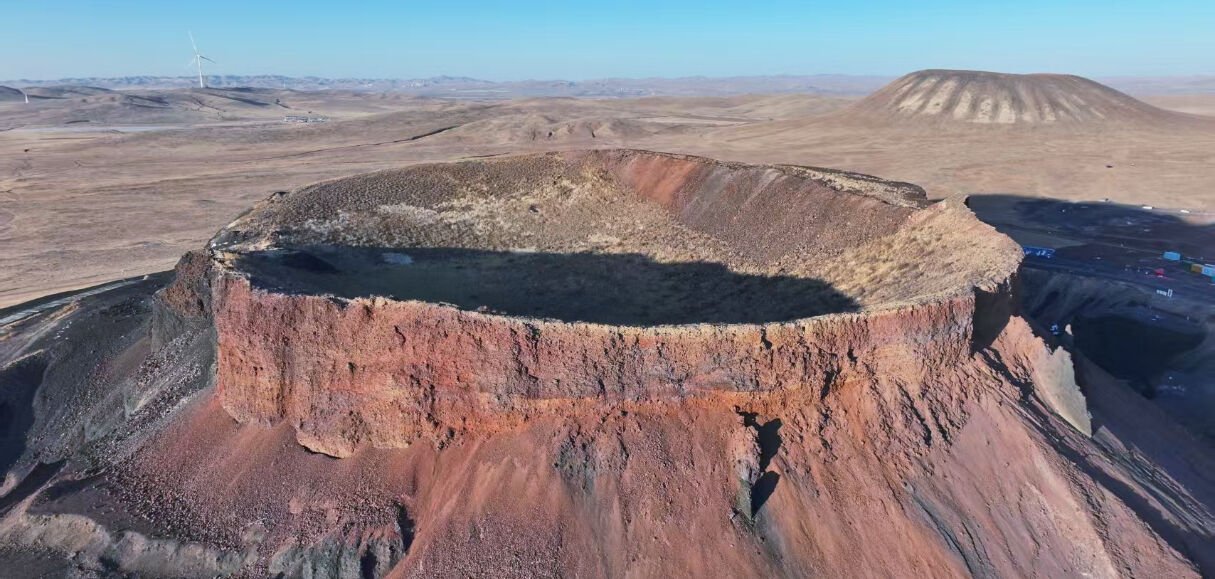
The park lies on the southern edge of the Inner Mongolian Plateau, where rolling grasslands are dotted with more than 30 well-preserved volcanic cones and 46 mountain peaks rising above 1,500 meters. It is the only known Holocene volcanic group in this region of Inner Mongolia, making it an important site for geological research and education.
Over thousands of years, volcanic eruptions produced spectacular lava flows that solidified into dramatic landscapes known as stone rivers, stone lakes, and stone seas. Together with wide-open grasslands and seasonal wildflowers, these volcanic features create a landscape unlike anywhere else in China.
Discover the Famous Volcanoes
Each volcano within the Ulanhad Volcanic Group has its own unique character and geological significance.
Volcano No. 3 – The Accessible Crater
Volcano No. 3 is the best-known volcano in the park and the only one where visitors can walk directly into a well-preserved volcanic crater. Standing on the rim provides breathtaking panoramic views of the surrounding grasslands and neighboring volcanic cones.
Volcano No. 4 – A Multi-Eruption Volcano
Volcano No. 4 experienced multiple eruptions approximately 30,000, 20,000, and 10,000 years ago. It is an excellent example of a complex volcanic structure and offers valuable insights into the region's volcanic history.
Volcano No. 5 – The Colorful Volcano
Known for its ever-changing appearance throughout the seasons, Volcano No. 5 became famous after appearing on the December 2015 cover of China National Geographic. Green grass in summer, colorful vegetation in autumn, and snow-covered slopes in winter make it one of the park's most photographed landmarks.
Volcano No. 6 – A Protected Geological Site
The volcanic cone of Volcano No. 6 has been partially damaged by historical human activity. To protect its fragile geological features, climbing is no longer permitted, allowing the site to recover naturally.
Volcanoes No. 7 and No. 8 – The Twin Peak Mountains
Also known as the South Peak and North Peak Mountains, Volcanoes No. 7 and No. 8 represent the youngest volcanic activity within the Ulanhad volcanic field. Their summits contain fascinating petrified wood fossils and naturally occurring mineral crystals, including agate and jade, making them particularly interesting for geology enthusiasts.
A Paradise for Outdoor Adventures
Today, Ulanhad Volcanic Geopark has become one of Inner Mongolia's most popular destinations for outdoor exploration. Visitors can hike across ancient lava fields, climb volcanic cones, photograph dramatic landscapes, enjoy camping beneath star-filled skies, and experience the stunning contrast between black volcanic rock and endless green grasslands.
The best time to visit is from May to October, when the weather is pleasant and the surrounding grasslands are at their most beautiful. Sunrise and sunset offer exceptional opportunities for landscape photography as golden light illuminates the volcanic cones.
A Geological Wonder of Northern China
Combining ancient volcanoes, sweeping grasslands, unique lava formations, and fascinating geological history, Ulanhad Volcanic Geopark offers one of China's most distinctive natural experiences. Whether you are interested in Earth science, hiking, photography, or discovering hidden landscapes, this remarkable geopark is an unforgettable destination in Inner Mongolia.