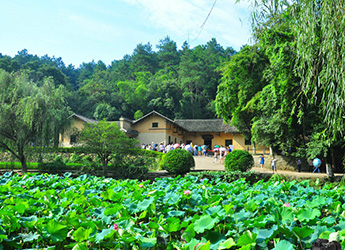
 Mao Zedong’s Former Residence is a famous historical site located in Shangwu Ground, Tudi Chong Village, Shaoshan Township, Hunan Province. It is the birthplace and childhood home of Mao Zedong, one of the most influential figures in modern Chinese history.
Born here on December 26, 1893, Mao Zedong spent his early years in this traditional rural house, where he lived with his parents and worked on the family farm. Today, the residence has become one of the most important cultural attractions in Shaoshan, attracting visitors interested in Chinese history and Mao’s early life.
History of Mao Zedong’s Former Residence
Shaoshan is a small mountain village located about 100 kilometers southwest of Changsha, the capital of Hunan Province. Once a quiet farming community surrounded by beautiful hills and rice fields, Shaoshan became internationally known because of Mao Zedong’s connection with the area.
The former residence was built in a traditional Hunan rural style. The structure is shaped like the Chinese character “凹”, with the eastern section belonging to Mao’s family and the western section belonging to a neighboring family. The two families shared the central room, which was a common arrangement in traditional village houses.
The house contains 13.5 rooms, including a central hall, kitchen, dining room, family bedrooms, and a guest room. The simple design reflects the lifestyle of a rural farming family in late Qing Dynasty China.
Exhibits and Historical Items
Inside the residence, visitors can see many original items related to Mao Zedong’s childhood and family life, including:
* Family photographs of Mao Zedong and his relatives
* Traditional household furniture and daily utensils
* Farming tools used by the family
* Agricultural equipment such as shoulder poles, buckets, and hoes
These objects provide a glimpse into the rural environment where Mao spent his childhood and youth.
Key Areas Inside the Former Residence
The Central Room
The central room is one of the most meaningful areas of the house. Since it was shared by Mao’s family and their neighbor, only half of the room belonged to Mao’s family. This unique arrangement reflects the close relationships among villagers in traditional rural communities.
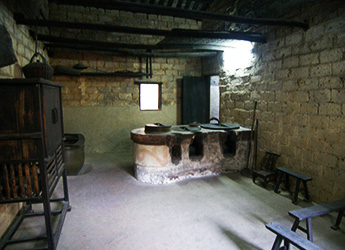 The Kitchen
The kitchen was where young Mao often helped his mother with household chores. It offers visitors a closer look at the daily life of the Mao family during his childhood.
Mao’s Parents’ Bedroom
Behind the kitchen is the bedroom of Mao’s parents. Two portraits of his parents are displayed on the inner wall. It was in this room that Mao Zedong was born on December 26, 1893.
Shaoshan – A Famous Cultural Tourism Destination
As Mao Zedong’s hometown, Shaoshan has developed into one of the most important tourist destinations in Hunan Province. In addition to the former residence, major attractions in the area include:
* Mao Zedong Memorial Hall
* Water Dripping Cave
* Mao Zedong Poetry Stele Forest
Together, these sites showcase Mao’s personal history, poetry, and the cultural heritage of Shaoshan.
Visiting Mao Zedong’s Former Residence
Surrounded by green hills, forests, and rice fields, Mao Zedong’s Former Residence combines historical significance with the peaceful scenery of rural Hunan. The traditional yellow mud-brick house, wooden structures, and preserved household items allow visitors to experience the atmosphere of a Hunan farming village from more than a century ago.
For travelers exploring Hunan’s history and cultural landmarks, Shaoshan and Mao Zedong’s Former Residence offer an important window into the early life of one of China’s most notable historical figures.