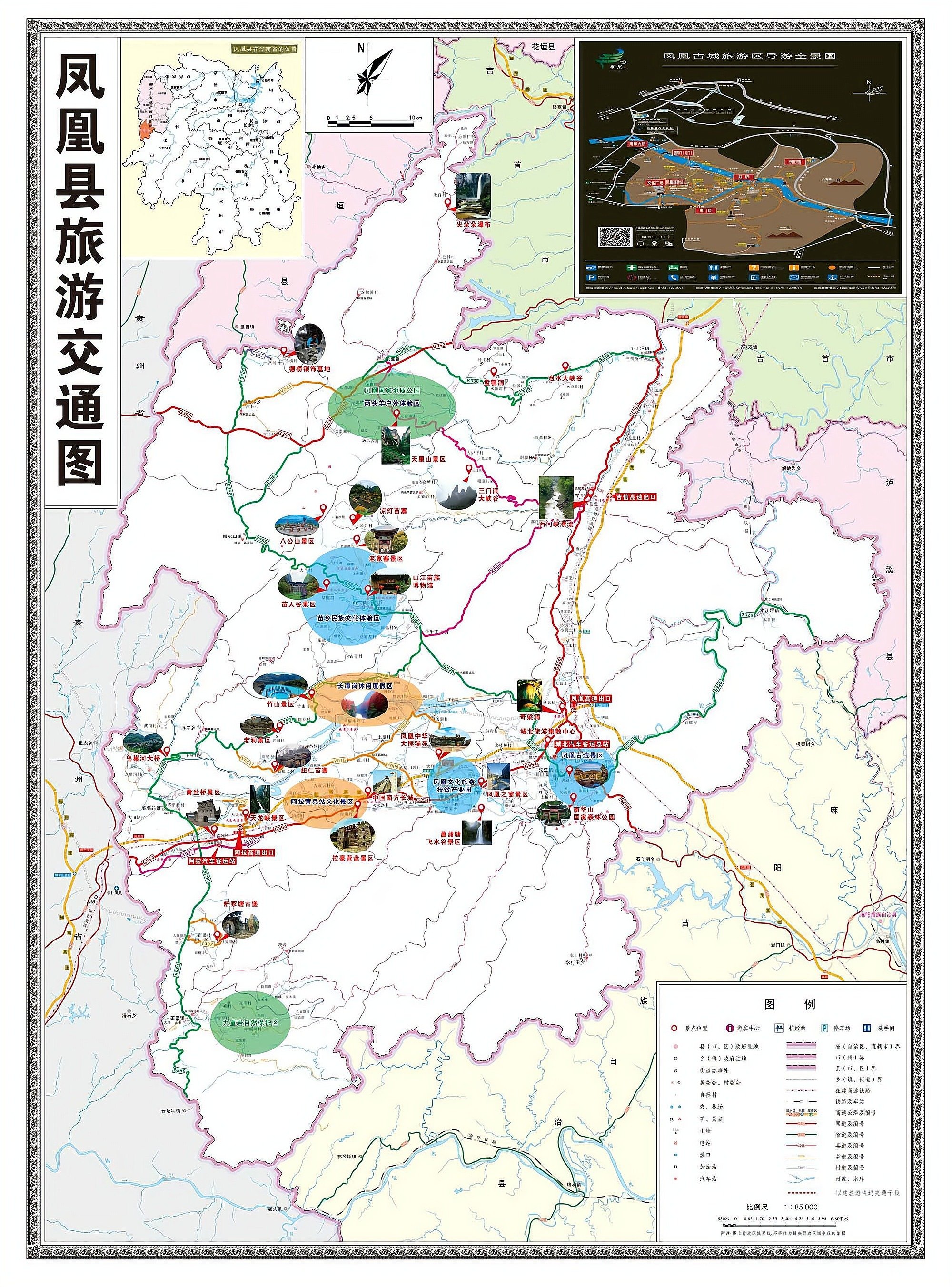
Located in the southwest of Xiangxi Tujia and Miao Autonomous Prefecture, Hunan Province, Fenghuang Ancient City (凤凰古城) is one of China’s most famous historical and cultural towns.
The name Fenghuang means “Phoenix,” a legendary sacred bird in Chinese mythology symbolizing beauty, rebirth, and prosperity. With its well-preserved ancient streets, traditional wooden houses, ethnic culture, and beautiful riverside scenery, Fenghuang has become one of the most popular destinations in Hunan.
The ancient city is recognized as:
* A National Historical and Cultural City of China
* A AAAA-rated Tourist Attraction
* One of the Top Ten Ancient Towns in China
* One of the Top Ten Cultural Heritage Sites in Hunan Province
Fenghuang is also an important cultural center for the Miao and Tujia ethnic groups, offering visitors a unique opportunity to experience traditional customs, architecture, and lifestyles.
 History of Fenghuang Ancient City
Fenghuang Ancient City was originally built in 1556 during the Ming Dynasty and has a history of more than 400 years.
Although the city has experienced many historical changes, its ancient appearance has been remarkably preserved. Today, visitors can still admire:
* Ancient city gates
* Stone-paved streets
* Traditional wooden houses
* Riverside stilt buildings
* Historic temples and ancestral halls
Important historical buildings include:
* Chaoyang Palace
* Fenghuang Ancient City Museum
* Yang Family Ancestral Hall
* Shen Congwen Former Residence
* Xiong Xiling Former Residence
* Tianwang Temple
* Dacheng Hall
* Wanshou Palace
The combination of ancient architecture and natural scenery makes Fenghuang one of the most charming historic towns in China.
Legend of the Phoenix
According to Chinese legend, the phoenix is a sacred bird that could be reborn from ashes after living for hundreds of years. It represents immortality, beauty, and good fortune.
It is said that the mountains around Fenghuang resemble a phoenix spreading its wings, which inspired the town’s name.
Today, the phoenix remains an important cultural symbol of the ancient city and appears throughout local architecture, artwork, and festivals.
 Highlights of Fenghuang Ancient City
Fenghuang Ancient City preserves more than 120 traditional residences from the Ming and Qing dynasties, along with over 30 temples, pavilions, and historical buildings.
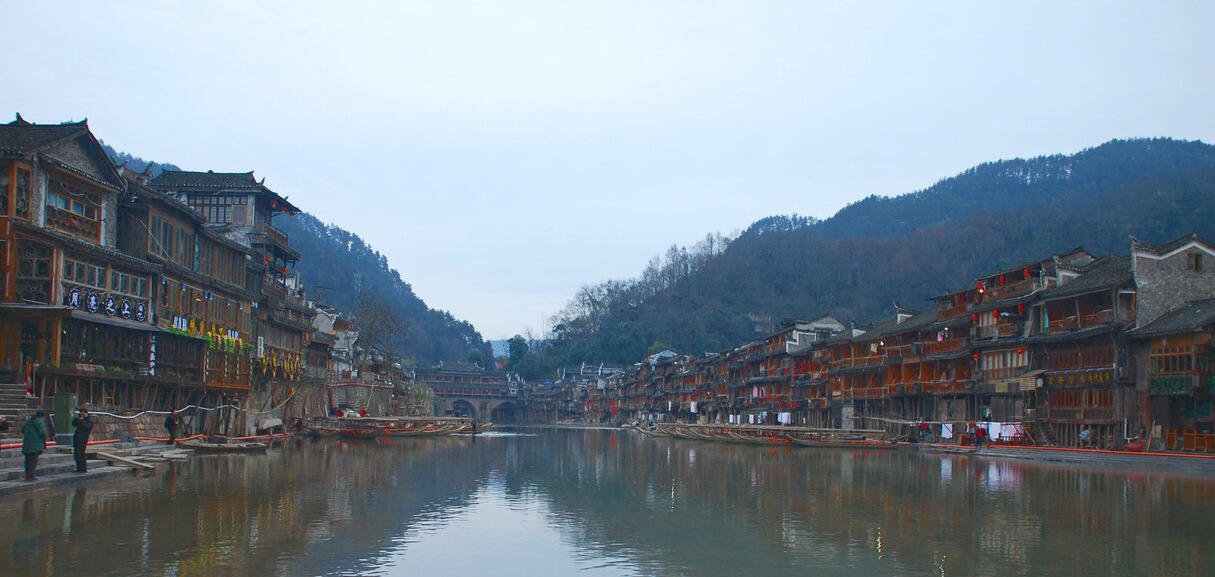
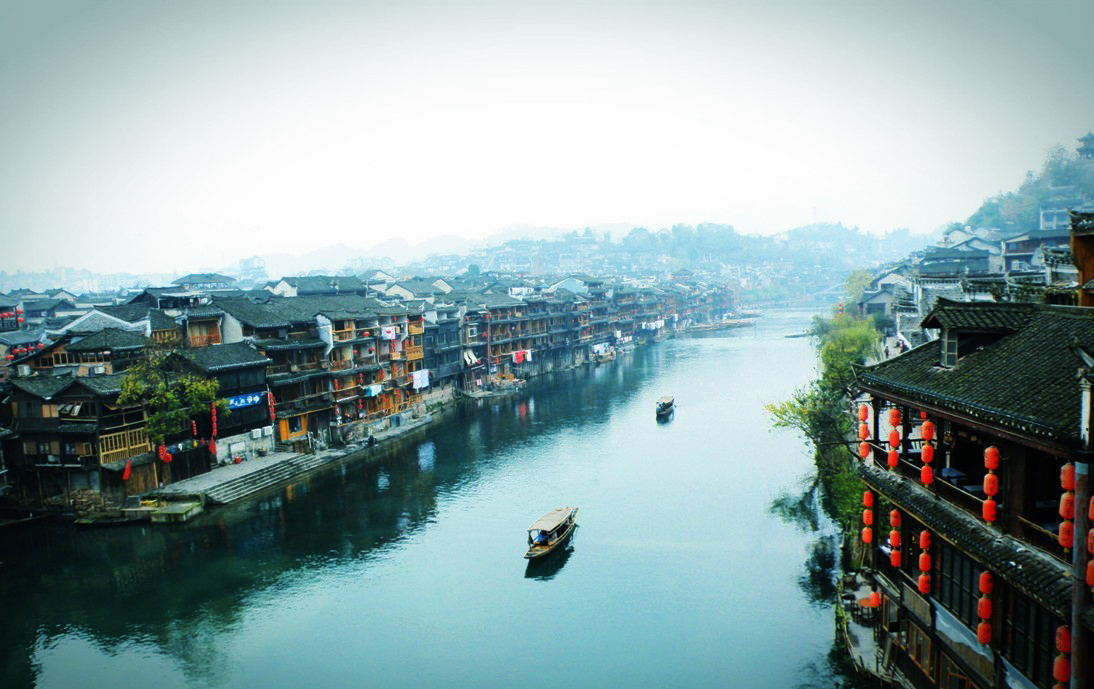
The ancient town is divided into the old city and new city areas. The old town is the main attraction, built along the beautiful Tuojiang River.
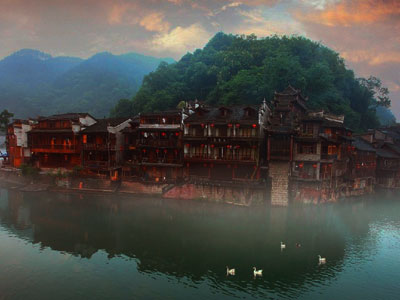
The river flows through the city, with red sandstone walls, ancient towers, and wooden stilt houses creating one of the most iconic landscapes in Hunan.
Top Attractions in Fenghuang Ancient City
Shenfeng Cultural Scenic Area
The Shenfeng Cultural Scenic Area focuses on phoenix mythology and local culture.
The area includes more than 20 attractions, such as:
* Phoenix Pavilion
* Phoenix Bridge
* Phoenix Temple
* Phoenix Bamboo Sea
* Totem poles
* Cultural corridors
* Traditional landscape gardens
Visitors can learn about the connection between the phoenix legend and local ethnic traditions.
Tian Family Ancestral Hall
Located on the northern bank of the Tuojiang River, Tian Family Ancestral Hall was built in 1837 during the Qing Dynasty.
The complex was constructed under the leadership of Tian Xingshu, a Qing official and governor of Guizhou Province.
Featuring strong ethnic architectural characteristics, the ancestral hall includes:
* Main hall
* Stage
* Courtyards
* Corridors
* Decorative stone carvings
The impressive entrance, stone elephants, and traditional layout reflect the importance of clan culture in ancient China.
 Fenghuang North Gate Ancient Tower
The North Gate Ancient Tower, also known as Bihui Tower, was originally built during the Ming Dynasty.
Constructed with local red sandstone, the tower features:
* A semi-arched gate
* Stone carvings
* Defensive structures
* Traditional Chinese roof design
The tower was once an important military defense point and remains one of the symbols of Fenghuang Ancient City.
Chen Dounan Residence
Built in 1902 during the Qing Dynasty, Chen Dounan Residence is a typical traditional courtyard house in western Hunan.
Covering an area of about 366 square meters, the residence includes:
* Front hall
* Courtyard
* Main hall
* Rear hall
Its exquisite clay sculptures and traditional decorations have been highly praised by experts. The residence has also been used as a filming location for many Chinese movies and television dramas.
Tuojiang River Stilted Houses
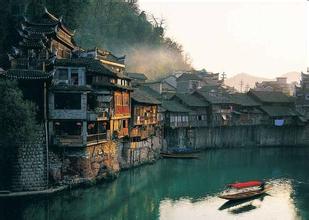
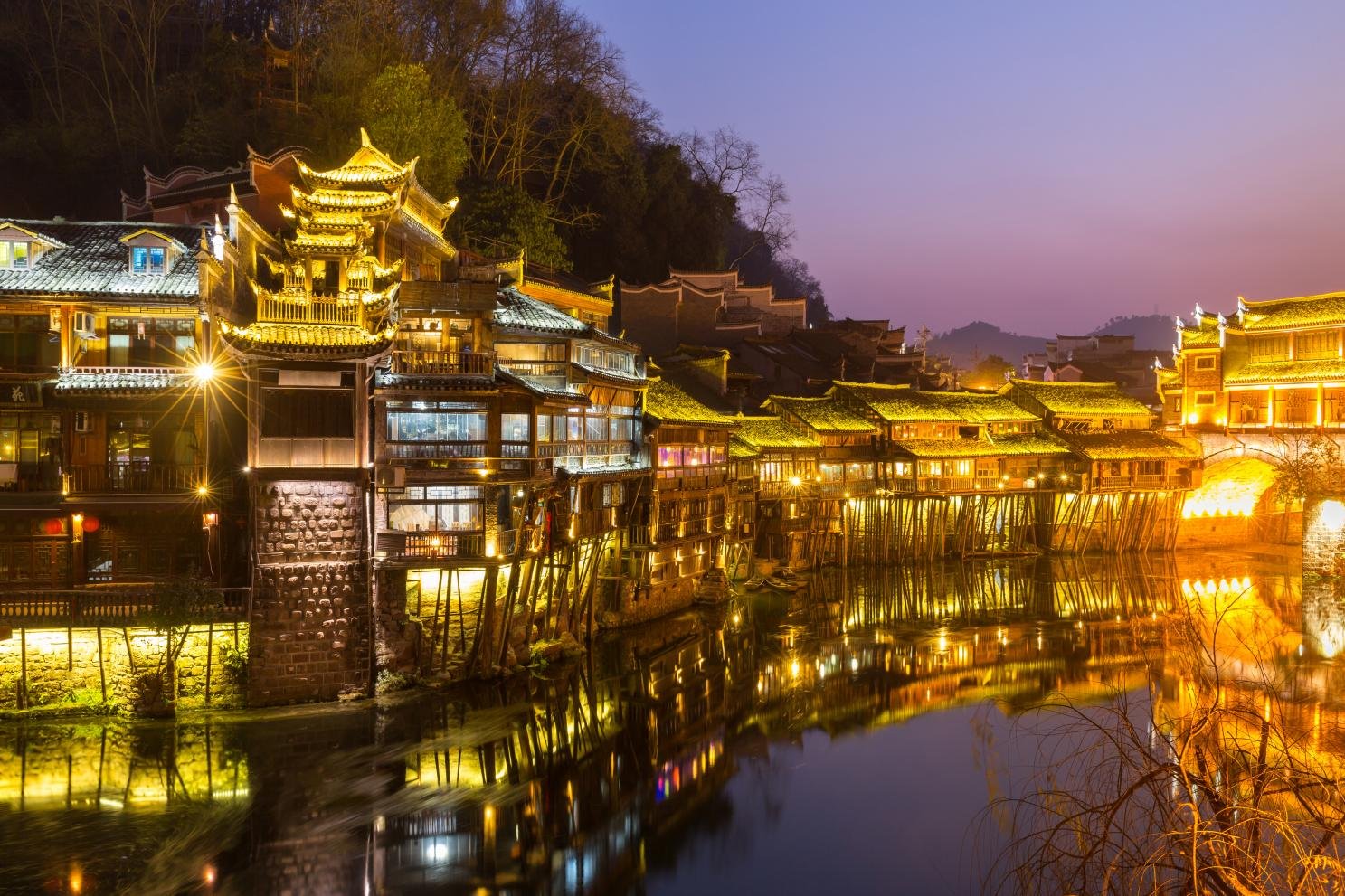
The Tuojiang River Stilted Houses are among the most famous sights in Fenghuang.
Built along the riverbank, these traditional wooden houses reflect the architectural style of the Miao ethnic group.
The existing stilt houses stretch for about 240 meters, with some still inhabited by local families.
The combination of wooden structures, flowing water, and mountain scenery creates the classic image of Fenghuang Ancient City.
Slate Old Street
The ancient Green Stone Street is the busiest traditional commercial street in Fenghuang.
The narrow stone-paved road stretches for more than 3,000 meters, passing through:
* Cross Street
* Dongzheng Street
* Ancient towers
* Shen Congwen Cemetery
* Historical landmarks
Walking along the street, visitors can discover traditional shops, local snacks, handicrafts, and old buildings.
Shen Congwen Former Residence
The former residence of Shen Congwen, one of China’s most famous modern writers, was built in 1866.
The traditional courtyard house features:
* Wooden structures
* Fireproof brick walls
* Ming and Qing architectural styles
Shen Congwen’s literary works introduced the beauty and culture of western Hunan to readers around the world.
Nearby Attractions Around Fenghuang
Wulong Mountain Scenic Area
Located about 28 kilometers from Fenghuang Ancient City, Wulong Mountain is known for its untouched natural environment.
The scenic area features:
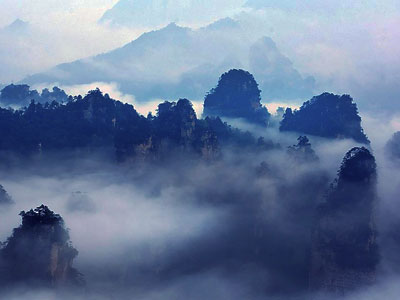
* Strange rock formations
* Cliffs
* Peaks
* Caves
* Waterfalls
Highlights include:
* Wulong Cave
* Longma Waterfall
* Wuchao River Canyon
It is an excellent destination for hiking and nature exploration.
Huangsiqiao Ancient City
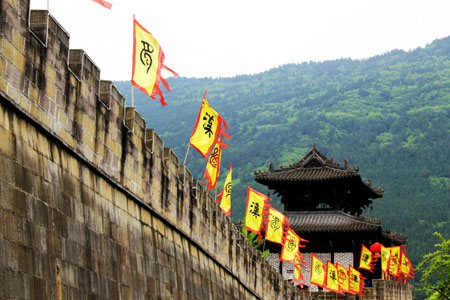
Located about 30 kilometers west of Fenghuang County, Huangsiqiao Ancient City is one of the best-preserved ancient military castles in China.
Built in 687 AD during the Tang Dynasty, the city was originally used as a military garrison.
The ancient stone city features:
* 5.6-meter-high walls
* Three city gates
* Traditional defensive structures
Its solid construction combines local architectural techniques with imperial craftsmanship.
Shujia Tang Ancient Castle
Located about 31 kilometers west of Fenghuang County, Shujia Tang is an ancient mountain fortress built for defense.
Because of its location near the borders of Hunan, Guizhou, and Sichuan, the castle once played an important military role.
The site is known for:
* Unique defensive design
* Ancient architecture
* Beautiful mountain surroundings
Miao Ethnic Museum
Located in Shanjiang Town near Fenghuang, the Miao Ethnic Museum is one of the largest private museums dedicated to Miao culture in China.
Covering about 1,864 square meters, the museum displays more than 10,000 cultural items, including:
* Traditional clothing
* Farming tools
* Household objects
* Ancient residences
* Religious items
* Folk art
The museum provides visitors with a deeper understanding of Miao history, traditions, and daily life.
Why Visit Fenghuang Ancient City?
With its ancient streets, riverside scenery, traditional architecture, and rich ethnic culture, Fenghuang Ancient City is one of the most unforgettable destinations in Hunan Province.
Visitors can:
* Walk through historic stone streets
* Admire Tuojiang River scenery
* Experience Miao and Tujia traditions
* Explore ancient buildings
* Enjoy local food and handicrafts
For travelers interested in Chinese history, ethnic culture, photography, and traditional towns, Fenghuang Ancient City offers a unique journey into the cultural heart of western Hunan.