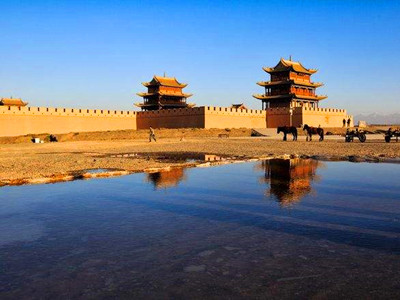
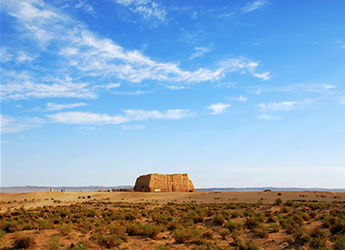
 Located approximately 90 kilometers northwest of Dunhuang, Gansu Province, Yumen Pass (Jade Gate Pass) is one of the most important historical landmarks along the ancient Silk Road. Also known as Little Square Plate City, this ancient military fortress once served as a crucial gateway connecting ancient China with the Western Regions.
Together with Yangguan Pass, Yumen Pass played a vital role in protecting the Hexi Corridor and safeguarding trade routes between China and Central Asia. Today, it is one of the most famous historical attractions in Dunhuang, offering visitors a glimpse into the history, culture, and landscape of the ancient Silk Road.
Why Is It Called Yumen Pass (Jade Gate Pass)?
According to historical records, jade from Hetian (in present-day Xinjiang) was transported through this pass before reaching the central plains of China.
Because precious jade entered China through this gateway, the pass became known as Yumen Pass, meaning “Jade Gate Pass.”
For thousands of years, the name has represented China’s connection with the Western Regions and the cultural exchanges that took place along the Silk Road.
History of Yumen Pass
Yumen Pass has a history of more than 2,000 years and was first established during the Western Han Dynasty (206 BC–9 AD) under the reign of Emperor Wu of Han.
During the early Western Han period, the powerful Xiongnu (Huns) controlled large areas of northwest China and repeatedly threatened the empire’s western frontier.
Initially, the Han Dynasty attempted to maintain peace through diplomatic arrangements. However, Emperor Wu later adopted a military strategy to strengthen control over the Hexi Corridor.
In 121 BC, General Huo Qubing, one of the most famous military commanders of the Han Dynasty, launched successful campaigns against the Xiongnu. Following these victories, the Han government established several commanderies in the Hexi region, including:
* Wuwei Prefecture
* Jiuquan Prefecture
* Zhangye Prefecture
* Dunhuang Prefecture
At the same time, Yumen Pass was built as a major defensive stronghold and transportation checkpoint.
 Architectural Features of Yumen Pass
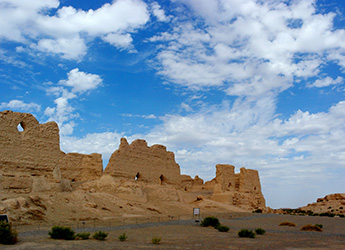
Built mainly from rammed earth, Yumen Pass has survived for more than two millennia despite the harsh desert environment.
The remaining structure measures approximately:
* 26 meters long from north to south
* 24 meters wide from east to west
The walls are:
* About 3 meters thick at the top
* About 5 meters thick at the base
The fortress includes gate openings on the western and northern sides, reflecting its important military function as a border defense facility.
Although only part of the original structure remains today, the ruins still provide a powerful impression of the scale and importance of ancient Silk Road defenses.
Yumen Pass and the Silk Road Landscape
A visit to Yumen Pass Dunhuang is not only a historical journey but also a spectacular desert experience.
Traveling from Yumen Pass along National Highway 215, visitors can cross the Aerchin Mountains and continue toward:
* The Qaidam Basin in Qinghai Province
* Ruoqiang in Xinjiang
* Lhasa in Tibet
Along the way, travelers can enjoy the dramatic scenery of northwestern China, including:
* Endless Gobi Desert landscapes
* Desert mirages
* Mountain ranges
* Unique desert vegetation
* Ancient Silk Road scenery
The surrounding landscape reveals the harsh but beautiful environment that shaped ancient trade and military routes.
Yumen Pass in Chinese Poetry
Yumen Pass has inspired many Chinese poets throughout history.
One of the most famous poems about the pass is “Song of Liangzhou” written by Wang Zhihuan (688–742) during the Tang Dynasty.
The poem describes the lonely frontier landscape beyond the pass and expresses the hardship of life on the ancient border.
A famous line suggests that beyond Yumen Pass, the warm spring winds from the central plains could hardly reach, symbolizing the remoteness and isolation of the frontier.
Travel Guide to Yumen Pass
Location
Yumen Pass is located about 90 kilometers northwest of Dunhuang, Gansu Province, China.
How to Get There
The most convenient way to visit Yumen Pass is:
* Chartering a private vehicle from Dunhuang
* Joining a Dunhuang Silk Road tour
* Combining the visit with nearby attractions such as:
* Mogao Caves
* Yangguan Pass
* Mingsha Mountain and Crescent Spring
The journey usually takes about 2 hours by car from Dunhuang.
Opening Hours
8:00 AM – 6:00 PM
Best Time to Visit Yumen Pass
The best seasons to visit Yumen Pass are:
Spring (April–May)
* Comfortable temperatures
* Clear skies
* Ideal for desert sightseeing
Autumn (September–October)
* Pleasant weather
* Beautiful desert light
* Excellent photography conditions
Summer can be extremely hot, while winter temperatures may be very cold due to the desert climate.
Why Visit Yumen Pass?
As one of the most important relics of the ancient Silk Road, Yumen Pass Dunhuang offers travelers a unique opportunity to experience:
* Over 2,000 years of Chinese frontier history
* The legacy of the Silk Road
* Ancient military architecture
* Gobi Desert landscapes
* The cultural exchanges between China and Central Asia
Standing among the desert ruins of Yumen Pass, visitors can imagine the caravans, merchants, soldiers, and travelers who once passed through this legendary gateway connecting East and West.