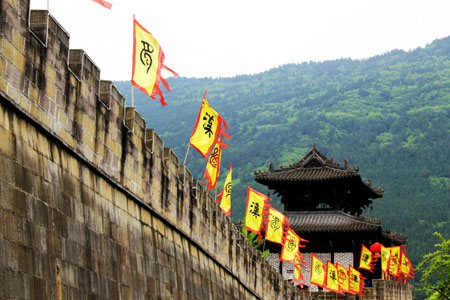
Located about 65 kilometers northwest of Chengdu in Sichuan Province, Mount Qingcheng (Qingchengshan) and the Dujiangyan Irrigation System together form one of China’s most celebrated UNESCO World Heritage Sites. Recognized for their outstanding cultural and historical significance, the site also encompasses the Longxi (Dragon Stream) Nature Reserve and the Hongkou (Iris Port) Scenic Area, creating a remarkable destination where ancient engineering, Taoist culture, and pristine natural landscapes coexist in harmony.
Designated as a UNESCO World Heritage Site in 2000, Mount Qingcheng and Dujiangyan are regarded as major milestones in the history of Chinese civilization. The site represents both one of the world’s oldest functioning irrigation systems and one of the birthplaces of Taoism, attracting history enthusiasts, nature lovers, and spiritual travelers from around the world.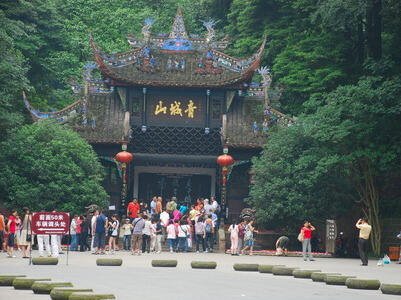
Discover Mount Qingcheng – The Birthplace of Taoism
Known as one of the birthplaces of Taoism in China, Mount Qingcheng has been an important center of Taoist culture for nearly two thousand years. During the Eastern Han Dynasty (25–220 AD), Zhang Daoling, the founder of organized Taoism, established his teaching center on the mountain and began spreading Taoist philosophy.
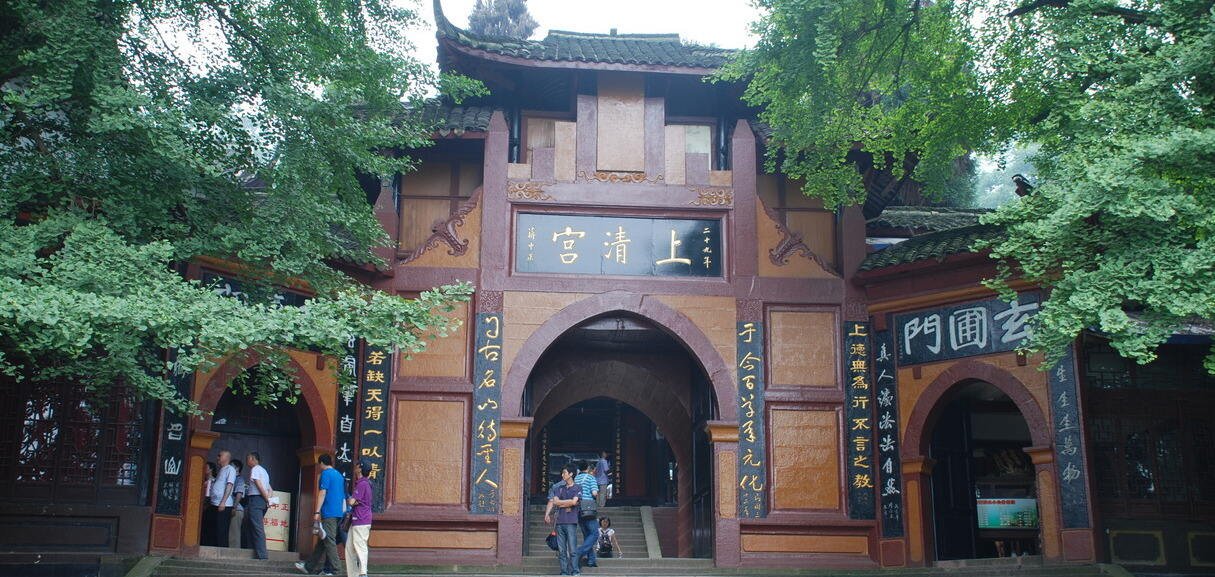
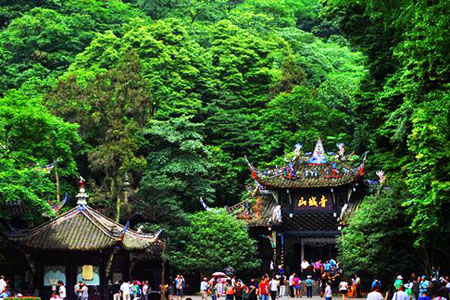
Today, more than 20 ancient Taoist temples, palaces, and religious sites are scattered throughout the mountain, hidden among dense forests and tranquil valleys. Their elegant architecture, built in the distinctive Sichuan style, blends seamlessly into the surrounding landscape, perfectly reflecting the Taoist philosophy of harmony between humanity and nature.
Explore Historic Taoist Temples
Mount Qingcheng is home to numerous well-preserved Taoist landmarks, including:
* Tianshi Cave (Celestial Master’s Cave) – the most important Taoist temple on the mountain, where Zhang Daoling is believed to have preached.
* Shangqing Palace (Palace of Celestial Purity) – located near the summit, offering panoramic views of the surrounding mountains.
* Zushi Hall (Hall of the Ancestral Masters) – dedicated to generations of respected Taoist masters.
* Chaoyang Cave (Facing the Sun Cave) – a peaceful meditation retreat nestled among the cliffs.
* Natural Picture Pavilion (Tianran Tuhua) – an elegant wooden architectural complex surrounded by ancient forests and dramatic mountain scenery.
Many of these temples are connected by scenic stone paths shaded by centuries-old trees, creating a peaceful atmosphere ideal for hiking, meditation, and cultural exploration.
Dujiangyan Irrigation System – A Masterpiece of Ancient Engineering
At the foot of Mount Qingcheng lies the world-famous Dujiangyan Irrigation System, one of the greatest engineering achievements in ancient China.
Constructed more than 2,200 years ago during the Qin Dynasty under the direction of Li Bing and his son, the irrigation system successfully controls flooding while providing irrigation to the fertile Chengdu Plain—all without the use of a dam. Remarkably, it continues to function today, making it the oldest non-dam irrigation system still in operation anywhere in the world.
The engineering principles developed at Dujiangyan have influenced water management for over two millennia and remain an extraordinary example of sustainable engineering and environmental harmony.
Cultural Heritage and Historic Relics
Mount Qingcheng preserves numerous cultural treasures reflecting its long history and spiritual significance.
Visitors can admire the impressive Qing Dynasty stone inscriptions, including the famous carving proclaiming Mount Qingcheng as “The Fifth Most Famous Mountain Under Heaven.”
One of the site’s most valuable historical relics is the 1,800-year-old stone statue of Li Bing, excavated from the Min River in 1974. Standing 2.9 meters high and weighing approximately 4.5 tons, it is regarded as one of the earliest large-scale stone sculptures in Chinese history.
The scenic area also displays:
* Ancient inscriptions documenting water management techniques
* Historic Qing Dynasty maps of the Dujiangyan Irrigation System
* Memorial inscriptions honoring Li Bing and his son
* Paintings and calligraphy by celebrated Chinese artists, including Xu Beihong, Zhang Daqian, and Guan Shanyue
Together, these cultural relics offer valuable insight into China’s engineering achievements, artistic traditions, and philosophical heritage.
Experience the Philosophy of Taoism
Beyond its temples and historic buildings, Mount Qingcheng embodies the core values of Taoist philosophy—balance, simplicity, harmony with nature, and spiritual tranquility.
Walking through its quiet forests, mountain streams, ancient pavilions, and mist-covered peaks, visitors can experience the peaceful atmosphere that has inspired Taoist practitioners for centuries. Every temple, pathway, and natural landscape reflects the Taoist belief that humans should live in harmony with the natural world.
Things to Do at Mount Qingcheng
Visitors can enjoy a wide range of cultural and outdoor experiences, including:
* Explore ancient Taoist temples and monasteries
* Visit the UNESCO-listed Dujiangyan Irrigation System
* Hike through lush mountain forests and scenic trails
* Ride the cable car to Shangqing Palace
* Discover Taoist history and philosophy
* Photograph traditional architecture and mountain landscapes
* Visit historic stone inscriptions and cultural relics
* Experience the peaceful atmosphere of one of China’s sacred mountains
Best Time to Visit
Mount Qingcheng is beautiful throughout the year.
Spring (March–May) and autumn (September–November) offer the most comfortable weather for hiking and sightseeing, with lush greenery, clear skies, and vibrant seasonal colors.
Summer provides a cool mountain retreat from Chengdu’s heat, while winter brings a quiet, misty atmosphere that enhances the mountain’s spiritual charm.
Why Visit Mount Qingcheng?
Combining UNESCO World Heritage status, ancient Taoist culture, magnificent mountain scenery, and the remarkable Dujiangyan Irrigation System, Mount Qingcheng is one of the most rewarding destinations in Sichuan.
Whether you’re interested in Chinese philosophy, ancient engineering, cultural heritage, photography, or peaceful mountain hiking, Mount Qingcheng and Dujiangyan offer an unforgettable journey into the history, spirituality, and natural beauty of southwest China.