




search for a Trip
Xishuangbanna National Park
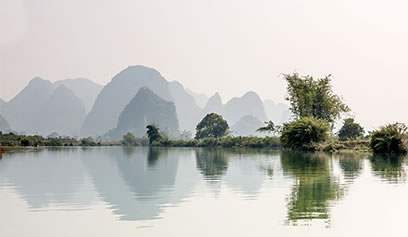
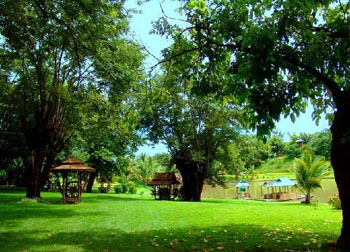 Xishuangbanna National Park, often described as a green jewel in China’s tropical region, is located in the southern part of Yunnan Province, near China’s border with Laos and Myanmar. Situated on the northern edge of the country’s tropical zone, the region is characterized by diverse landscapes, including low mountains, steep hills, gentle slopes, plains, basins, narrow valleys and shallow lakes.
The park contains a remarkable variety of natural habitats, ranging from wetlands and open waters to dense tropical forests. The region receives abundant rainfall and has high humidity throughout the year, creating ideal conditions for the development of rich tropical and subtropical ecosystems.
These favorable natural conditions support an extraordinary diversity of plants and animals, including many rare and unusual species. The protected area covers a vast landscape and includes several important nature reserves and conservation areas around Jinghong, Mengla, Menghai, Mengyang and Mengcang.
Xishuangbanna is particularly famous for its exceptional diversity of tropical and subtropical plant life. The combination of warm temperatures, abundant rainfall and extensive forests makes the region one of the most important areas of biodiversity in China.
Main Scenic Highlights
A Treasure House of Plant Life
Xishuangbanna is home to an impressive variety of plant species. Hundreds of species of trees can be found throughout the region, including valuable timber species. Many other plants have traditionally been used for food, medicine and industrial purposes.
Wild fruits, flowers and other tropical plants grow abundantly in the forests, creating colorful scenery throughout the year. For visitors interested in botany and nature, the park provides an excellent opportunity to explore the remarkable plant diversity of southern Yunnan.
A Paradise for Wildlife
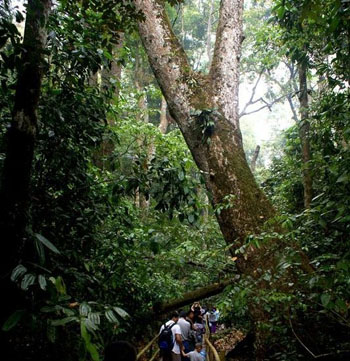
The dense tropical forests and abundant vegetation provide ideal habitats for a wide range of wildlife. Xishuangbanna is home to numerous species of mammals, amphibians and reptiles, as well as a remarkable variety of birds and insects.
The region is particularly important for the conservation of rare tropical wildlife. Exploring its forests offers visitors a chance to experience one of China’s richest ecosystems and discover the close relationship between tropical plants and wildlife.
 Historic and Cultural Sites
Xishuangbanna is famous not only for its tropical landscapes and biodiversity but also for its distinctive Dai culture and Buddhist heritage.
Numerous Buddhist temples and pagodas can be found throughout the region. Many of the pagodas are associated with Theravada Buddhist traditions and feature elegant white structures and distinctive architectural details. Together with traditional Dai villages and cultural customs, these sites add an important cultural dimension to a visit to Xishuangbanna.
Scientific Research and Conservation
Xishuangbanna is an important center for tropical ecological research and biodiversity conservation. Over the years, scientists have conducted extensive studies of the region’s tropical forests, plant resources and wildlife.
Research has included the conservation and cultivation of valuable wild plant species, the sustainable use of plant resources and the development of effective methods for protecting different types of tropical forest ecosystems.
These efforts contribute to the long-term protection of Xishuangbanna’s exceptional biodiversity and provide valuable knowledge for tropical forest conservation.
About Xishuangbanna
The name “Xishuangbanna” comes from the Dai language and is traditionally associated with the concept of “twelve administrative districts,” reflecting the historical administrative system of the Dai people in the region.
Jinghong, the capital of Xishuangbanna Dai Autonomous Prefecture, is the main gateway to the region. The city is also known by its Dai name, “Yunjinghong,” which is traditionally interpreted as meaning “City of Dawn.”
Jinghong can be reached by air from Kunming and other major Chinese cities, while road transportation provides access to the surrounding towns, villages and scenic areas.
Xishuangbanna is internationally recognized for its exceptional biodiversity and tropical ecosystems. With its dense forests, diverse wildlife, rare plants, distinctive Dai culture and Buddhist heritage, it is one of the most fascinating destinations in Yunnan for travelers interested in nature, culture and ecological tourism.
Related Tours:
China Attractions Guide
- Anhui Attractions
- Beijing Attractions
- Chongqing Attractions
- Fujian Attractions
- Gansu Attractions
- Guangdong Attractions
- Guangxi Attractions
- Guizhou Attractions
- Hainan Attractions
- Henan Attractions
- Hongkong Attractions
- Hubei Attractions
- Hunan Attractions
- Heilongjiang Attractions
- Inner Mongolia Attractions
- Jiangsu Attractions
- Jilin Attractions
- Jiangxi Attractions
- Liaoning Attractions
- Manchuria Attractions

