The Amdo Tibetan area is a fascinating region in northeastern Tibet and the surrounding areas of present-day Qinghai, Gansu, and Sichuan provinces. It is renowned for its vast grasslands, snow-capped mountains, abundant water resources, rich wildlife, and diverse ethnic cultures. The region is also closely associated with the headwaters of some of Asia's great rivers, including the Yellow River, Yangtze River, and Lancang River. Numerous lakes, both large and small, are scattered across its expansive plateau landscape.
In this remarkable land, visitors can explore the Kunlun Mountains, Animaqing Mountains, high-altitude salt lakes, Jiuzhaigou National Park, and the Ruoergai Grassland. The region is equally rich in cultural attractions, including Ta'er Monastery, Labrang Monastery, and the distinctive tower-style stone houses of Danba.
Amdo is also home to many ethnic groups, including Tibetans, Hui, Mongols, Salar, and others. This cultural diversity has created a unique blend of languages, religions, customs, architecture, and traditional lifestyles.
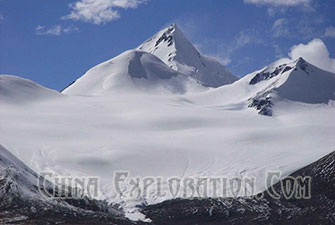
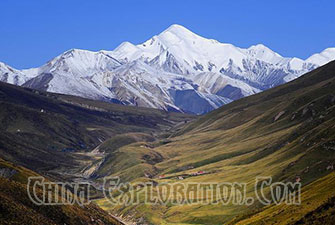
Animaqing Snow Mountain
The Animaqing Mountains, also known as the Amnye Machen Mountains, are located in Golog Tibetan Autonomous Prefecture, Qinghai Province. The highest peak, Maqen Gangri, rises to approximately 6,282 meters (20,610 feet) above sea level.
The mountain range is characterized by towering snow-covered peaks, deep valleys, glaciers, and vast alpine grasslands. With its magnificent scenery and strong spiritual significance, Animaqing is regarded as one of the sacred mountains of Tibetan Buddhism and has been revered by Tibetan communities for centuries.
For pilgrims and travelers alike, the snow-covered peaks of Animaqing provide one of the most spectacular landscapes on the northeastern Tibetan Plateau.
The Sources of the Yellow River and Yangtze River
The headwaters of two of China's great rivers—the Yellow River and the Yangtze River—lie on the high plateau of Qinghai, in the southern part of the traditional Amdo region. The surrounding landscape is a remarkable combination of snow-capped mountains, alpine grasslands, wetlands, forests, lakes, and streams.
The upper reaches of the Yellow River are particularly beautiful. The river flows gently through broad grasslands and wetlands, fed by countless small streams and lakes. The scenery is very different from the lower reaches of the Yellow River, where the river becomes wider, faster, and heavily laden with sediment.
Traveling through this remote region offers visitors an opportunity to experience a landscape that remains largely natural and unspoiled. The combination of immense mountains, open grasslands, abundant wildlife, and traditional Tibetan communities makes the river-source region one of the most fascinating areas of the Tibetan Plateau.
Labrang Monastery
Labrang Monastery is located in Xiahe County, Gansu Province, in the traditional Amdo Tibetan region. Founded in 1709 during the Qing Dynasty, it gradually developed over more than three centuries into one of the most important centers of Tibetan Buddhist learning in northeastern Tibet.
The monastery is a vast architectural complex containing six major Buddhist colleges, numerous prayer halls and temples, residences for senior religious figures, monks' quarters, and a traditional sutra-printing center. Its distinctive Tibetan architecture and rich religious heritage make it an important destination for visitors interested in Tibetan Buddhism and Amdo culture.
Labrang is particularly famous for its long tradition of Buddhist scholarship and remains one of the major monastic institutions of the Gelug school of Tibetan Buddhism.
Wolong Natural Reserve
Wolong National Nature Reserve lies in the transitional zone between the Sichuan Basin and the Tibetan Plateau, approximately 120–140 kilometers northwest of Chengdu. Covering about 2,000 square kilometers, it is one of China's best-known protected areas for giant pandas and other wildlife.
In 1980, the China Conservation and Research Center for the Giant Panda was established in Wolong in cooperation with the World Wide Fund for Nature (WWF). The same year, Wolong became part of UNESCO's Man and the Biosphere (MAB) Programme.
Wolong is often called the “Hometown of the Giant Panda” because of its importance as a habitat and research base for this iconic species. The reserve is also home to numerous other rare animals and plants, including golden monkeys and other species associated with the mountain forests of southwestern China.
Its ecosystems range from subtropical and temperate forests to high-altitude alpine environments. Dense forests, snow-capped mountains, glaciers, rivers, and diverse plant and animal life create an exceptional natural environment for scientific research and ecotourism.
Jiuzhaigou National Nature Reserve
Jiuzhaigou National Nature Reserve is located in Jiuzhaigou County, Sichuan Province. The reserve is famous for its spectacular alpine scenery, including turquoise lakes, multi-level waterfalls, snow-capped mountains, and pristine forests.
The region has a complex mountainous climate and remarkable vertical variations in vegetation. Its forests provide habitats for a variety of rare and protected species, including the giant panda, Sichuan takin, golden snub-nosed monkey, and blue-eared pheasant.
The scenery of Jiuzhaigou is particularly famous for its hundreds of colorful mountain lakes. Clear water reflects the surrounding forests and snow peaks, while numerous waterfalls cascade through the valleys. These natural features have made Jiuzhaigou one of China's most celebrated scenic destinations.
In 1992, Jiuzhaigou was inscribed on the UNESCO World Heritage List as a World Natural Heritage site.
Qinghai Lake
Qinghai Lake is the largest inland saltwater lake in China. Located in northeastern Qinghai Province at an elevation of approximately 3,200 meters (10,500 feet), it lies between Gangcha, Haiyan, and Gonghe counties.
The lake covers an area of roughly 4,500 square kilometers, although its exact size varies with water levels, and its shoreline stretches for hundreds of kilometers. Surrounded by vast grasslands and distant snow-covered mountains, Qinghai Lake is one of the most impressive natural landscapes on the Qinghai-Tibet Plateau.
The lake and its surrounding wetlands provide important habitats for migratory birds and other plateau wildlife. Bird Island, in particular, is famous as a breeding and resting ground for large numbers of migratory birds.
The combination of the immense blue lake, golden grasslands, snow-capped mountains, and seasonal wildflowers makes Qinghai Lake a popular destination for nature lovers, photographers, and cyclists.
Danba Beauty Valley
Danba County lies in western Sichuan, in the traditional Tibetan cultural region of Garzê (Ganzi) Tibetan Autonomous Prefecture. It is situated among the eastern ranges of the Tibetan Plateau, with dramatic differences in elevation between high snow-covered mountains and deep river valleys.
The Dadu River system runs through the area, while the Big Jinchuan and Small Jinchuan rivers meet near Danba. The county's landscape changes dramatically with altitude, ranging from snow-capped peaks and alpine valleys to forests, grasslands, and fertile river terraces.
Danba is predominantly inhabited by Tibetans and is particularly famous for its distinctive traditional architecture. The area is home to numerous ancient stone watchtowers and fortified Tibetan houses, some of which rise several stories above the surrounding villages.
Danba is also popularly known as the “Beauty Valley.” Local Tibetan women have traditionally been celebrated for their beauty and distinctive traditional clothing, making the area especially attractive to photographers and travelers interested in Tibetan culture.
The combination of spectacular mountain scenery, traditional villages, Tibetan architecture, and colorful local customs makes Danba one of the most fascinating cultural destinations in western Sichuan.
Related Tours