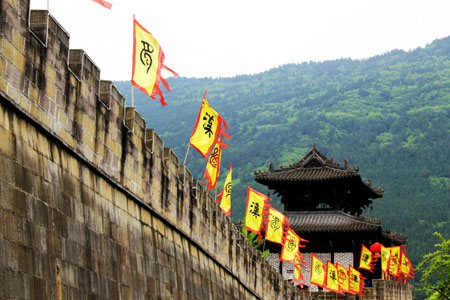
Located approximately 60 kilometers (37 miles) northwest of central Beijing, the Juyongguan Great Wall winds through a dramatic mountain valley in Changping District. Historically one of the most important passes along the Great Wall, Juyongguan served as a vital defensive gateway protecting Beijing from the north.
The present fortifications were largely rebuilt and strengthened during the Ming Dynasty (1368–1644), although the pass has a much longer history. Juyongguan is connected with the Badaling section farther north and is distinguished by its imposing fortified pass, surrounded by steep mountains on both sides.
The Juyongguan Pass extends for more than 4 kilometers (2.5 miles) around the valley. Its strategic position allowed armies to control movement through this natural mountain corridor. As early as the Jin Dynasty (1115–1234), the area was already renowned for its beautiful landscape of mountains, forests, and seasonal flowers.
The pass has two principal gates, one facing south and the other north. A fortified enclosure outside the southern gate provided additional protection, while an ancient-style street within the pass recreates the atmosphere of a traditional Chinese frontier town.
Yuntai Cloud Platform
One of Juyongguan's most important historical treasures is the Yuntai, or Cloud Platform, located near the center of the pass. Built during the Yuan Dynasty, it originally served as the stone foundation for three white pagodas. The pagodas were later destroyed, leaving the magnificent white-marble platform.
The Yuntai is approximately 9.5 meters (31 feet) high and contains a distinctive arched passage running through its center. Its walls and ceiling are decorated with intricate Buddhist carvings, including images of Buddhas, floral motifs, and the Four Heavenly Kings, traditional Buddhist guardians of the four directions.
Particularly remarkable are the inscriptions carved in six languages, including Sanskrit and Tibetan. They include Buddhist mantras and inscriptions commemorating the construction of the pagodas. These multilingual carvings provide valuable evidence of the cultural and religious exchanges that took place across China and Inner Asia during the Yuan Dynasty.
Because of its exceptional historical, artistic, and cultural significance, the Yuntai was included as part of the Great Wall UNESCO World Heritage Site in 1987.
A Great Wall Destination in Every Season
Juyongguan offers a different experience from the more famous Badaling and Mutianyu sections. Its imposing fortress, ancient architecture, mountain scenery, and surviving Yuan Dynasty stone carvings create a unique combination of military and cultural heritage.
In spring, peach blossoms brighten the surrounding mountains, while autumn brings colorful maple foliage. These seasonal landscapes add to the appeal of Juyongguan and make it an excellent destination for travelers interested in both the history of the Great Wall and the natural beauty of the Beijing mountains.