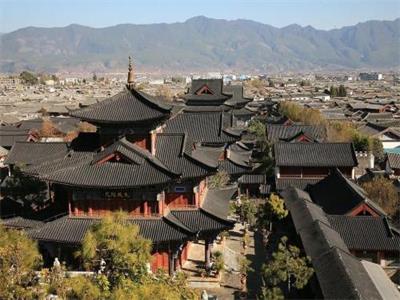
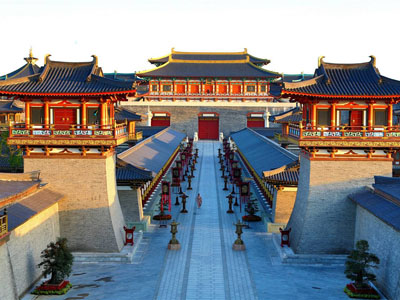
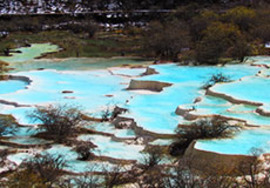
 Jianshui Ancient Town (Jianshui Old City) is one of the best-preserved historical towns in Yunnan Province, China. Located about 220 kilometers south of Kunming, the capital of Yunnan, Jianshui has a history of more than 1,200 years, with its origins dating back to 810 AD during the Tang Dynasty.
The name “Jianshui” is believed to come from the ancient language of the Yi ethnic group, meaning “the sea.” As an important town in southern Yunnan, Jianshui has long been a center of culture, education, trade, and architecture.
With its ancient streets, traditional residences, historic temples, and unique ethnic culture, Jianshui is often regarded as one of the most charming ancient towns in Yunnan.
History and Cultural Heritage of Jianshui
Throughout history, Jianshui developed into an important cultural and educational center in southern Yunnan.
During the Yuan Dynasty, the town began establishing schools inside temples. In the Ming Dynasty, the Lin’an Prefecture School was built, followed by the Shuizhou Confucian School during the reign of Emperor Wanli.
During the Qing Dynasty, four famous academies were successively established:
* Chongzheng Academy
* Huanwen Academy
* Chongwen Academy
* Qujiang Academy
Because of its outstanding educational tradition, Jianshui gained the reputation of:
* “The State of Literature”
* “Zoulu of Southern Yunnan” (a reference to the birthplace of scholars)
During the imperial examination era, Jianshui was famous for producing a large number of successful candidates. The saying “Half of the successful candidates in Yunnan came from Jianshui” reflects the town’s remarkable academic achievements.
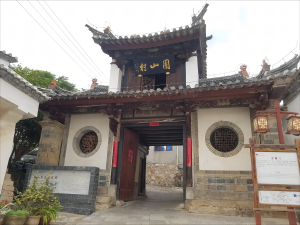 Main Attractions of Jianshui Ancient Town
Zhu Family Garden (Zhu Jia Garden)
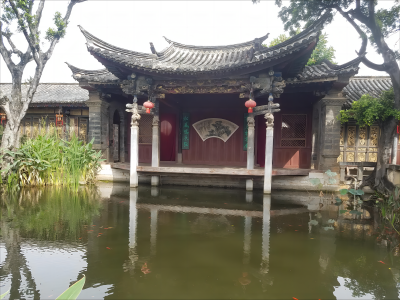
The Zhu Family Garden is the most famous traditional residence in Jianshui and one of the finest examples of Qing Dynasty private gardens in Yunnan.
Built during the reign of Emperor Guangxu of the Qing Dynasty, the garden was constructed by local wealthy merchant and gentry family member Zhu Weiqing.
Covering an area of more than 20,000 square meters, the complex includes over 5,000 square meters of residential buildings.
The architectural layout follows the traditional design of:
“Three vertical sections and four horizontal sections”
The garden features:
* Elegant courtyards
* Carved wooden doors and windows
* Painted beams and decorated roofs
* Beautiful gardens
* Intricate architectural details
The buildings are arranged like a maze, with changing views and rich spatial layers. This unique design combines the characteristics of traditional Chinese courtyard houses, southern Chinese garden aesthetics, and border-region cultural influences.
Today, Zhu Family Garden is considered a masterpiece of traditional residential architecture and an important cultural attraction in Yunnan.
Zhang Family Garden (Zhang Jia Garden)
Located in Tuanshan Village, about 13 kilometers west of Jianshui Old Town, the Zhang Family Garden is another outstanding example of traditional residential architecture.
Built during the late Qing Dynasty, the garden covers more than 10,000 square meters and was originally the private residence of the Zhang family.
Although its scale is slightly smaller than Zhu Family Garden, many experts consider Zhang Family Garden superior in terms of:
* Preservation quality
* Construction craftsmanship
* Historical authenticity
* Cultural value
Unlike Zhu Family Garden, which has become a museum, Zhang Family Garden still functions as a living residential area. Several local families continue to live in different courtyards.
The most impressive features are the delicate wooden carvings on doors and windows. Some carvings are even considered more refined than those found in Zhu Family Garden and are comparable to famous Huizhou-style architecture in Anhui Province.
Chaoyang Tower (Chaoyang Building)
Chaoyang Tower is one of the most iconic landmarks of Jianshui Ancient Town.
Built in 1389 during the Ming Dynasty, the tower has stood for more than 600 years despite wars, earthquakes, and historical changes.
The magnificent wooden structure represents the long history of Jianshui and symbolizes the importance of this ancient town as a strategic center in southern Yunnan.
With its traditional architectural style and historical significance, Chaoyang Tower is often considered the “symbol of Jianshui.”
Shuanglong Bridge (Double Dragon Bridge)
The famous Shuanglong Bridge is a historic stone arch bridge located about 5 kilometers west of Jianshui, where the Lushui River and Tachun River meet.
The bridge was named “Shuanglong” (“Double Dragon”) because the two rivers resemble two winding dragons flowing beneath it.
Built with:
* Seventeen stone arches
* Two elegant pavilions
* Traditional Chinese bridge architecture
Shuanglong Bridge is one of the most beautiful ancient bridges in Yunnan and a remarkable example of traditional Chinese engineering.
The combination of the bridge, surrounding countryside, and river landscape creates a picturesque scene that has attracted photographers and travelers for generations.
Why Visit Jianshui Ancient Town?
Jianshui offers travelers a rare opportunity to experience authentic traditional China through:
* Over 1,200 years of history
* Well-preserved ancient architecture
* Traditional Chinese courtyard houses
* Confucian educational heritage
* Ethnic culture of southern Yunnan
* Beautiful rural landscapes
Unlike many commercialized ancient towns, Jianshui maintains its original atmosphere, where historic buildings, local communities, and traditional lifestyles continue to exist together.
For travelers exploring Yunnan’s cultural routes, Jianshui Ancient Town is an essential destination that reveals the deep history and architectural beauty of southwest China.