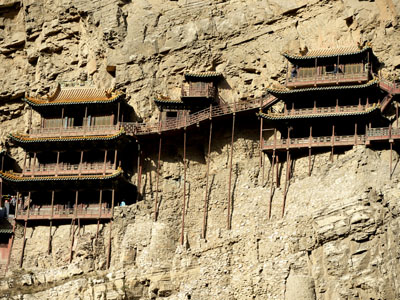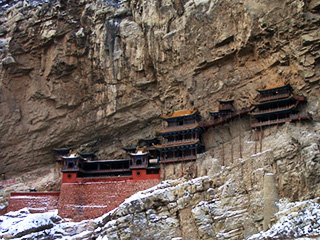
The Hanging Temple (悬空寺, Xuankong Temple), also known as the Hanging Monastery, is one of the most extraordinary ancient architectural wonders in China. Built directly into a steep cliff near Mount Heng in Hunyuan County, Datong City, Shanxi Province, the temple stands about 75 meters (246 feet) above the ground, creating a breathtaking sight that appears to float on the mountainside.
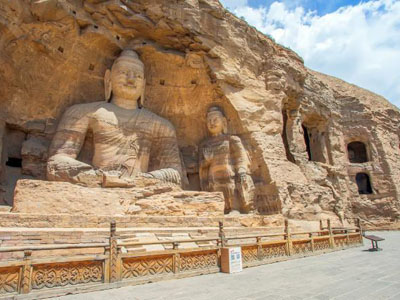
Located approximately 64 kilometers northwest of Datong, the Hanging Temple is one of the city’s most famous historical attractions, together with the renowned Yungang Grottoes. With a history of more than 1,500 years, the temple is admired not only for its dramatic location but also for its unique combination of Buddhism, Taoism, and Confucianism.
A Masterpiece of Ancient Cliffside Architecture
The Hanging Temple was first constructed during the Northern Wei Dynasty (386–534 AD) and has undergone several repairs and restorations throughout history. The temple complex consists of halls, corridors, and chambers connected by wooden walkways, all carefully built along the cliff face.
The structure is supported by wooden beams inserted deep into holes carved into the rock. Many of the supporting elements are hidden inside the cliff, creating the illusion that the entire monastery is suspended in the air.
The temple’s unique location also provides natural protection. The surrounding mountains shield it from heavy rainfall, snow, and direct sunlight, helping preserve the colorful paintings and architectural details inside the monastery.
The Only Temple Combining Three Chinese Religions
One of the most remarkable features of the Hanging Temple is that it is the only existing ancient temple in China that integrates the three traditional Chinese philosophies and religions:
* Buddhism
* Taoism
* Confucianism
Inside the temple, visitors can find statues and halls representing figures from all three traditions. This unusual combination reflects the historical coexistence and interaction of different belief systems in Chinese culture.
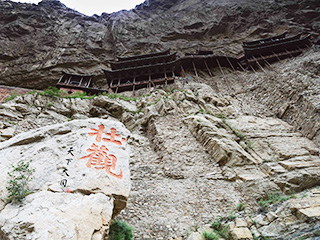 Why Was the Hanging Temple Built on a Cliff?
The unusual location of the Hanging Temple was carefully chosen for both practical and spiritual reasons.
Protection from Natural Elements
Building the monastery on the cliff helped protect it from flooding, while the mountain walls reduced exposure to rain, snow, and strong sunlight. This design allowed the wooden structure and artwork to survive for more than a millennium.
Pursuit of Peace and Harmony
According to Taoist ideas, a quiet environment away from the noise of daily life was ideal for spiritual practice. The elevated location reduced sounds from the outside world, creating a peaceful atmosphere for meditation and worship.
A Remarkable Ancient Wonder
The Hanging Temple is considered one of China’s most unusual architectural achievements. Its combination of engineering skill, religious harmony, and dramatic natural surroundings continues to impress visitors from around the world.
In 2010, the Hanging Temple was included by TIME magazine among the world’s top ten most extraordinary and dangerous buildings, highlighting its unique design and remarkable cliffside construction.
Visiting Hanging Temple
For travelers exploring Datong and Shanxi Province, the Hanging Temple is a must-visit destination. Along with the Yungang Grottoes, it offers a fascinating glimpse into China’s ancient history, religious traditions, and architectural ingenuity.