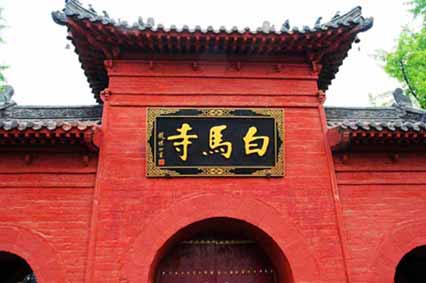
Located about 10 kilometers (7 miles) east of Luoyang City, Henan Province, White Horse Temple (Baima Temple) is regarded as the first Buddhist temple in China and is one of the most important Buddhist cultural sites in the country.
With a history of more than 1,900 years, the temple is often honored as the “Cradle of Chinese Buddhism” and the “Founder’s Home” because of its important role in introducing Buddhism to China and spreading Buddhist teachings throughout East Asia.
The Origin of White Horse Temple
The history of White Horse Temple dates back to the Eastern Han Dynasty (25–220 AD).
According to historical records, in 64 AD, Emperor Ming of the Eastern Han Dynasty sent a delegation to the western regions to learn about Buddhism. After several years, the delegation returned to China accompanied by two respected Indian monks:
* She Moteng (Kasyapa Matanga)
* Zhu Falan (Dharmaratna)
They brought Buddhist scriptures and statues carried by a white horse, marking the first official introduction of Buddhism into China.
To show his respect and gratitude to the two monks and the white horse that carried the Buddhist teachings, Emperor Ming ordered the construction of a monastery in the following year and named it White Horse Temple.
The two monks later translated Buddhist scriptures at the temple, including the famous “Forty-two Chapter Sutra”, one of the earliest Buddhist texts translated into Chinese. As more monks came to study and practice Buddhism here, White Horse Temple gradually became the center of Buddhist activities in ancient China.
Ancient Architecture and Peaceful Temple Environment
Surrounded by ancient trees, White Horse Temple creates a peaceful and solemn atmosphere away from the busy city. The temple complex preserves traditional Chinese Buddhist architecture and offers visitors a chance to experience the spiritual atmosphere of ancient China.
Outside the temple entrance, visitors can see a peaceful pool surrounded by fences. According to Buddhist tradition, this area is used for animal release ceremonies, symbolizing compassion and respect for life.
After crossing the stone bridge over the pool, visitors enter the main temple area.
Near the entrance are the tombs of She Moteng and Zhu Falan, which are considered among the most important historical sites within the temple complex.
In the eastern corner of the temple stands a Tablet Pavilion, featuring inscriptions written by the famous Yuan Dynasty (1271–1368) calligrapher and Buddhist monk Shamen Wencai. The elegant calligraphy records the history and significance of White Horse Temple.
Main Halls of White Horse Temple
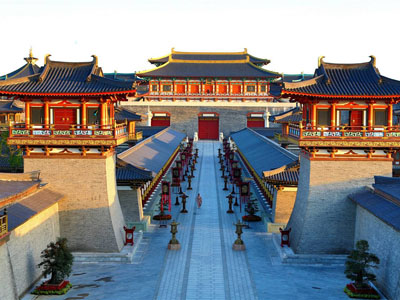
White Horse Temple is famous for its well-preserved ancient Buddhist architecture. The layout of the temple has remained largely unchanged for centuries, reflecting traditional Chinese temple design.
The main structures include:
Hall of Heavenly Kings
The first major hall after entering the temple, dedicated to the Four Heavenly Kings who protect Buddhist teachings.
Hall of the Great Buddha
A sacred hall housing Buddhist statues and used for religious ceremonies.
Hall of Mahavira
The central and most important hall of the temple, where major Buddhist rituals are held.
Hall of Guidance
A hall dedicated to Buddhist figures associated with guiding believers toward spiritual enlightenment.
Cool and Clear Terrace (Qingliang Terrace)
A historic platform connected with Buddhist scripture translation activities and the early development of Buddhism in China.
Together, these halls preserve the architectural style and religious traditions that have continued for nearly two thousand years.
Visiting White Horse Temple in Luoyang
As the birthplace of Buddhism in China, White Horse Temple Luoyang is an essential destination for travelers interested in Chinese history, religion, architecture, and cultural heritage.
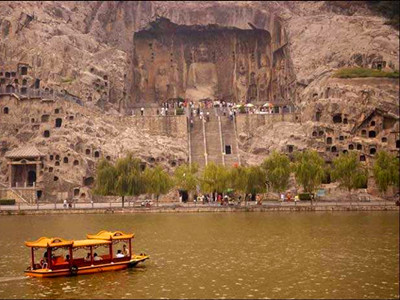
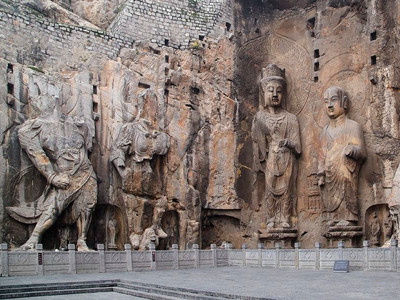
Along with other famous Luoyang attractions such as Longmen Grottoes, Guanlin Temple, and Luoyang Museum, White Horse Temple offers visitors a deeper understanding of China’s ancient civilization and spiritual traditions.