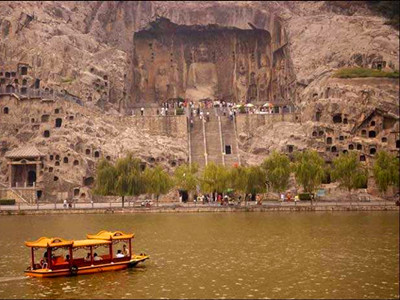
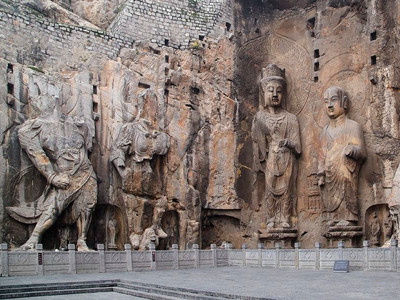
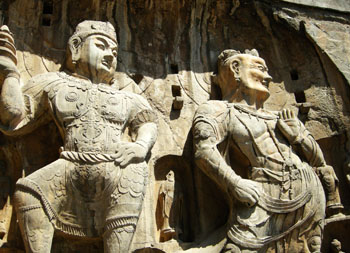
 Located approximately 13 kilometers south of Luoyang City, Henan Province, the Longmen Grottoes are among the most magnificent ancient Buddhist cave complexes in China.
Carved into the cliffs on both sides of the Yi River, the grottoes extend for about one kilometer and represent the peak of Chinese Buddhist art from the Northern Wei Dynasty (386–534) to the Tang Dynasty (618–907).
Construction began around 493 AD during the reign of the Northern Wei Dynasty and continued for more than 400 years through several dynastic periods. Today, Longmen Grottoes stand as one of China’s most important cultural treasures and a remarkable record of ancient religion, art, architecture, and social development.
In recognition of its outstanding historical and artistic value, Longmen Grottoes was listed as a UNESCO World Heritage Site in 2000.
A Treasure House of Buddhist Art
The Longmen Grottoes contain an extraordinary collection of Buddhist sculptures and inscriptions, including:
* 2,345 caves and niches
* More than 100,000 statues of Buddhas, Bodhisattvas, and Arhats
* Approximately 2,840 inscribed stone tablets
* More than 60 stone stupas
Many sculptures can be accurately dated, providing valuable evidence for studying the development of Chinese Buddhist sculpture.
Among the most famous caves and temples are:
* Guyang Cave – One of the earliest caves of Longmen, famous for its Northern Wei inscriptions
* Binyang Cave – A representative work showing the transition of Buddhist sculpture styles
* Lotus Cave (Lianhua Cave) – Known for its beautiful lotus carving from the Northern Wei period
* Qianxi Temple – Famous for its elegant Tang Dynasty sculptures
* Cave of Ten Thousand Buddhas (Wanfuo Cave) – Featuring thousands of Buddhist figures
* Fengxian Temple – Home to the iconic Vairocana Buddha statue
* Kanjing Temple – A significant site featuring Tang Dynasty Buddhist art
Cultural Heritage of Longmen Grottoes
The caves and niches of Longmen preserve the largest and most impressive collection of Chinese stone Buddhist art from the late Northern Wei Dynasty to the Tang Dynasty.
Beyond religious sculptures, the grottoes provide valuable information about many aspects of ancient Chinese civilization, including:
* Buddhism and religious practices
* Painting and sculpture techniques
* Chinese calligraphy
* Music and performance culture
* Traditional clothing styles
* Medicine and social customs
* Ancient construction methods
* International cultural exchanges
The site serves as a remarkable historical archive, allowing visitors to understand the cultural achievements of ancient China.
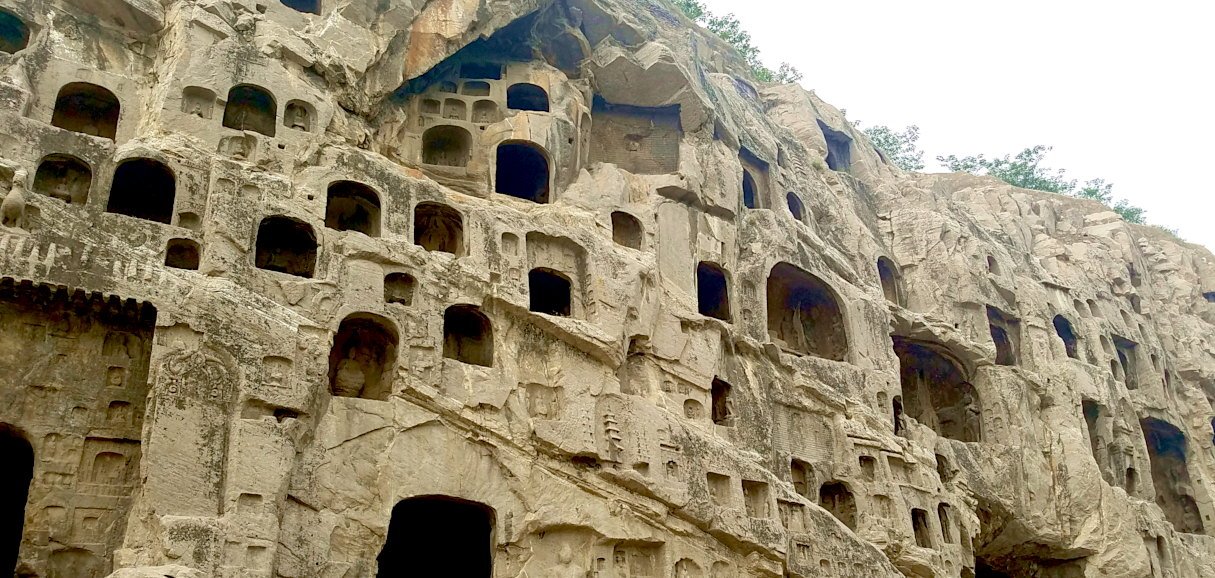 The Artistic Achievement of Longmen Sculptures
The sculptures at Longmen Grottoes represent a unique combination of Buddhist traditions and Chinese artistic expression.
Although Buddhist concepts originated in India, Chinese artisans gradually developed their own distinctive style. The sculptures demonstrate outstanding achievements in:
* Facial expressions
* Clothing design
* Body proportions
* Carving techniques
* Artistic realism
The 11 Buddha statues in Binyang Cave are excellent examples of Northern Wei sculpture. They demonstrate the artistic transition from the simple and powerful style of the Yungang Grottoes in Datong, Shanxi Province, to the more naturalistic and elegant style of Tang Dynasty Buddhist art.
The Famous Vairocana Buddha at Fengxian Temple
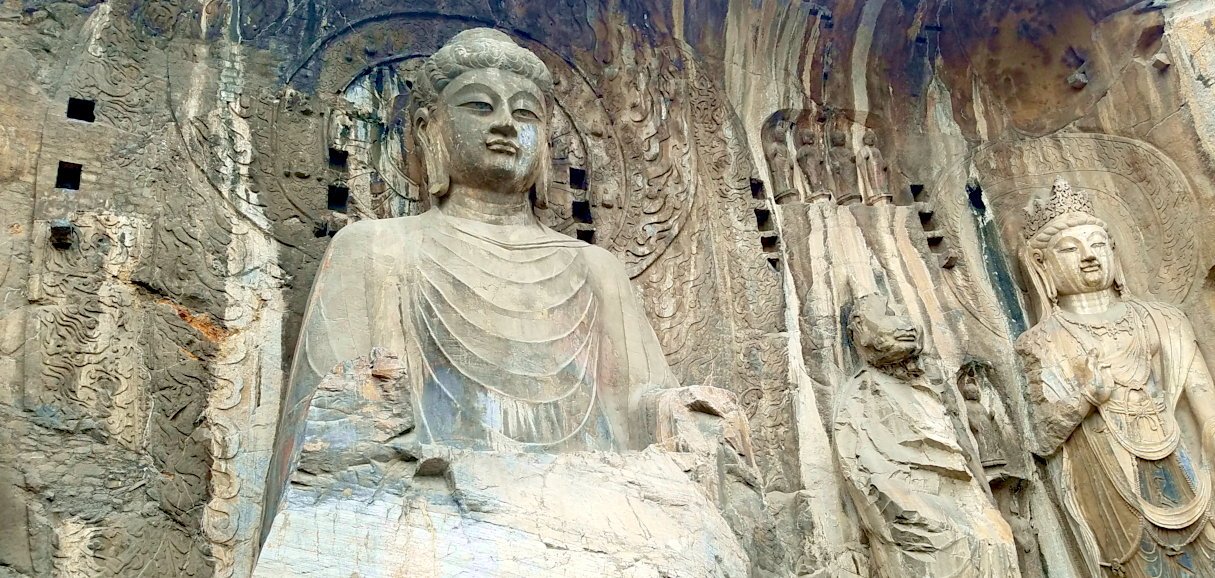
The most iconic masterpiece of Longmen Grottoes is the Vairocana Buddha statue at Fengxian Temple.
Standing 17.14 meters high, the statue represents the Buddha of Great Enlightenment and is considered the finest example of Tang Dynasty Buddhist sculpture.
The statue features:
* A peaceful and majestic expression
* Delicate facial details
* Balanced proportions
* Extraordinary carving techniques
It is widely regarded as the masterpiece of Chinese Buddhist sculpture and a symbol of the artistic brilliance of the Tang Dynasty.
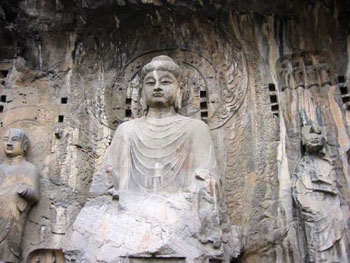 Advanced Sculpture Techniques and Artistic Innovation
Ancient craftsmen at Longmen developed highly sophisticated techniques to enhance realism and artistic expression.
For large statues, artisans adjusted the proportions of the figures by enlarging the heads to avoid visual distortion when viewed from below.
The sculptures also incorporated artistic influences from different cultures, including:
* Indian methods of shaping the nose bridge
* Western influences in depicting the eyes
* The use of materials such as glass to enhance visual effects
These innovations demonstrate the openness and creativity of ancient Chinese art during the Silk Road era.
Longmen Grottoes and Chinese Calligraphy
In addition to its sculptures, Longmen Grottoes are famous for their outstanding collection of ancient Chinese calligraphy.
Thousands of inscriptions and memorial texts were carved onto the cave walls and stone surfaces. These writings record historical events, religious beliefs, and the creation of Buddhist statues.
Among them, the Twenty Calligraphic Treasures of Longmen (Longmen Ershi Pin) are considered masterpieces of the Wei Stele Style (Weibeiti), an important stage in the development of Chinese calligraphy.
The inscriptions feature:
* Powerful brush-like strokes
* Strong structure
* Balanced composition
* Deep artistic expression
They have been admired and studied by generations of Chinese calligraphy enthusiasts.
Visiting Longmen Grottoes in Luoyang
The Longmen Grottoes offer visitors a unique opportunity to explore the artistic achievements, religious traditions, and cultural exchanges of ancient China.
As one of the most important historical attractions in Henan Province, Longmen Grottoes is a must-see destination for travelers interested in:
* Chinese history
* Buddhist culture
* Ancient sculpture
* UNESCO World Heritage Sites
* Silk Road civilization
A visit to Longmen Grottoes provides an unforgettable journey into the golden age of Chinese art and civilization.
Related Tours
Longmen Grottoes one day tour
Dazu Rock Carvings one day tour
Buddhism Pilgrimage Tour
China Festival Tours
China Daoism Sacred Mountain Pilgrim
Tibet Tours
Mt. Emeishan Hiking Exploration
Fixed Overland tour from Kyrghyzstan to Laos in 2015
2015 China Overland Tour of Self driving From Laos To Mongolia by Own Vehicle
18 Days Ancient China Culture Tours
28 Days All China Around Exploration