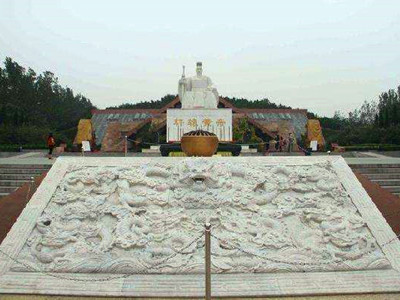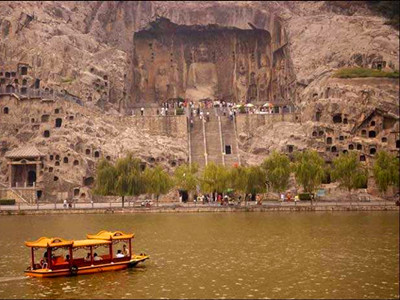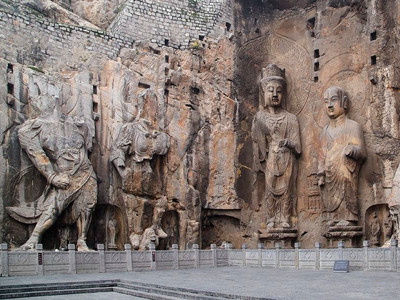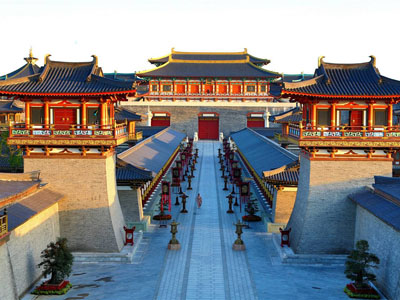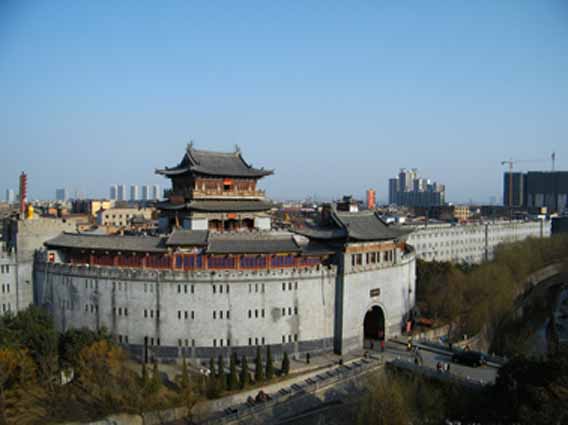
Located in Luoyang City, Henan Province, Dingding Gate (Dingdingmen) was the main entrance of the southern outer city wall of Luoyang during the Sui and Tang Dynasties (581–907). Situated on the central axis of ancient Luoyang City, it was one of the most important city gates in Chinese history.
Today, the Dingding Gate Relic Site of Luoyang City from the Sui and Tang Dynasties is recognized as part of the UNESCO World Heritage Site “Silk Roads: the Routes Network of Chang’an-Tianshan Corridor”, highlighting its historical importance as a center of politics, culture, and international exchange.
History of Dingding Gate
The history of Dingding Gate dates back to the Sui Dynasty (581–618) when Emperor Yang of Sui built Luoyang as the eastern capital of the empire.
Originally known as Jianguo Gate, the gate was renamed Dingding Gate during the Tang Dynasty (618–907). Emperor Yang of Sui, who moved to the newly constructed Luoyang capital, became the first emperor to pass through this grand city entrance.
After that, Dingding Gate continued to serve as the main southern entrance to Luoyang’s outer city wall through several important dynasties, including:
* Tang Dynasty (618–907)
* Later Liang Dynasty (907–923)
* Later Tang Dynasty (923–936)
* Later Zhou Dynasty (951–960)
* Northern Song Dynasty (960–1127)
The gate gradually fell into disuse during the late Northern Song Dynasty as the city’s political importance declined.
The Longest-Serving Capital City Gate in Ancient China
Dingding Gate served as the main entrance of Luoyang’s southern outer city wall for approximately 530 years, making it the longest-serving city gate used as an entrance to an ancient Chinese capital.
Its long history reflects the importance of Luoyang as one of China’s most influential ancient capitals and a major center of political power, culture, and trade.
During the Sui and Tang Dynasties, Luoyang was connected with the wider world through the ancient Silk Road and played a crucial role in cultural exchanges between China and other regions of Asia.
Dingding Gate and the UNESCO Silk Road Heritage Site
In June 2014, the UNESCO World Heritage Committee approved the joint application submitted by China, Kazakhstan, and Kyrgyzstan for the “Silk Roads: the Routes Network of Chang’an-Tianshan Corridor.”
The Dingding Gate Relic Site of Luoyang City from the Sui and Tang Dynasties was included as one of the important heritage sites along this historic corridor in China.
The site represents the prosperity of ancient Luoyang and its role as a major starting point and cultural hub along the Silk Road network.
Visiting Dingding Gate in Luoyang
Today, visitors can explore the restored Dingding Gate site and learn about the magnificent layout of ancient Luoyang City. The site provides a fascinating glimpse into the urban planning, architecture, and international connections of China’s golden age.
For travelers interested in Chinese history, ancient capitals, UNESCO World Heritage Sites, and Silk Road culture, Dingding Gate is an important stop during a Luoyang tour.