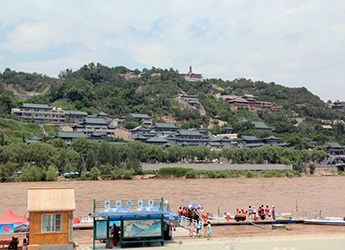
 Located on the north bank of the Yellow River in Lanzhou, Gansu Province, the White Pagoda (Baita) is one of the city’s most iconic historical landmarks. Standing on Baita Mountain, the pagoda overlooks the Yellow River and has become a symbol of Lanzhou’s long history, Buddhist culture, and traditional Chinese architecture.
Originally built during the Yuan Dynasty (1271–1368), the present structure was reconstructed between 1450 and 1456 during the Ming Dynasty (1368–1644). With its unique architectural design and beautiful riverside setting, the White Pagoda is one of the most popular cultural attractions in Lanzhou.
History of White Pagoda
According to historical records, the original White Pagoda was built during the Yuan Dynasty to commemorate a Tibetan Buddhist monk who helped strengthen cultural exchanges between the Mongol Empire and Tibet.
Over the centuries, the pagoda suffered damage from natural disasters and warfare. During the Ming Dynasty, it was rebuilt and restored, creating the structure visitors can see today.
For hundreds of years, the White Pagoda has witnessed the development of Lanzhou as an important city along the Yellow River and the ancient Silk Road.
Unique Architectural Design of White Pagoda
The White Pagoda Lanzhou is famous for its unusual combination of two traditional Chinese pagoda styles:
* The inverted-bowl style
* The multi-storeyed tower style
In most Chinese pagodas that combine these two designs, the lower section is usually multi-storeyed while the upper section has an inverted-bowl shape.
However, the White Pagoda follows the opposite arrangement:
* The lower section features a large inverted-bowl structure
* The upper section consists of multiple storeys
This rare architectural style makes the White Pagoda an outstanding example in the history of Chinese Buddhist architecture.
Structure and Features of White Pagoda
The pagoda stands approximately 17 meters high and has an elegant and distinctive appearance.
Its structure includes:
* A square foundation
* A large Sumeru pedestal commonly seen in Buddhist architecture
* A hemispherical inverted-bowl-shaped lower section
* A multi-level upper tower
The combination of balanced proportions, smooth curves, and delicate details demonstrates the craftsmanship of ancient Chinese builders.
The white exterior of the pagoda creates a striking contrast with the surrounding green mountains and the flowing Yellow River, making it a beautiful place for sightseeing and photography.
White Pagoda and Baita Mountain
The White Pagoda is located inside Baita Mountain Park, one of Lanzhou’s best viewpoints.
Visitors can enjoy:
* Panoramic views of Lanzhou city
* Views of the Yellow River
* Traditional temple architecture
* Peaceful mountain scenery
The nearby Zhongshan Bridge, one of China’s earliest modern iron bridges over the Yellow River, is also located close to the White Pagoda and is often visited together.
Visiting White Pagoda Lanzhou
Location
North bank of the Yellow River, Lanzhou City, Gansu Province, China.
Best Time to Visit
The best seasons to visit White Pagoda are:
* Spring (April–May): pleasant weather and green scenery
* Autumn (September–October): clear skies and excellent views of the Yellow River
Sunset is one of the best times to visit, when the pagoda and surrounding landscape are beautifully illuminated.
Why Visit White Pagoda?
The White Pagoda Lanzhou is more than an ancient Buddhist structure. It represents the historical connection between:
* Chinese architecture
* Buddhist culture
* The Yellow River civilization
* The ancient Silk Road
With its rare architectural style, long history, and spectacular riverside location, White Pagoda is a must-see attraction for travelers exploring Lanzhou and Gansu Province.
Lanzhou Tour Routes and Packages:
1. Bingling Temple One Day Tour
2. Two-day Lanzhou & Tianshui Tour
3. Xiahe Labrang Monastery Two Days Tour