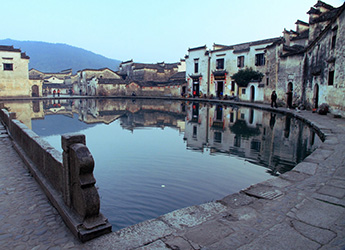
Located at the southwestern foot of Mount Huangshan (Yellow Mountain) in Anhui Province, Hongcun Village is one of China’s most beautiful and well-preserved ancient villages. It is only about 11 kilometers from Yixian County, covering an area of approximately 30 hectares.
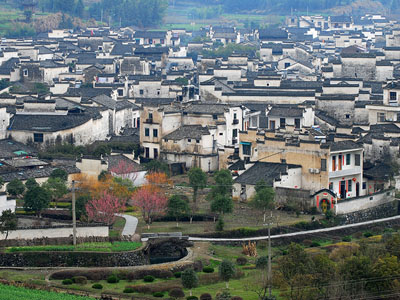
Known as a unique “buffalo-shaped village”, Hongcun is famous for its carefully planned layout, traditional Hui-style architecture, ancient water system, and peaceful rural scenery. With its white-walled houses, black-tiled roofs, green mountains, and clear streams, Hongcun has earned the reputation of being “a village in a Chinese painting.”
Hongcun Village – A Remarkable Buffalo-Shaped Ancient Settlement
The unique design of Hongcun dates back more than 900 years to the Song Dynasty. At that time, local residents created an ingenious irrigation system that connected almost every household in the village.
The waterways were originally designed to provide daily washing water and a reliable water source for fire prevention. The entire village layout was inspired by the shape of a buffalo:
* Nanhu Lake represents the buffalo’s belly.
* Moon Pond (Yuezhao) represents the stomach.
* The waterways represent the buffalo’s intestines.
* The surrounding landscape forms the body and legs of the buffalo.
This creative combination of architecture, water management, and natural surroundings makes Hongcun one of the most remarkable examples of traditional Chinese village planning.
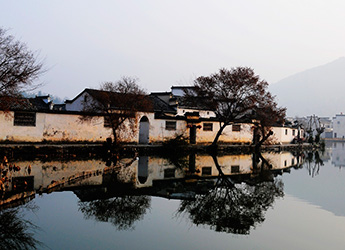 Hui-Style Architecture and Ancient Residences of Hongcun
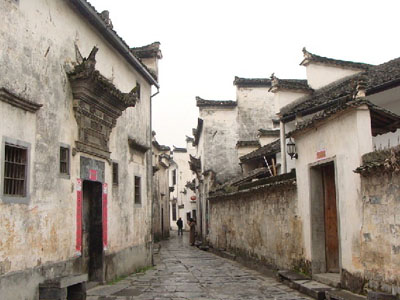
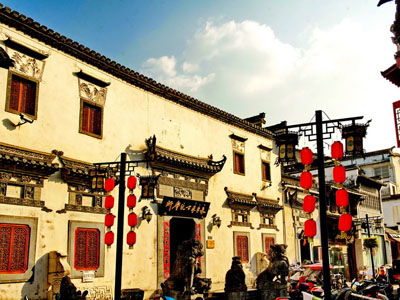
The buildings of Hongcun follow the traditional Hui-style architectural style, featuring elegant courtyards, white walls, black tiled roofs, and exquisite carvings.
The wooden, brick, and stone decorations demonstrate the outstanding craftsmanship of ancient Chinese builders. Many residences are decorated with delicate carvings depicting traditional stories, flowers, animals, and cultural symbols.
Among the village’s historic buildings, Chengzhi Hall is one of the most famous. This magnificent residential complex contains:
* Two main living halls
* A Buddhist worship area
* Entertainment rooms
* Beautifully decorated courtyards
Because of its scale, artistic design, and historical value, Chengzhi Hall is often called the “Residence Museum.”
Hongcun Village – A Scenic Masterpiece of Chinese Countryside
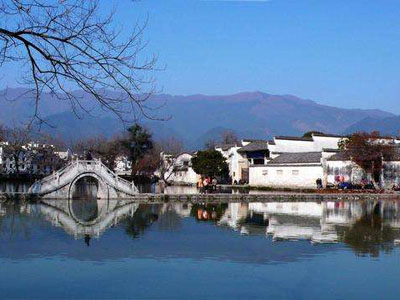
Hongcun offers a perfect combination of traditional architecture and natural beauty. The simple yet elegant village scenery blends ancient houses, green mountains, peaceful streams, and clear ponds into a harmonious landscape.
The reflections of historic buildings in Moon Pond and Nanhu Lake create a picturesque scene that has inspired countless artists and photographers.
Today, Hongcun preserves 158 ancient residential buildings from the Ming and Qing dynasties, dating back approximately 300–400 years. Nearly 140 of these historic houses remain well preserved, allowing visitors to experience the lifestyle and culture of ancient Huizhou communities.
UNESCO World Heritage Site and Film Location
Because of its outstanding cultural value and unique village design, Hongcun Village was added to the UNESCO World Heritage List in 2000, together with nearby Xidi Village.
The village has also gained international recognition as a filming location for the award-winning movie “Crouching Tiger, Hidden Dragon.” Its ancient streets, traditional houses, and beautiful landscapes provided a perfect setting for the film’s historical atmosphere.
Why Visit Hongcun Village?
Hongcun Village is one of the best destinations in China for travelers seeking traditional culture, ancient architecture, and authentic rural landscapes.
Walking through its stone lanes, visitors can admire centuries-old houses, explore the unique water system, enjoy peaceful countryside scenery, and discover the artistic spirit of Huizhou culture.
For travelers visiting Huangshan Mountain, Hongcun Village is an unmissable cultural attraction and the perfect complement to the spectacular natural scenery of Yellow Mountain.