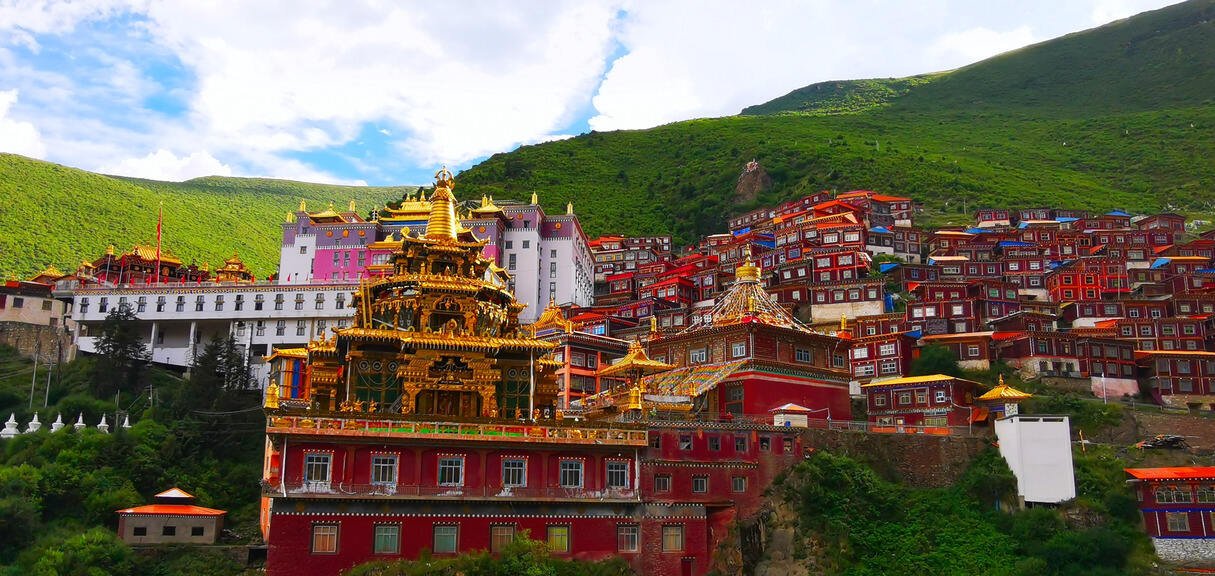
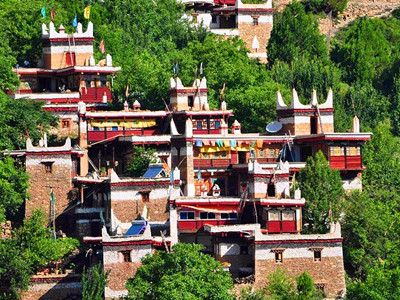
Nestled deep within the mountains of Baiyu County in the Ganzi Tibetan Autonomous Prefecture of Sichuan Province, Gartok Monastery (also known as Katok Monastery or Gato Monastery) is one of the oldest, largest, and most influential monasteries of the Nyingma School (Red Sect) of Tibetan Buddhism. Located on the slopes of Doni Mountain in the scenic Bailong Valley, approximately 51 kilometers north of Baiyu County, the monastery is surrounded by pristine forests, snow-capped peaks, and the dramatic landscapes of the eastern Tibetan Plateau.
Founded more than 860 years ago, Gartok Monastery is recognized as one of the Six Great Nyingma Monasteries in Tibet and has played a pivotal role in the development of Tibetan Buddhism throughout the Kham region. Its rich religious heritage, magnificent Tibetan architecture, invaluable cultural relics, and profound spiritual atmosphere make it one of western China’s most remarkable cultural and pilgrimage destinations.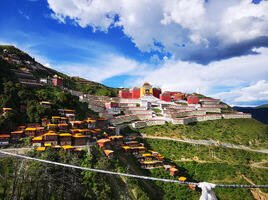
A Sacred Center of the Nyingma School
Established in 1159 AD by the renowned Nyingma master Gyal Dampa Delek, Gartok Monastery has remained one of the most important centers for the study, practice, and preservation of Nyingma Buddhism for centuries.
Today, the monastery oversees a vast religious network of more than 140 branch monasteries across Tibet, Qinghai, Sichuan, Yunnan, as well as Bhutan, India, and Mongolia, highlighting its enduring influence throughout the Himalayan Buddhist world.
For generations, Gartok has attracted monks, scholars, and pilgrims seeking advanced Buddhist education, meditation, and religious training.
Magnificent Tibetan Architecture
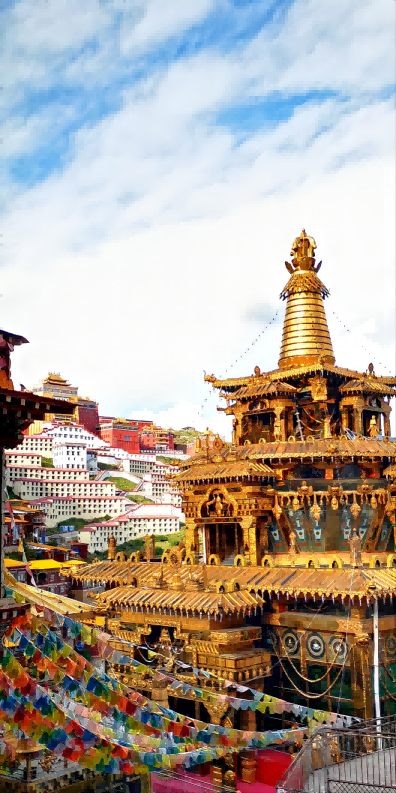
The monastery is renowned for its impressive Tibetan architectural style. Its most iconic structure is the Great Golden Hall, a magnificent temple covering approximately 600 square meters.
Featuring soaring golden roofs, richly decorated wooden columns, colorful murals, elaborate Tibetan carvings, and intricately painted eaves, the hall showcases the finest craftsmanship of traditional Tibetan architecture.
Within the monastery stands a beautifully gilded bronze stupa adorned with precious ornaments and imperial gifts known as Kadang, reflecting the monastery’s historical connections with China’s imperial courts.
Remarkable Cultural Treasures
Gartok Monastery preserves an extraordinary collection of historical relics that span centuries of Tibetan history.
Among its most valuable treasures are:
* Ancient weapons and artifacts associated with the legendary King Gesar, including bows, arrows, swords, helmets, and bronze vessels.
* Rare embroidered images of Padmasambhava (Guru Rinpoche) dating back to the Yuan Dynasty.
* Four official seals presented to the monastery by the renowned imperial preceptor Phagpa.
* Ming Dynasty statues of Manjushri Bodhisattva.
* Qing Dynasty porcelain bowls and important Buddhist scriptures.
* A vast collection of rare woodblock-printed Buddhist texts and commentaries.
These invaluable relics provide exceptional insight into Tibetan Buddhism, Himalayan art, and the cultural history of the eastern Tibetan Plateau.
 A Monastery Favored by Emperors
Throughout its long history, Gartok Monastery received generous support from both regional rulers and Chinese emperors.
During the Qing Dynasty, Emperor Kangxi invited an eminent Gartok lama to Beijing and personally bestowed ceremonial crowns, sedan chairs, ritual instruments, and other imperial gifts upon the monastery.
Under successive abbots, the monastery underwent repeated expansions, becoming one of the largest and most prestigious religious centers in Kham. At its height, thousands of pilgrims from Yunnan, Aba, Batang, Kangding, and other regions gathered here for important religious festivals and ceremonies.
A Historic Center of Buddhist Scholarship
Gartok Monastery has long been celebrated as one of Tibet’s foremost centers of Buddhist learning.
During the 18th century, the distinguished scholar Geze Nyima Wengchuk earned the prestigious title of Pandita (Doctor of Buddhist Philosophy) after winning major philosophical debates in Lhasa. Under his leadership, the monastery established an influential printing academy dedicated to preserving Buddhist scriptures.
The monastery eventually accumulated more than 7,000 woodblocks and volumes, making it one of the largest traditional Tibetan printing centers between Kham and Central Tibet. Scholars produced annotated editions of Buddhist scriptures, philosophical treatises, and religious commentaries that continue to influence Tibetan Buddhism today.
King Gesar Culture
Beyond its importance in Tibetan Buddhism, Gartok Monastery is closely associated with the legendary King Gesar, the heroic figure of the world’s longest epic poem.
The monastery preserves numerous relics connected with Gesar culture and continues to play an important role in protecting the oral traditions, folklore, and artistic heritage surrounding this legendary Tibetan hero.
For researchers and visitors interested in Tibetan history and mythology, Gartok offers an exceptional cultural experience.
Things to Do at Gartok Monastery
Visitors can enjoy a variety of cultural and spiritual experiences, including:
* Explore one of the Six Great Nyingma Monasteries
* Admire magnificent Tibetan Buddhist architecture
* Discover priceless Buddhist relics and historical artifacts
* Learn about the history of the Nyingma School
* Experience authentic Tibetan religious ceremonies (during festival periods)
* Appreciate traditional Tibetan murals, wood carvings, and sacred art
* Discover the legacy of King Gesar culture
* Photograph the spectacular mountain scenery surrounding the monastery
Best Time to Visit
The best time to visit Gartok Monastery is from May to October, when the weather is mild and mountain roads are most accessible.
Summer and early autumn offer pleasant temperatures, lush alpine scenery, and opportunities to experience traditional Tibetan festivals and religious ceremonies.
Why Visit Gartok Monastery?
As one of the Six Great Nyingma Monasteries and one of the most influential Buddhist institutions in eastern Tibet, Gartok Monastery offers an extraordinary combination of spiritual heritage, ancient architecture, priceless cultural relics, and breathtaking Himalayan scenery.
Whether you are interested in Tibetan Buddhism, religious history, traditional art, or the unique culture of the Tibetan Plateau, Gartok Monastery provides an unforgettable journey into one of China’s most sacred and historically significant destinations.