




search for a Trip
Yangtze and Three Gorge
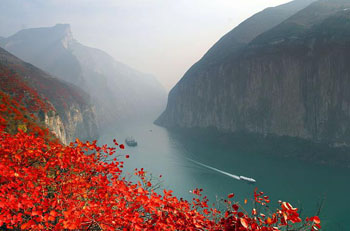 The Yangtze River is one of China’s most important lifelines, flowing for about 3,915 miles (6,300 kilometers) from its source on the Tibetan Plateau to the East China Sea near Shanghai. It is a vast artery supporting millions of people and carrying barges, ferries, cargo ships and smaller boats along its course.
Villages are nestled along the riverbanks, where traditional ways of life can still be seen. In some rural areas, farmers continue to use age-old agricultural methods, including hardworking water buffaloes.
The Three Gorges, located along the middle reaches of the Yangtze River, are among China’s most spectacular natural landscapes. A cruise through the gorges offers an unforgettable journey through verdant mountains and dramatic cliffs, with constantly changing views of graceful slopes, waterfalls, peaks and the winding river.
Yangtze River Cruises
There are many Yangtze River cruises operating between Chongqing and Yichang, with some itineraries extending toward Wuhan and other destinations. Cruises range from simple, budget-friendly vessels to luxurious five-star ships offering comfortable cabins, dining and a wide range of onboard services.
China Exploration Tour provides Yangtze River cruise arrangements for different types of travelers, according to their travel time, preferences and budget. Depending on the itinerary, accommodation can range from shared second-class cabins for budget-conscious travelers to deluxe private rooms on five-star cruise ships.
Three Gorges
The Three Gorges stretch for approximately 200 kilometers along the Yangtze River and are famous for their towering cliffs, dramatic mountains and powerful river currents. For centuries, their magnificent scenery has inspired numerous Chinese poets and writers to create famous poems and literary works.
Today, the landscape of the Three Gorges has been transformed by the construction of the Three Gorges Dam and the resulting rise in the water level. Some areas were submerged, while many historic and scenic sites remain accessible. The spectacular mountain scenery of the gorges can still be enjoyed during a Yangtze River cruise.
Fengdu Ghost City
Fengdu, also known as Fengdu Ghost City, was called Mingdu in ancient times. According to traditional Chinese legends and folk beliefs, it was regarded as a place where the souls of the dead would come to face judgment before entering the underworld.
Numerous temples and religious sites associated with the traditional concept of the afterlife were built here, particularly from the Tang Dynasty onward. Today, Fengdu is a fascinating cultural attraction where visitors can explore ancient architecture, legends and traditional Chinese beliefs surrounding the underworld.
 Shibaozhai
Shibaozhai, also known as the Stone Treasure Fortress, is located on the northern bank of the Yangtze River. The site is dominated by a steep, isolated hill rising beside the river, crowned by a distinctive wooden pagoda.
During the Ming Dynasty, approximately 500 years ago, a 12-story wooden pavilion was built against the hillside. Its remarkable design and construction have made Shibaozhai one of the most distinctive historical attractions along the Yangtze River. It is sometimes described by visitors as a “pearl on the Yangtze River.”
Qutang Gorge
Qutang Gorge is the shortest and narrowest of the Three Gorges, extending for about 8 kilometers from Baidi City toward Daxi. Despite its short length, it is famous for its dramatic scenery, imposing cliffs and narrow river channel.
The river is flanked by steep cliffs and towering peaks, creating one of the most spectacular landscapes along the Yangtze River.
The river is particularly narrow at Kuimen, the eastern entrance to Qutang Gorge. The cliffs on both sides rise like enormous gates, creating the impression of a natural gateway controlling the powerful river. Kuimen has long been regarded as one of the most dramatic and strategically important passes along the Yangtze.
As a cruise ship passes through Kuimen, the towering cliffs and rushing water create an unforgettable experience, with the river appearing to surge forward between the mountains.
Wu Gorge
Wu Gorge is famous for its elegant peaks, steep cliffs and mist-covered mountains. The deep and winding gorge offers beautiful scenery throughout the journey, with changing landscapes appearing around every bend.
The Twelve Peaks of Wushan are among the most spectacular sights in the area. Each peak has a distinctive shape and character: some resemble green screens, some rise into the clouds, while others are covered with ancient pine trees. Among them, Shennv Peak, or Goddess Peak, is particularly famous for its graceful and enchanting appearance.
The landscapes around the Daning River, Xiangxi River and Shennong River add another dimension to the scenery, with green mountains, clear water and a sense of natural beauty. Historic towns such as Wushan, Badong and Zigui are also located in the broader Three Gorges region and are associated with rich history, traditional culture and colorful local customs.
Xiling Gorge
Xiling Gorge extends for approximately 76 kilometers from the Xiangxi River area near Zigui toward Nanjinguan in Yichang. Traditionally known as the most challenging of the Three Gorges, it was once famous for its dangerous rapids, reefs, whirlpools and narrow channels.
Historical descriptions mention a number of difficult sections and shoals, including Qingtan, Xietan and Qingtan Shoal. Before the construction of the Three Gorges Dam and the rise in water levels, navigation through some sections was particularly difficult.
The gorge includes a series of scenic sections, such as Military Books and Precious Sword Gorge, Ox Liver and Horse Lung Gorge, Lantern Shadow Gorge and Yellow Ox Gorge. Today, the higher water level has made navigation considerably easier, allowing modern cruise ships to travel safely through the region.
Lesser Three Gorges
The Lesser Three Gorges are located along the Daning River, one of the major tributaries of the Yangtze River. The river rises in the Dabashan Mountains and eventually joins the Yangtze near Wu Gorge.
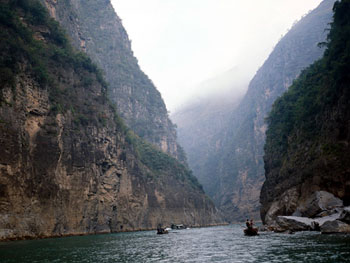
The Lesser Three Gorges generally include Longmen Gorge, Bawu Gorge and Dicui Gorge, stretching for approximately 50 kilometers. The area is known for magnificent mountains, clear water, secluded valleys and unusual rock formations.
Compared with the main Three Gorges, the Lesser Three Gorges offer a more intimate and tranquil landscape. A boat excursion through this area is highly recommended for travelers who want to experience the natural beauty of the Yangtze River more closely.
Three Gorges Dam
The Three Gorges Dam is located at Sandouping in Yichang, Hubei Province. It is one of the world’s largest hydroelectric projects and a major landmark along the Yangtze River.
The project was designed to provide multiple benefits, including flood control, hydroelectric power generation, improved navigation, tourism development and water-resource management. The dam has also significantly changed the landscape and navigation conditions of the Three Gorges region.
The concrete gravity dam is approximately 3,035 meters long at the crest, with the crest elevation at about 185 meters. The reservoir has a designed normal water level of 175 meters and a total storage capacity of approximately 39.3 billion cubic meters.
The project’s powerhouses contain 34 generating units in total, including large units with a combined installed generating capacity of 22.5 million kW. The Three Gorges Hydropower Station is therefore one of the world’s largest hydropower facilities.
The navigation facilities were designed to greatly improve shipping capacity along the Yangtze River. The ship locks allow large vessels to pass through the dam, making the river more navigable and facilitating transportation between inland China and the lower reaches of the Yangtze.
The construction of the Three Gorges Project took many years and required the relocation of a large number of residents from areas affected by the reservoir. Today, the dam is not only an important engineering achievement but also a major attraction for visitors traveling along the Yangtze River.
Related Tours:
China Attractions Guide
- Anhui Attractions
- Beijing Attractions
- Chongqing Attractions
- Fujian Attractions
- Gansu Attractions
- Guangdong Attractions
- Guangxi Attractions
- Guizhou Attractions
- Hainan Attractions
- Henan Attractions
- Hongkong Attractions
- Hubei Attractions
- Hunan Attractions
- Heilongjiang Attractions
- Inner Mongolia Attractions
- Jiangsu Attractions
- Jilin Attractions
- Jiangxi Attractions
- Liaoning Attractions
- Manchuria Attractions

