




search for a Trip
Kailash - Tibet Sacred Mountain
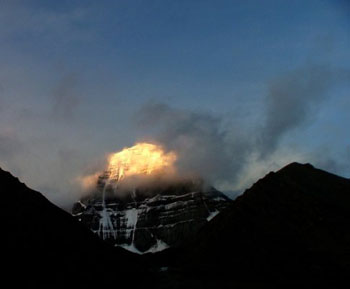 Located in the far west of Tibet, Mount Kailash (Kangrinboqe Peak) is the main peak of the Gangdise Mountains, rising to an elevation of approximately 6,638 meters above sea level. Surrounded by more than 250 glaciers, the mountain is considered the source region of several important Asian rivers, including the Indus River, Ganges River, and Yarlung Tsangpo River.
Unlike many famous mountains around the world, Mount Kailash is not primarily known for climbing but for its profound spiritual significance. It is regarded as one of the most sacred mountains on Earth and is revered by millions of followers of Tibetan Buddhism, Hinduism, Bon, and Jainism.
Despite its global religious importance, Mount Kailash remains one of the least visited sacred mountains in the world due to its remote location, challenging environment, and difficult access.
The Sacred Mountain of Four Religions
For centuries, Mount Kailash has been regarded as a holy site by multiple religious traditions.
In Tibetan Buddhism, the mountain is believed to be the home of Chakrasamvara Buddha and an important pilgrimage destination. Tibetan pilgrims traditionally complete the sacred Kora (circumambulation) around the mountain, walking clockwise to receive blessings and spiritual purification.
For Hindus, Mount Kailash is considered the abode of Lord Shiva, one of the most important deities in Hinduism. Followers believe that completing a pilgrimage around the mountain can bring spiritual merit and remove past sins.
The mountain is also sacred in the Bon tradition, the ancient indigenous religion of Tibet, making Kailash a unique symbol of faith and devotion shared by different cultures.
A Remote and Mysterious Himalayan Landscape
Mount Kailash is located in one of the most remote regions of western Tibet. Due to its isolated location, there are no nearby airports, railways, or convenient transportation routes. Travelers usually need to undertake a long overland journey across the Tibetan Plateau to reach this sacred destination.
The harsh alpine environment adds to the mountain’s mystery. The weather can change rapidly, with cold temperatures, strong winds, and unpredictable conditions. Pilgrims and travelers must 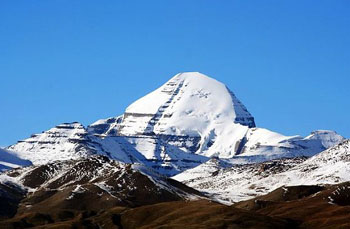 prepare carefully and carry essential supplies during their journey.
prepare carefully and carry essential supplies during their journey.
The magnificent pyramid-shaped peak, surrounded by vast plateaus, glaciers, lakes, and barren landscapes, creates a powerful spiritual atmosphere unlike anywhere else in Tibet.
Pilgrimage Around Mount Kailash
The traditional pilgrimage route around Mount Kailash is known as the Kailash Kora. The circuit is approximately 52 kilometers long and usually takes pilgrims two to three days to complete.
Along the route, visitors can experience:
* Sacred mountain views
* Tibetan prayer flags and mani stones
* Ancient monasteries
* High-altitude valleys
* Traditional Tibetan pilgrimage culture
For many believers, completing the Kailash Kora is one of the most meaningful spiritual journeys of their lifetime.
Travel Highlights
* Visit one of the world’s most sacred mountains
* Experience Tibetan Buddhist pilgrimage culture
* Explore the remote beauty of western Tibet
* Discover glaciers, rivers, and high-altitude landscapes
* Witness the spiritual atmosphere of the Kailash Kora route
* Experience one of Tibet’s most unforgettable journeys
Mount Kailash is more than a mountain. It is a place where nature, religion, and human devotion come together, attracting pilgrims and travelers from around the world to experience its extraordinary spiritual power.
Related Tours:
China Attractions Guide
- Anhui Attractions
- Beijing Attractions
- Chongqing Attractions
- Fujian Attractions
- Gansu Attractions
- Guangdong Attractions
- Guangxi Attractions
- Guizhou Attractions
- Hainan Attractions
- Henan Attractions
- Hongkong Attractions
- Hubei Attractions
- Hunan Attractions
- Heilongjiang Attractions
- Inner Mongolia Attractions
- Jiangsu Attractions
- Jilin Attractions
- Jiangxi Attractions
- Liaoning Attractions
- Manchuria Attractions

