




search for a Trip
Fairy land Jiuzhaigou National Park
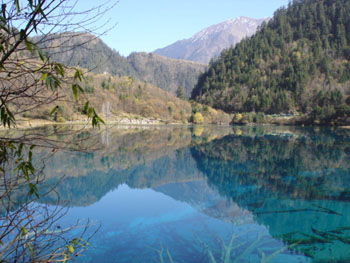 Located in the Aba Tibetan and Qiang Autonomous Prefecture of Sichuan Province, Jiuzhaigou National Park is one of China’s most spectacular natural destinations. Set in the Min Mountains, the park is famous for its crystal-clear lakes, multi-level waterfalls, colorful forests, snow-capped mountains and rich Tibetan and Qiang cultural heritage.
The name Jiuzhaigou, meaning “Nine Stockades Valley,” comes from the nine Tibetan villages historically located within the valley. The combination of pristine landscapes and traditional Tibetan culture has given Jiuzhaigou a reputation as one of China’s most beautiful natural areas.
A Legendary Landscape
According to local legend, the goddess Semo received a magical mirror made from wind and clouds. After the mirror was accidentally broken, its fragments fell into the mountains and became the beautiful lakes of Jiuzhaigou.
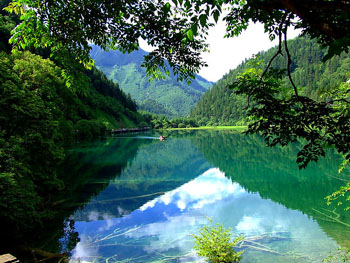
Although this is a traditional legend rather than a scientific explanation, it perfectly captures the magical appearance of the valley. The brilliant colors of the lakes, reflections of surrounding forests and mountains, and numerous waterfalls create scenery that seems almost unreal.
The landscape changes with the seasons, offering visitors a different experience throughout the year.
Crystal-Clear Lakes and Colorful Waters
Water is the defining feature of Jiuzhaigou. The valley contains numerous lakes, ponds, streams and waterfalls, many of which are famous for their remarkable clarity and vivid colors.
The lakes can appear turquoise, emerald green, deep blue or golden depending on the depth of the water, sunlight, surrounding vegetation and season. Forests and mountains are reflected on the calm surface, creating spectacular natural scenery.
Among the best-known lakes are Five Flower Lake, Five Colored Lake, Panda Lake and Long Lake.
The unusual colors and exceptional clarity of the water are among the main reasons Jiuzhaigou is considered one of China’s most beautiful scenic destinations.
 Spectacular Waterfalls
Water flows throughout Jiuzhaigou, creating numerous waterfalls and cascades along the mountain valleys. The combination of flowing water, forests and rugged cliffs gives the park its distinctive character.
Nuorilang Waterfall
Nuorilang Waterfall is one of the most iconic landmarks in Jiuzhaigou. The waterfall spreads across a broad rocky terrace, with water cascading down through the forest.
Its name is associated with Tibetan language and is commonly interpreted in connection with the concept of magnificent or grand waterfalls. The surrounding viewing area provides an excellent perspective of the falls and the lush landscape.
Shuzheng Waterfall
Located in the Shuzheng Valley, Shuzheng Waterfall is surrounded by forests and a series of beautiful lakes. The flowing water creates a lively contrast with the peaceful turquoise pools.
Panda Lake Waterfall
Panda Lake Waterfall is another impressive waterfall in the park. Water descends through a steep forested landscape, creating a dramatic natural scene.
The combination of waterfalls and forests is one of the characteristic landscapes of Jiuzhaigou and can be described as a natural “forest waterfall” landscape.
Shuzheng Valley and Tibetan Villages
Shuzheng Valley is one of the main scenic areas along the central route through Jiuzhaigou. It is characterized by a series of interconnected lakes, waterfalls and forested slopes.
The valley is also associated with traditional Tibetan villages. Tibetan prayer flags, religious symbols, temples and traditional-style buildings provide glimpses into the cultural heritage of the local communities.
The name Jiuzhaigou itself reflects this history, referring to the traditional Tibetan stockades that once occupied the valley.
The Rize Valley and Primeval Forest
The Rize Valley offers some of the most spectacular scenery in Jiuzhaigou. The route passes through a succession of colorful lakes, waterfalls and dense forests before reaching the higher mountain areas.
Among the highlights are Pearl Shoal Waterfall, Panda Lake and Five Flower Lake.
At the upper end of the valley lies the Primeval Forest, where dense coniferous woodland covers the mountain slopes. The forest creates a peaceful environment far removed from the urban landscape.
Zechawa Valley and Long Lake
The Zechawa Valley extends toward the highest areas of the scenic region. Its landscape is characterized by mountains, forests and high-altitude lakes.
At the end of the valley lies Long Lake, the largest and one of the highest-altitude lakes in Jiuzhaigou. Surrounded by mountains, the lake is particularly impressive when the surrounding peaks are covered with snow.
Nearby Five Colored Lake is another major attraction. Despite its relatively small size, its brilliant colors make it one of the most beautiful lakes in the park.
Tibetan and Qiang Culture
Nature is only part of the attraction of Jiuzhaigou. The area is also home to Tibetan and Qiang communities with distinctive traditions, architecture, festivals and religious customs.
Visitors may encounter Tibetan prayer wheels, prayer flags, traditional villages and Buddhist cultural elements throughout the region.
This combination of dramatic natural scenery and living cultural traditions gives Jiuzhaigou a unique character and distinguishes it from many other Chinese national parks.
Wildlife and Forests
The forests and mountains of Jiuzhaigou provide habitat for a variety of wildlife. The surrounding region is part of the natural range of several rare species, including the giant panda and golden snub-nosed monkey.
Although encounters with wild animals are uncommon, the rich forests and mountain ecosystems contribute significantly to the ecological importance of the area.
The park’s forests are particularly beautiful in autumn, when leaves turn shades of yellow, orange and red and contrast with the turquoise lakes.
Jiuzhaigou Through the Seasons
Jiuzhaigou is beautiful throughout the year, but each season has its own character.
Spring brings fresh vegetation, flowing streams and newly awakened forests. Water levels gradually increase as snow melts in the mountains.
Summer offers lush green forests, abundant water and pleasant daytime temperatures. However, evenings can still be cool because of the high elevation.
Autumn is widely considered one of the most spectacular seasons. The colorful foliage contrasts dramatically with the blue and turquoise lakes, creating some of Jiuzhaigou’s most iconic scenery.
Winter transforms the valley into a quieter landscape of snow-covered mountains, frozen waterfalls and partially frozen lakes. The number of visitors is generally lower, giving the park a more peaceful atmosphere.
A Natural Wonderland in Sichuan
With its extraordinary combination of colorful lakes, spectacular waterfalls, snow-capped mountains, ancient forests and Tibetan culture, Jiuzhaigou National Park is one of the most remarkable natural attractions in China.
Whether visiting in the colorful autumn season, the lush summer months or the quiet winter, travelers can experience a landscape that changes dramatically throughout the year.
For visitors seeking natural beauty, photography, hiking and cultural discovery, Jiuzhaigou offers an unforgettable journey into one of Sichuan’s most extraordinary mountain landscapes.
Related Tours:
China Attractions Guide
- Anhui Attractions
- Beijing Attractions
- Chongqing Attractions
- Fujian Attractions
- Gansu Attractions
- Guangdong Attractions
- Guangxi Attractions
- Guizhou Attractions
- Hainan Attractions
- Henan Attractions
- Hongkong Attractions
- Hubei Attractions
- Hunan Attractions
- Heilongjiang Attractions
- Inner Mongolia Attractions
- Jiangsu Attractions
- Jilin Attractions
- Jiangxi Attractions
- Liaoning Attractions
- Manchuria Attractions

