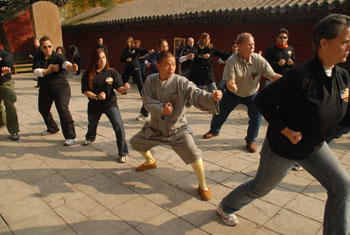
Kung Fu, also written as kungfu and commonly associated with Chinese martial arts or Wushu, refers to the many traditional systems of martial arts that developed throughout China. Today, Wushu is the preferred Chinese term for the country's martial arts, while “kung fu” has become the term most widely recognized internationally.
It is important to note that the word kung fu does not originally mean “martial arts.” In Chinese, gongfu (功夫) generally refers to skill, accomplishment, or expertise acquired through time, effort, and practice. It can therefore describe mastery in many fields, not just fighting.
The term became known in the West through early European accounts of China. One commonly cited early usage is associated with the French Jesuit missionary Jean Joseph Marie Amiot, who described Chinese physical exercises using a transcription resembling “Cong Fou.” Over time, the Western world adopted “kung fu” as a general term for Chinese martial arts.
In China, the term Guoshu (国术), meaning “national art,” was also used during the Republican period, particularly in the early 20th century. Today, however, Wushu is the standard term in mainland China.
From Hunting and Warfare to Martial Arts
The origins of Chinese martial arts can be traced to ancient human activities such as hunting, warfare, physical training, wrestling, and ritual dance.
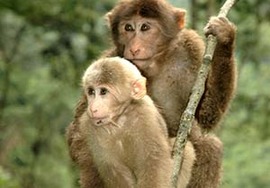
As early communities developed hunting and fighting skills, people also created dances for ritual, entertainment, and physical training. Some early dances appear to have imitated the movements of animals. Traditional accounts refer to dances inspired by creatures such as monkeys, bears, and birds.
The ancient Chinese classic known as the Book of Documents refers to dances associated with numerous animals. These traditions suggest an early connection between dance, physical exercise, hunting techniques, and martial skills.
Other early activities were more directly connected with warfare. These included exercises using shields, axes, and other weapons, as well as forms of wrestling. One famous tradition was “horn butting,” in which competitors wore horn-like headgear and attempted to defeat one another by butting. This practice is traditionally associated with the legendary warrior Chiyou and is often regarded as an early form of Chinese wrestling.
Martial Arts During the Han Dynasty
By the Han Dynasty (206 BC–AD 220), martial skills had developed considerably. Wrestling, weapon training, fencing, and unarmed combat were popular forms of physical activity and entertainment.
Sword dancing became particularly fashionable at banquets and public performances. These performances were not simply entertainment; many incorporated movements derived from actual combat techniques.
The Han period also saw the development of various martial dances, including sword dances, broadsword dances, halberd dances, and battle-axe performances. Some movements emphasized attack and defense, while others developed into forms of physical conditioning and exercise.
Historical sources also describe competitions in wrestling and weapon skills. According to traditional accounts, fencing was particularly popular in the ancient states of Wu, Yue, and Zhao. Because protective equipment was limited, these contests could be extremely dangerous.
The philosopher Zhuangzi, writing during the Warring States period, described sophisticated systems of swordsmanship and unarmed combat. Techniques included attacking, defending, counterattacking, and using feints to deceive an opponent.
From Combat to a System of Training
During the Qin Dynasty (221–206 BC) and especially the Han Dynasty, martial competitions became increasingly organized. Rules, designated arenas, referees, and forms of protective equipment gradually appeared.
At the same time, martial arts began to develop beyond purely military purposes. Techniques of combat became intertwined with physical exercise, performance, entertainment, health cultivation, and ritual.
This long process of development eventually produced the extraordinary diversity of Chinese martial arts seen today.
The Shaolin Tradition
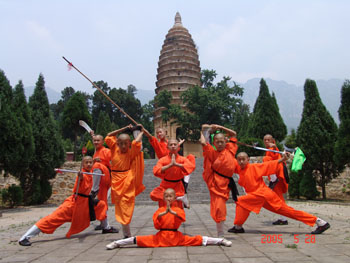
Among China's many martial arts traditions, Shaolin Kung Fu is perhaps the best known internationally. Shaolin Temple in Henan became an important center for Buddhist practice and martial arts, and over centuries a rich tradition of Shaolin boxing and weapon techniques developed.
Shaolin Kung Fu is famous for its diverse movements and its many forms inspired by animals, including the Tiger, Crane, Dragon, Monkey, Snake, and Praying Mantis. These animal-inspired styles do not simply imitate animals; they use their perceived characteristics to express different strategies, movements, and methods of generating power.
However, Chinese martial arts did not originate exclusively from Shaolin Temple. China developed numerous regional traditions, including Emei, Wudang, Wing Chun, Tai Chi, Bagua, Xingyi, and many forms of northern and southern boxing.
The history of Chinese Kung Fu is therefore best understood not as the story of a single school, but as the result of thousands of years of interaction between warfare, hunting, wrestling, dance, exercise, philosophy, religion, medicine, and everyday life.
From ancient battlefield techniques to modern Wushu performances, Chinese martial arts have continually evolved while retaining their central emphasis on discipline, skill, balance, perseverance, and the cultivation of both body and mind.
Related Tours
China Kungfu Tour
China Festival Tours
China Hiking & Trekking Tour
Fixed Overland tour from Kyrghyzstan to Laos in 2015
2015 China Overland Tour of Self driving From Laos To Mongolia by Own Vehicle
18 Days Ancient China Culture Tours
28 Days All China Around Exploration
Popular China Tours