 Yellow Crane Tower (Huanghelou) is one of the most famous cultural landmarks in Wuhan, Hubei Province, China.
Located on the southern bank of the Yangtze River, the tower is widely known as “the First Tower Under Heaven” and “the Finest Scenery Under Heaven” due to its long history, magnificent architecture, and beautiful river views.
Together with Qingchuan Pavilion and Guqin Tai (Guqin Terrace), Yellow Crane Tower is considered one of the three major scenic attractions in Wuhan.
History of Yellow Crane Tower
The original Yellow Crane Tower was first built during the Three Kingdoms Period in 223 AD as a military watchtower.
Over centuries, the tower was repeatedly rebuilt due to wars and natural disasters, but it remained an important symbol of Chinese culture.
The tower became especially famous during the Tang Dynasty when the renowned poet Cui Hao wrote the masterpiece poem Yellow Crane Tower. His poem made the building widely known throughout China and established its reputation as a cultural icon.
Magnificent Architecture of Yellow Crane Tower
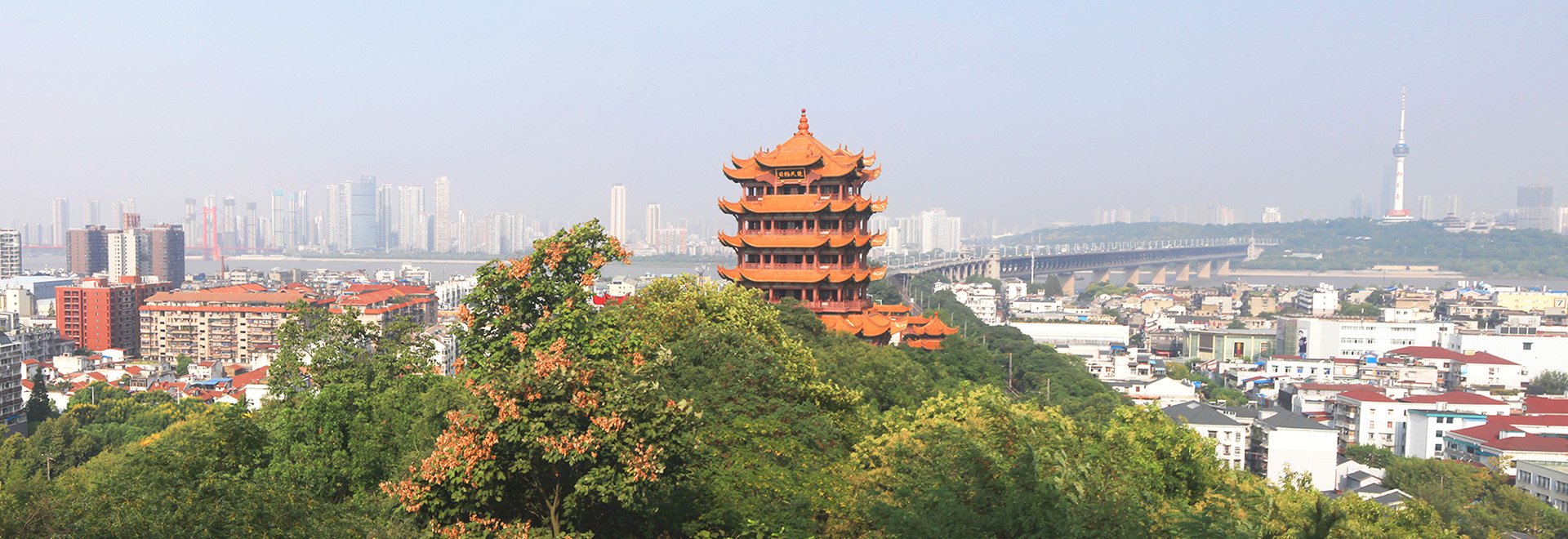
The current Yellow Crane Tower stands on the top of Snake Hill (Sheshan), about 61.7 meters above sea level, overlooking the Yangtze River and Wuhan’s urban landscape.
The tower features:
* Height: 51.4 meters
* Five floors
* Construction area: approximately 3,219 square meters
* 72 supporting columns inside
* 60 outward-extending roof corners
* More than 100,000 yellow glazed roof tiles
The elegant design combines traditional Chinese architectural styles with symbolic elements, making it one of the most recognizable ancient towers in China.
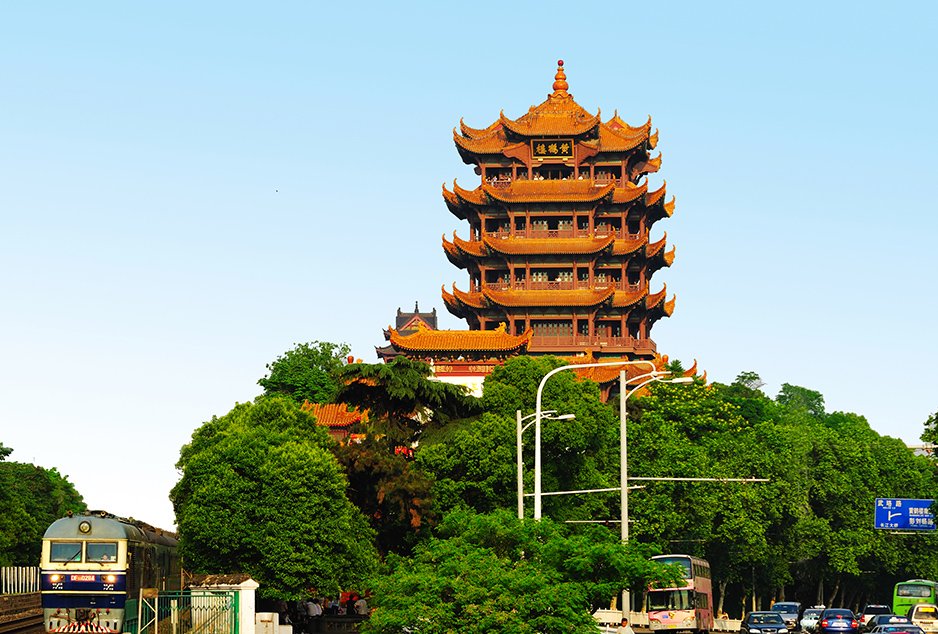 Scenic Views from Yellow Crane Tower
Surrounding the main tower are many beautiful supporting structures, including:
* Bronze yellow crane sculptures
* Pagodas
* Traditional archways
* Pavilions
* Baiyun Pavilion
* Monument corridors
Standing on the tower, visitors can enjoy panoramic views of:
* The Yangtze River
* Wuhan Yangtze River Bridge
* The three towns of Wuhan
The combination of historical architecture and modern city scenery creates a unique travel experience.
Cultural and Religious Significance
From the Northern Song Dynasty to the 1950s, Yellow Crane Tower was also associated with Taoist culture.
It was considered a sacred place connected with Lu Dongbin, one of the famous Eight Immortals in Chinese Taoism, where Taoist teachings and practices were once promoted.
The tower has long been a symbol of Chinese literature, philosophy, and traditional culture.
Legends Behind the Name Yellow Crane Tower
There are several fascinating legends explaining the origin of the name.
The Immortal and the Yellow Crane
One legend says that an immortal once rode a yellow crane and passed through this area, so the tower was named Yellow Crane Tower.
The Taoist Priest and the Painted Crane
Another popular story tells of a Taoist priest who painted a dancing yellow crane on the wall of a wine shop. The painting brought great fortune to the owner.
Ten years later, the priest returned, played his flute, summoned the painted crane to life, and flew away riding the crane. The grateful shop owner later built a tower in memory of the event.
These legends have added mystery and romance to the history of Yellow Crane Tower.
Why Visit Yellow Crane Tower Wuhan?
Yellow Crane Tower is more than an ancient building — it represents the spirit of Chinese history, poetry, architecture, and legend.
Visitors can experience:
* One of China’s most famous historical towers
* Classical Chinese architecture
* Yangtze River panoramic views
* Ancient poetry and legends
* Wuhan’s cultural heritage
For travelers exploring Wuhan, Yellow Crane Tower is an essential attraction and a perfect place to discover the deep cultural roots of central China.