 Guangzhou, also known as “Sui,” “Yangcheng” (Ram City), “Huacheng” (Flower City), and “Wuyang City” (Five-Ram City), is the capital and largest city of Guangdong Province in southern China.
As a sub-provincial city, national central city, and major international metropolis, Guangzhou plays an important role in China’s economy, transportation, trade, and cultural development.
Located in the central and southern part of Guangdong Province and at the northern edge of the Pearl River Delta, Guangzhou covers a total area of approximately 7,434.40 square kilometers and has a permanent population of about 18.827 million.
With its unique combination of ancient history, modern urban development, Cantonese culture, and convenient transportation, Guangzhou has become one of the most attractive destinations for international travelers visiting southern China.
Geography and Climate of Guangzhou
Guangzhou is located in a hilly region with a typical subtropical monsoon climate.
The city enjoys:
* Mild temperatures throughout the year
* Abundant rainfall
* A strong maritime influence
* Lush vegetation and rich natural resources
The warm climate and green landscapes have helped Guangzhou earn the nickname “Flower City”, as flowers bloom throughout much of the year.
Guangzhou – A Thousand-Year Maritime Trade Center
Guangzhou has a history of more than 2,000 years as an important center of international trade.
From the Qin Dynasty to the Ming Dynasty, Guangzhou served as a major port connecting China with the outside world. It was one of the important starting points of the Maritime Silk Road, playing a key role in cultural and commercial exchanges between China and other countries.
Because of its long-standing role in global trade, Guangzhou is often called the “Millennium Commercial Capital of China.”
The city’s historic importance can still be seen today through its ancient temples, traditional neighborhoods, colonial architecture, and vibrant trading culture.
Guangzhou – The Southern Gateway of China
Guangzhou is located at the heart of the Guangdong-Hong Kong-Macao Greater Bay Area and is one of the key cities in the Pearl River Delta Economic Zone.
As an important hub city of the Belt and Road Initiative, Guangzhou is known as the “Southern Gate of China.”
The city has developed into a global center for:
* International trade
* Manufacturing
* Transportation
* Technology innovation
* Finance and business services
Its international airport, railway network, and port connections make Guangzhou an important gateway for travelers exploring southern China.
Top Tourist Attractions in Guangzhou
Guangzhou offers a rich variety of cultural, historical, and natural attractions. By 2024, the city had 68 A-level tourist attractions, including:
* 2 national 5A-level scenic areas
* 31 national 4A-level scenic areas
* 34 national 3A-level scenic areas
* 1 national 2A-level scenic area
Among the most popular attractions are:
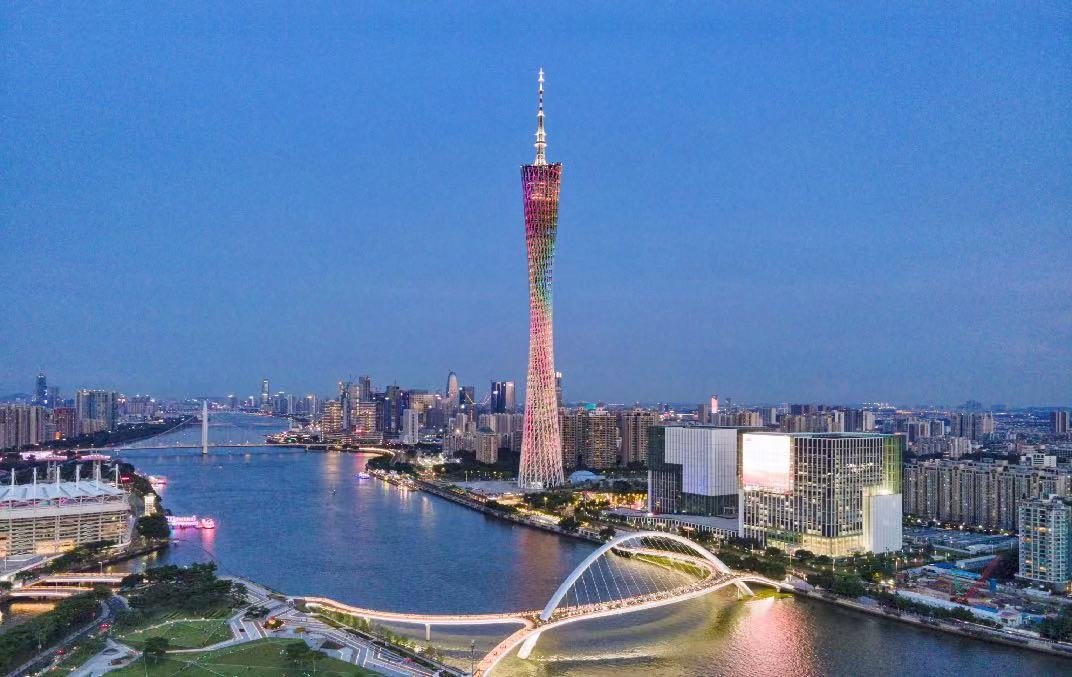
Canton Tower (Guangzhou Tower)
Standing on the banks of the Pearl River, Canton Tower is one of Guangzhou’s most iconic landmarks.
Known as one of the tallest towers in the world, it offers spectacular panoramic views of the city, especially at night when the tower lights up along the riverfront.
Baiyun Mountain
Baiyun Mountain is one of Guangzhou’s most famous natural attractions.
Known as the “First Mountain of Southern Yue,” it features beautiful forests, peaceful walking trails, and excellent viewpoints overlooking the city
Pearl River
The Pearl River is the lifeline of Guangzhou and one of the city’s most scenic areas.
A night cruise along the river allows visitors to enjoy views of Guangzhou’s modern skyline, including illuminated landmarks such as Canton Tower
Chen Clan Ancestral Hall
The Chen Clan Ancestral Hall is a masterpiece of traditional Lingnan architecture.
Built during the Qing Dynasty, it is famous for its exquisite wood carvings, stone sculptures, ceramic decorations, and traditional Guangdong craftsmanship.
Sun Yat-sen Memorial Hall
The Sun Yat-sen Memorial Hall is an important historical landmark dedicated to Dr. Sun Yat-sen, the founder of modern China.
The building combines Chinese and Western architectural styles and represents an important chapter in Guangzhou’s modern history.
Shamian Island
Shamian Island is known for its European-style colonial architecture, tree-lined streets, and peaceful atmosphere.
Once an important foreign trading area, it now offers visitors a unique combination of history, architecture, and photography opportunities.
Yuexiu Park
Yuexiu Park is the largest urban park in Guangzhou and home to several cultural landmarks, including the famous Five-Ram Statue, a symbol of the city.
Huangpu Military Academy
The Huangpu Military Academy was one of China’s most influential military schools in modern history.
Visitors can learn about important historical events and figures connected with China’s political and military development.
Why Visit Guangzhou?
Guangzhou is a city where ancient traditions meet modern innovation. From its role as a historic Maritime Silk Road port to its position as a global economic center, Guangzhou offers travelers a fascinating combination of culture, history, cuisine, and urban experiences.
Visitors can enjoy:
* Rich Cantonese culture
* Famous Guangzhou cuisine
* Historic temples and architecture
* Modern skyscrapers and city views
* Pearl River scenery
* Traditional markets and neighborhoods
For travelers exploring southern China, Guangzhou is an essential destination and an ideal gateway to the Greater Bay Area, Hong Kong, and Macau.