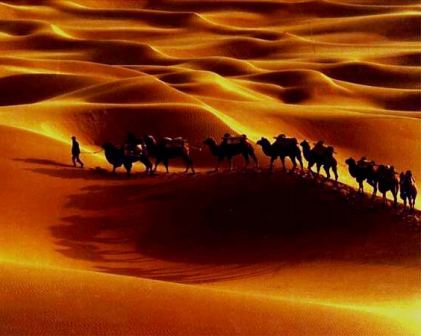
The Silk Road was much more than a trade route for Chinese silk, porcelain, tea, and other daily necessities. It was also a channel through which ideas, artistic styles, fashions, religions, music, and culinary traditions traveled between East and West. These exchanges passed through the kingdoms and cities of Central Asia, connecting China with the wider world.
Central Asia was a true melting pot of civilizations and an important crossroads for cultural exchange. It also played a significant role in transmitting artistic influences toward China. The rich cultural heritage along the Silk Road has enabled historians and archaeologists to identify Indian, Kushan, Iranian, Syrian, and other influences in the paintings, sculptures, architecture, and decorative arts discovered at places such as Miran, Bamiyan, Kucha, Penjikent, Khotan, Turfan, and Dunhuang.
These multicultural influences reached their height in China during the Tang Dynasty (618–907), when the empire maintained extensive contacts with Central Asia and beyond. Central Asian artistic motifs appeared in Chinese decorative arts, including designs featuring animals facing one another. But the influence was not limited to art. Exotic styles became fashionable in everyday life, influencing clothing, food, music, dance, and entertainment.
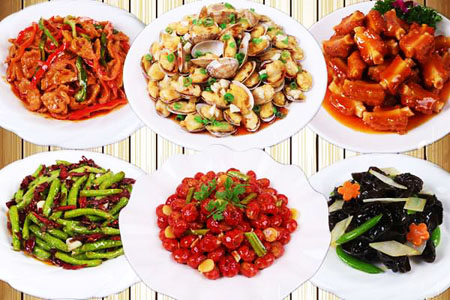
At the Tang imperial court, music from Central Asia and Persia was highly appreciated, while exotic foods and new cooking styles became popular among the aristocracy. Tang women were sometimes depicted wearing foreign-inspired clothing and hairstyles, reflecting the cosmopolitan character of Tang society.
This enthusiasm for foreign cultures spread beyond China and reached Japan, which maintained close cultural and diplomatic relations with Tang China. Some remarkable examples have survived at Shōsō-in, the treasure repository of Tōdai-ji Temple in Nara. Its collection preserves musical instruments, textiles, decorative objects, and other treasures that demonstrate the extraordinary cultural connections linking East Asia with Central and Western Asia.
Archaeological discoveries along the Silk Road provide remarkable evidence of this interaction between civilizations. Paintings, sculptures, manuscripts, textiles, musical instruments, coins, and everyday objects reveal a world in which people, goods, technologies, and ideas were constantly moving across borders.
The Silk Road therefore should not be remembered simply as an ancient highway for commerce. It was a bridge between civilizations. Its cultural exchanges shaped art, fashion, food, music, religion, and everyday life across a vast region of Eurasia.
And perhaps most remarkably, the influence of these ancient exchanges has never completely disappeared. Even today, traces of the Silk Road can still be found in the cultures, traditions, artistic styles, and daily lives of people across Asia and beyond.
-
Related Tours