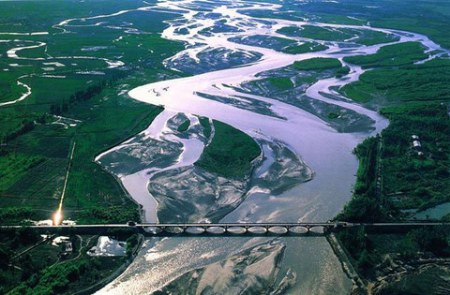
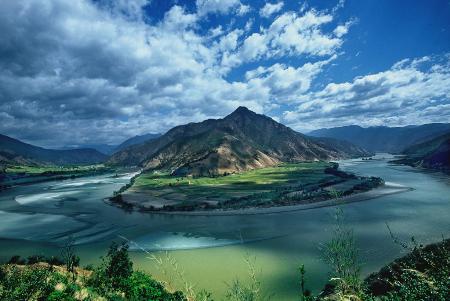
 In the high mountains of northwestern Yunnan Province, southwestern China, three major rivers—the Jinsha River, Lancang River, and Nujiang River—flow roughly parallel to one another from north to south for about 170 kilometers. All three rivers originate in the Qinghai-Tibet Plateau and pass through some of the most spectacular mountain landscapes in southwestern China.
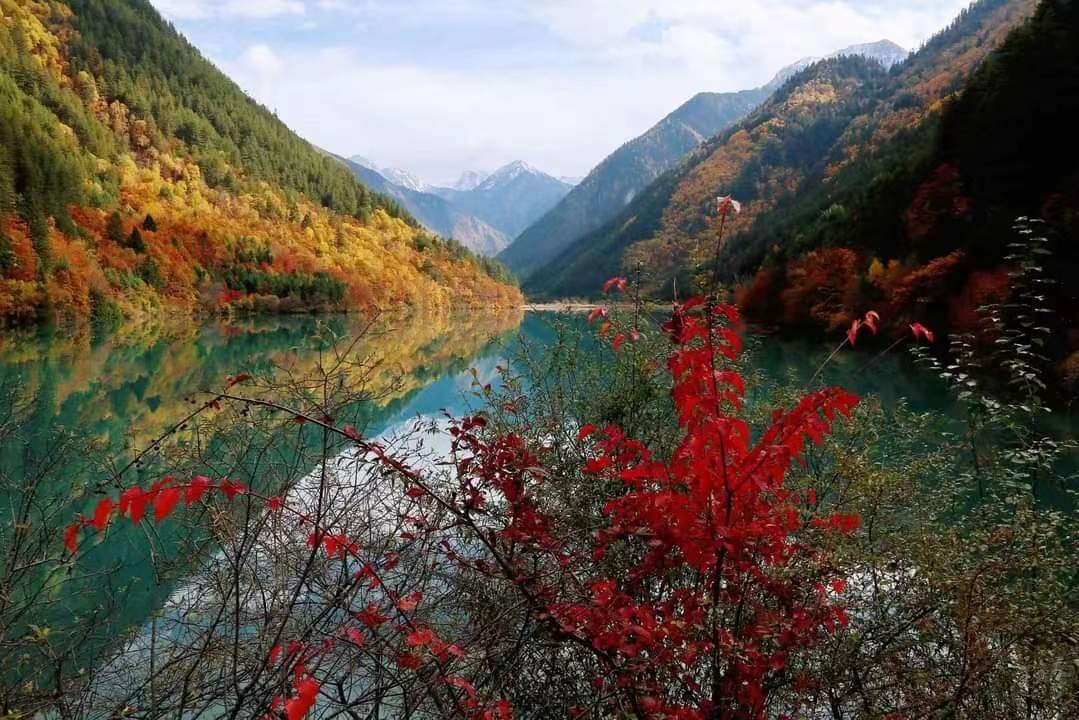
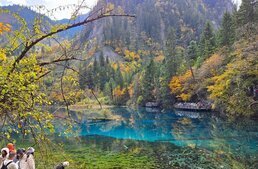
The Three Parallel Rivers region is one of the most remarkable natural areas in Yunnan. It is famous for its snow-capped mountains, deep river valleys, glaciers, alpine lakes, forests, dramatic cliffs, and exceptional biodiversity.
In 2003, the Three Parallel Rivers of Yunnan Protected Areas were inscribed on the UNESCO World Heritage List as a natural World Heritage Site, recognizing the region’s outstanding geological and biological significance.
Three Parallel Rivers Geography
The Three Parallel Rivers World Heritage area covers approximately 1.7 million hectares and includes nine nature reserves and ten major scenic areas across Lijiang City, Diqing Tibetan Autonomous Prefecture, and Nujiang Lisu Autonomous Prefecture.
The Jinsha, Lancang, and Nujiang rivers run unusually close to each other without immediately merging. At their closest points, the distance between the Lancang and Nujiang rivers is less than 19 kilometers, while the distance between the Jinsha and Lancang rivers is approximately 66 kilometers.
The region is located at the meeting point of several major geological regions, including East Asia, South Asia, and the Qinghai-Tibet Plateau. This unique geographical position has produced an extraordinary variety of landscapes and geological formations.
A Geological Museum
The Three Parallel Rivers region is often described as a natural museum of geological evolution. Its landscape records tens of millions of years of geological activity associated with the collision of the Indian and Eurasian tectonic plates and the uplift of the Himalayas and the Tibetan Plateau.
Within a relatively compact area, travelers can encounter dramatically different landforms, including:
* Snow-capped mountains and glaciers
* Deep river valleys
* Alpine meadows
* Ancient forests
* Glacial lakes
* Danxia landforms
* Karst formations
* Steep cliffs and gorges
This extraordinary geographical diversity is one of the main reasons the area has such high scientific and ecological value.
Snow-Capped Mountains and Glaciers
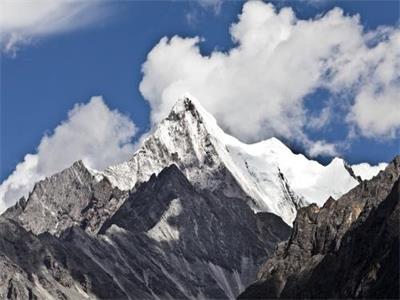
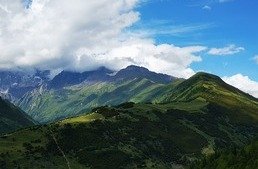
The Three Parallel Rivers region contains numerous high mountains, including more than 100 peaks exceeding 5,000 meters above sea level. The mountains vary greatly in shape and geological character and are surrounded by extensive forests and alpine lakes.
One of the most famous mountain ranges in the region is Meili Snow Mountain, located in Diqing Tibetan Autonomous Prefecture.
The highest peak of Meili Snow Mountain, Kawagarbo, reaches approximately 6,740 meters above sea level. The mountain is covered by glaciers and is considered sacred by local Tibetan communities.
The Mingyong Glacier is particularly famous for extending from the high mountains toward lower elevations. Its unusual combination of high-altitude ice, steep mountain slopes, and relatively low terminus makes it an important natural feature of the region.
For Tibetan communities, Meili Snow Mountain has long held profound religious significance. Kawagarbo is regarded as a sacred mountain, and traditional beliefs continue to influence how local people interact with the mountain.
 Laojun Mountain and Danxia Landforms
The Laojun Mountain area near Lijiang is another important part of the Three Parallel Rivers region. It is famous for its spectacular Danxia landforms, which are characterized by red sandstone cliffs, peaks, valleys, and unusual rock formations.
Surrounded by forests, the red rock formations create a striking contrast with the surrounding green landscape.
One of the most interesting formations is commonly known as Thousand Tortoise Mountain. Weathering has shaped the red sandstone into patterns that resemble the backs of countless tortoises. From a distance, the formations may appear to form a giant tortoise, while closer observation reveals numerous smaller patterns across the mountainside.
The combination of Danxia cliffs, forests, alpine scenery, and unusual rock formations makes Laojun Mountain one of the most distinctive landscapes in northwestern Yunnan.
A Global Biodiversity Hotspot
The Three Parallel Rivers region is one of the most important biodiversity areas in China and is recognized internationally for its exceptional variety of plant and animal species.
Although the region covers less than 0.4 percent of China’s total land area, it contains a remarkable proportion of the country’s plant and animal diversity. The area provides habitats for numerous rare and endangered species.
Protected animals found in the broader region include the Yunnan golden monkey, snow leopard, black-necked crane, and other nationally protected species.
The region is also home to many protected plants, including the Chinese fir (Cunninghamia lanceolata), spinulose tree fern (Cyathea spinulosa), and Chinese yew (Taxus chinensis).
Because of the dramatic changes in altitude, climate, and terrain over relatively short distances, the region supports an extraordinary range of ecosystems, from subtropical forests to alpine environments.
A Sea of Flowers in Spring
Spring transforms parts of the Three Parallel Rivers region into a spectacular landscape of blooming wildflowers.
The region is known for its remarkable diversity of flowering plants, including numerous species of rhododendrons, gentians, primroses, orchids, lilies, and other alpine flowers.
The combination of colorful flowers, snow-covered mountains, deep valleys, and clear mountain skies makes spring an especially attractive season for nature lovers and photographers.
Ethnic and Cultural Diversity
The Three Parallel Rivers region is not only important for its natural environment. It is also home to numerous ethnic communities with distinctive languages, religions, traditions, and lifestyles.
Around 16 ethnic groups live in the broader region, including Tibetan, Lisu, Naxi, Bai, Yi, and other communities.
Their traditional cultures have developed in close relationship with the mountains and rivers. Tibetan Buddhist traditions, local religious beliefs, traditional festivals, architecture, music, clothing, and agricultural practices all contribute to the cultural diversity of the region.
For travelers, visiting the Three Parallel Rivers area provides an opportunity to experience both the spectacular natural environment and the rich cultural heritage of southwestern China.
UNESCO World Heritage Site
The natural and cultural importance of the Three Parallel Rivers region has attracted scientific and international attention for decades.
In 1988, the Three Parallel Rivers area was designated as a national-level scenic area in China. On July 2, 2003, the Three Parallel Rivers of Yunnan Protected Areas were officially inscribed on the UNESCO World Heritage List as a natural property during the 27th session of the UNESCO World Heritage Committee.
The UNESCO designation recognizes the region’s exceptional geological formations, dramatic landscapes, and outstanding biodiversity.
Visiting Three Parallel Rivers
The Three Parallel Rivers region is one of the best destinations in Yunnan for travelers interested in nature, photography, hiking, wildlife, geology, and ethnic culture.
Because the World Heritage area is extensive, it is not a single attraction that can be explored in one day. Different sections of the region offer completely different experiences.
Travelers can explore the snow-covered peaks of Meili Snow Mountain, visit the dramatic gorges of the major rivers, discover the Danxia landscapes of Laojun Mountain, observe alpine flowers and wildlife, or experience the traditional cultures of local ethnic communities.
The region’s combination of three great rivers, towering mountains, glaciers, forests, rare wildlife, colorful flowers, and diverse ethnic cultures makes it one of the most extraordinary natural destinations in Yunnan.
For travelers looking beyond the more famous destinations of Lijiang and Shangri-La, the Three Parallel Rivers region offers an unforgettable journey into one of China’s most spectacular mountain landscapes.