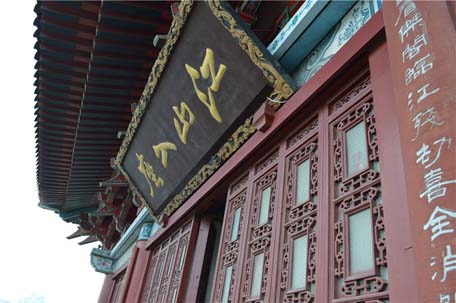
Located at the intersection of Yanjiang North Road and Dieshan Road in Nanchang, Jiangxi Province, Tengwang Pavilion (Tengwang Ge) is one of the most famous historical buildings in China. Known as one of the “Three Great Towers of Jiangnan” together with Yellow Crane Tower in Wuhan and Yueyang Tower in Yueyang, Tengwang Pavilion is celebrated for its magnificent architecture, poetic heritage, and important place in Chinese history.
Standing beside the Gan River, the pavilion offers visitors beautiful views of Nanchang’s cityscape and surrounding landscapes. With its long history and cultural significance, Tengwang Pavilion has become the iconic symbol of Nanchang and one of the must-visit attractions in Jiangxi Province.
History of Tengwang Pavilion
Tengwang Pavilion was originally built in 653 AD during the Tang Dynasty by Li Yuanying, the younger brother of Emperor Taizong of Tang, who was given the title Prince Teng. The pavilion was initially constructed as a place for royal entertainment and cultural gatherings.
The original structure was a grand nine-story pavilion with a height of approximately 57.5 meters. Throughout history, the pavilion was repeatedly destroyed and rebuilt due to wars and natural disasters. The present structure is a modern reconstruction that follows the traditional architectural style of ancient Tengwang Pavilion.
Facing the beautiful Xishan Mountains, the pavilion provides a panoramic view of Nanchang, the Gan River, and the surrounding scenery.
The Literary Legacy of Wang Bo’s “Preface to Tengwang Pavilion”
The worldwide fame of Tengwang Pavilion is largely associated with the masterpiece “Preface to Tengwang Pavilion” (Tengwang Ge Xu) written by the famous Tang Dynasty poet Wang Bo (650–676).
According to historical records, Wang Bo visited Nanchang while traveling south and was invited to a banquet celebrating the reconstruction of Tengwang Pavilion. During the gathering, he composed this brilliant prose piece, which later became one of the most celebrated works of classical Chinese literature.
The famous opening lines describe the magnificent scenery around the pavilion and have made Tengwang Pavilion an enduring symbol of Chinese literature, poetry, and cultural elegance.
Architecture and Scenic Views
Today, Tengwang Pavilion combines traditional Chinese architectural elements with modern exhibition spaces. Visitors can explore historical displays, cultural exhibitions, and enjoy views from the upper floors.
Highlights include:
* Traditional Tang-style architectural design
* Panoramic views of Nanchang and the Gan River
* Exhibitions about the history of Tengwang Pavilion
* Cultural displays related to Wang Bo and classical Chinese literature
* Beautiful sunset views overlooking the city
The combination of architecture, history, and literature makes Tengwang Pavilion a unique cultural experience.
Best Time to Visit Tengwang Pavilion
Nanchang has a humid subtropical climate with abundant rainfall. Summers are generally hot and humid because of the city’s location in a basin area, and Nanchang is traditionally listed among China’s “Four Furnaces” along with Nanjing, Chongqing, and Wuhan.
The best seasons to visit Tengwang Pavilion are:
* Spring (March–May): Pleasant weather and comfortable sightseeing conditions
* Autumn (September–November): Cooler temperatures and clearer views
Visiting near sunset is especially recommended, when the pavilion and the Gan River create a beautiful historical landscape.
Why Visit Tengwang Pavilion?
Tengwang Pavilion is more than an ancient tower—it is a place where Chinese architecture, history, and literature meet. From its Tang Dynasty origins to Wang Bo’s legendary prose, the pavilion represents the cultural spirit of Jiangxi and the elegance of ancient Chinese civilization.
For travelers interested in Chinese history, traditional architecture, poetry, and cultural heritage, Tengwang Pavilion is one of the most rewarding attractions in Nanchang.
Combined with other Jiangxi highlights such as August 1 Nanchang Uprising Museum, Poyang Lake, Lushan Mountain, and Jinggangshan, Tengwang Pavilion is an essential stop on any Jiangxi cultural tour.