 Located in Ruijin County, southeastern Jiangxi Province, at the western foothills of the Wuyi Mountains, the Ruijin Revolutionary Sites are among the most important historical landmarks related to modern Chinese history.
Known as the “Red Capital of China,” Ruijin was the political and military center of the Central Revolutionary Base Area during the Second Chinese Civil War period. From 1931 to 1934, it served as the headquarters of the Chinese Soviet Republic and the location of its provisional central government.
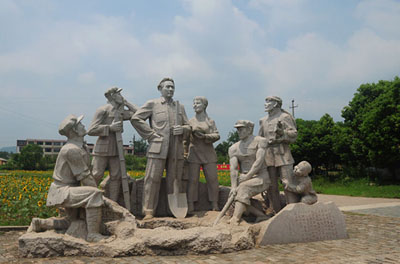
Today, the Ruijin Revolutionary Memorial preserves numerous historical buildings, documents, and cultural relics, allowing visitors to explore the history of this important revolutionary base.
The Historic Revolutionary Sites of Ruijin
The Ruijin Revolutionary Sites mainly include Yeping, Shazhouba, Wushilong, and Yunshishan, each representing an important stage of the revolutionary movement.
Yeping: The Birthplace of the Chinese Soviet Republic
Located about 6 kilometers northeast of Ruijin, Yeping was the site where the First National Congress of the Chinese Soviet Republic was held.
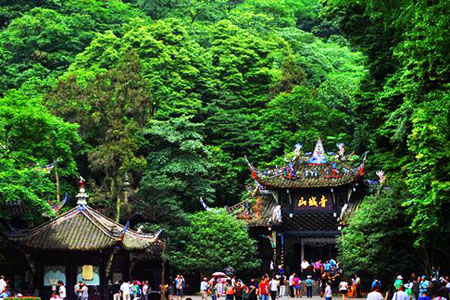
The Central Workers’ and Peasants’ Democratic Government was also established here. The original buildings were part of the Xieshi Ancestral Temple, which was later adapted into government offices.
The site includes:
* The former congress hall
* The central government office area
* Offices of various departments
* Traditional ancestral temple architecture
Yeping represents the early establishment of the revolutionary government system in Ruijin.
Shazhouba: The Former Central Government Headquarters
Located about 4 kilometers southwest of Ruijin, Shazhouba became the headquarters of the Central Workers’ and Peasants’ Democratic Government from April 1933 to July 1934.
Visitors can explore important historical sites including:
* The former central government office
* Former residences of Mao Zedong, Zhang Wentian, Xie Juezai, and Deng Xiaoping
* The former site of the All-China Federation of Trade Unions
* Lenin Primary School
Shazhouba provides valuable insight into the daily life and administrative work of the revolutionary period.
Wushilong: The Military Command Center
Located about 4 kilometers west of Ruijin, Wushilong was an important military base during the revolutionary period.
In 1933, the office of the Central Military Commission was moved here from Yeping. The area preserves:
* The former site of the Central Military Commission
* Former residences and offices of Zhu De, Liu Bocheng, and other leaders
This site reflects the military organization and strategic planning of the revolutionary movement.
Yunshishan: The Starting Point of the Long March
Located about 18 kilometers west of Ruijin, Yunshishan Mountain is a small hill featuring an ancient temple at its summit.
In August 1934, important revolutionary organizations, including:
* The Central Political Bureau
* The Central Military Commission
* The Central Workers’ and Peasants’ Democratic Government
were relocated here.
In October 1934, the Red Army began the historic Long March from Yunshishan, marking one of the most significant events in modern Chinese history.
Why Visit Ruijin Revolutionary Sites?
The Ruijin Revolutionary Sites offer visitors a deeper understanding of one of the most important periods in Chinese history. Through preserved buildings, historical documents, and cultural relics, travelers can explore the origins of the Chinese Soviet Republic and the early revolutionary movement.
For visitors interested in:
* Chinese modern history
* Red tourism
* Historical architecture
* Cultural heritage
Ruijin provides a meaningful journey through the past.
Combined with other Jiangxi attractions such as Jinggangshan Revolutionary Sites, Nanchang August 1 Uprising Museum, and Tengwang Pavilion, Ruijin is an essential destination for travelers exploring Jiangxi’s rich historical heritage.