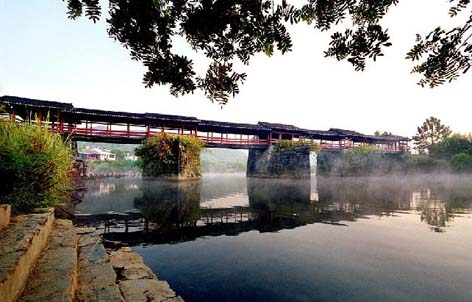
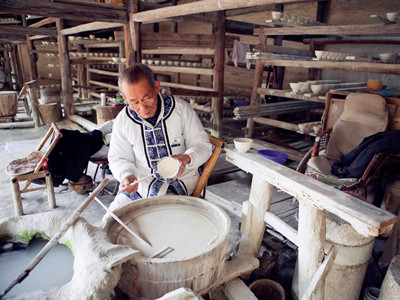
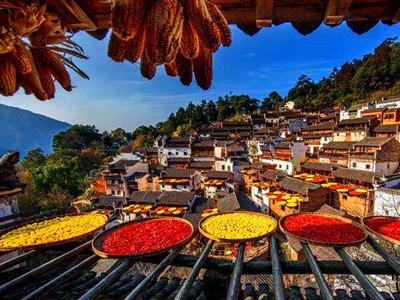
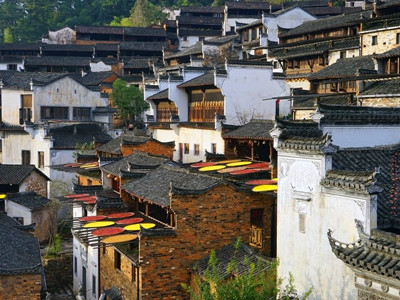
Located in Wuyuan County, Jiangxi Province, Rainbow Bridge (Caihong Bridge) is one of the most famous ancient bridges in China and is often regarded as one of the most beautiful covered bridges in Wuyuan.
Built during the Southern Song Dynasty (1127–1279) more than 800 years ago, the bridge remains remarkably well preserved and continues to serve local villagers today. Surrounded by mountains, rivers, and traditional villages, Rainbow Bridge perfectly reflects the peaceful beauty of the Wuyuan countryside.
To reach the bridge, visitors pass through one of the oldest lanes in Wuyuan, adding to the feeling of stepping back into ancient China.
Walking Through an Ancient Village Lane
The ancient lane leading to Rainbow Bridge dates back to the Tang Dynasty (618–907). The narrow pathway, lined with traditional stone walls, preserves the authentic atmosphere of old Wuyuan.
Because the lane is extremely narrow, visitors often need to turn sideways when passing others. Over centuries, rain and humidity have covered the walls with green moss, while wild grass and small flowers grow between the stones, creating a peaceful and poetic scene.
Walking along this historic path provides a glimpse into the traditional lifestyle of rural Jiangxi.
Architectural Beauty of Rainbow Bridge
Rainbow Bridge stretches approximately 140 meters in length and 7 meters in width. The bridge consists of five covered corridors and six pavilions, which is why it is also known locally as the “Corridor and Pavilion Bridge.”
Its elegant design combines practicality with beauty:
* Covered walkways providing shelter from sun and rain
* Traditional wooden pavilions for rest and sightseeing
* Stone piers designed to withstand river currents
* A harmonious combination of architecture and natural scenery
Despite its long history, the bridge has remained in excellent condition and even survived major floods, including the severe flood of 1954.
Ancient Flood Control Wisdom
One of the reasons Rainbow Bridge has survived for centuries is the traditional water management system surrounding it.
A nearby stone dam helps regulate the river flow, control sediment, protect the bridge from strong currents, and maintain the ecological balance of the waterway. This ancient engineering method reflects the wisdom of traditional Chinese landscape and environmental management.
Similar stone dams once existed along the river, but some were later removed during modernization. The consequences became clear when severe flooding caused environmental damage, including the loss of ancient forests and changes to the river landscape.
The preservation of Rainbow Bridge demonstrates the importance of respecting traditional ecological knowledge.
Why Visit Rainbow Bridge?
Rainbow Bridge is more than an ancient structure—it is a living example of Chinese architectural heritage, rural culture, and traditional engineering wisdom.
Visitors can enjoy:
* A beautifully preserved Song Dynasty covered bridge
* Peaceful river and mountain scenery
* Historic village lanes covered with moss and greenery
* Traditional countryside landscapes of Wuyuan
* Insight into ancient Chinese bridge construction
For travelers interested in history, photography, architecture, and authentic rural experiences, Rainbow Bridge is one of the must-see attractions in Wuyuan.
Together with other Wuyuan highlights such as Likeng Village, Huangling Village, Jiangwan Ancient Village, and Sixi Yancun Village, Rainbow Bridge offers an unforgettable journey into the cultural landscape of Jiangxi.