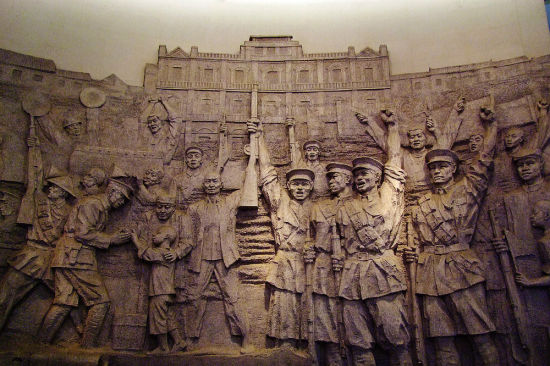
Located in downtown Nanchang, Jiangxi Province, the Nanchang August 1 Uprising Museum is one of the most important historical museums in the city. Built on the original site of the Nanchang Uprising Headquarters, the museum preserves the memory of the Nanchang Uprising of 1927, an important event in modern Chinese history.
The museum is housed in a five-story gray building featuring a unique combination of Western and Chinese architectural styles. Originally built as a local hotel, the building became the headquarters of the revolutionary forces during the uprising and was later converted into a memorial museum displaying valuable historical documents, cultural relics, and artifacts.
Today, the museum provides visitors with an opportunity to learn about the historical background, key figures, and major events surrounding the Nanchang Uprising.
History of the Nanchang August 1 Uprising Museum
The Nanchang Uprising, which took place on August 1, 1927, marked a significant moment in China’s modern history. The former headquarters building served as the command center during the uprising and witnessed important decisions made by revolutionary leaders.
After the event, the site was preserved as a memorial to commemorate this historic period. Many original rooms and facilities have been restored according to their historical appearance, allowing visitors to experience the atmosphere of the headquarters during the uprising.
At the entrance of the museum hangs a gold-decorated horizontal plaque reading “Nanchang August 1 Uprising Museum,” written by Chen Yi, one of the important historical figures associated with the event.
Museum Exhibitions and Highlights
The museum’s exhibitions are mainly located on the second and third floors. Through historical documents, photographs, charts, inscriptions, and cultural relics, the displays vividly introduce the background, development, and significance of the Nanchang Uprising.
Important exhibits and restored sites include:
* The former meeting hall restored to its original appearance
* Room No. 25, where Zhou Enlai once worked
* The office of Lin Boqu
* Room No. 9, the office of the Military Staff Committee
* Room No. 10, where some uprising leaders once stayed
* A collection of photographs featuring Zhou Enlai and other historical figures
These preserved spaces allow visitors to gain a deeper understanding of the people and events behind this important chapter of history.
Why Visit Nanchang August 1 Uprising Museum?
The Nanchang August 1 Uprising Museum is not only a historical museum but also an important cultural landmark representing Nanchang’s role in modern Chinese history.
For travelers interested in Chinese history, revolutionary heritage, architecture, and cultural museums, the museum offers a meaningful experience through its authentic historical site and extensive collection of artifacts.
Conveniently located in central Nanchang, the museum can be visited together with other nearby attractions such as Tengwang Pavilion, Bayi Square, and Nanchang Ancient City landmarks, making it an important stop on a cultural tour of Jiangxi Province.