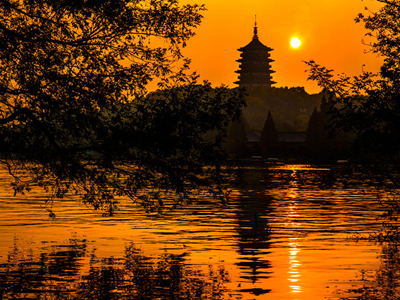
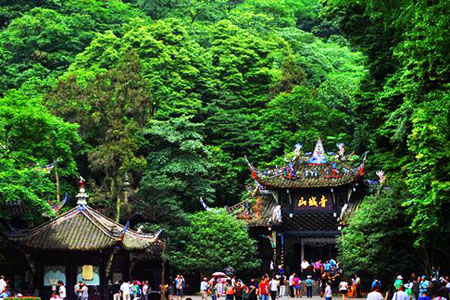
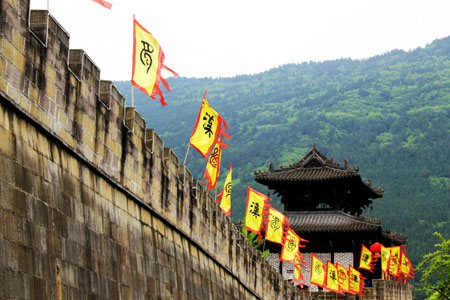
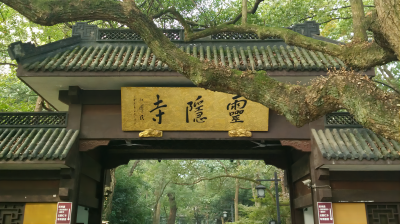
 Lingyin Temple (Temple of the Soul’s Retreat) is one of the most famous and oldest Buddhist temples in China. Located beside West Lake in Hangzhou, Zhejiang Province, the temple is surrounded by beautiful mountains and peaceful natural scenery. Backed by North Peak (Beigao Peak) and facing the famous Feilai Peak (Peak Flying from Afar), Lingyin Temple has been a sacred Buddhist site for nearly 1,700 years.
Founded in 326 AD during the Eastern Jin Dynasty, Lingyin Temple covers an area of approximately 87,000 square meters. It was established by Master Huili, an Indian Buddhist monk, and was later expanded during the Southern Dynasties under the support of Emperor Wu of Liang. Today, it remains one of the most important Buddhist temples in China and a must-visit cultural attraction in Hangzhou.
History and Cultural Importance of Lingyin Temple
The name Lingyin means “Temple of the Soul’s Retreat,” reflecting the peaceful and spiritual atmosphere of the site. Surrounded by forests, mountains, caves, and ancient Buddhist carvings, the temple has long been considered an ideal place for meditation and religious practice.
As one of the most influential temples of the Chinese Zen Buddhism tradition, Lingyin Temple has played an important role in the development of Buddhism in southern China. Throughout history, many famous monks, scholars, and travelers have visited the temple to seek spiritual inspiration.
The temple complex combines Buddhist architecture, traditional Chinese gardens, and natural landscapes, creating a unique cultural experience for visitors.
 Main Buildings of Lingyin Temple
The central axis of Lingyin Temple features several magnificent halls, including:
Hall of the Heavenly Kings
The first major hall of the temple, featuring a statue of Maitreya Buddha and guardian figures that represent protection and good fortune.
Great Hero Hall (Mahavira Hall)
The main hall of Lingyin Temple and the center of Buddhist worship. The hall houses a magnificent statue of Sakyamuni Buddha, representing the highest level of Buddhist architecture and art.
Medicine Buddha Hall
Dedicated to the Medicine Buddha, who symbolizes healing, health, and compassion.
Dharma Hall
A place for Buddhist teachings and religious ceremonies.
Huayan Hall
Dedicated to the teachings of the Huayan School of Buddhism.
Other important buildings include:
* Five Hundred Arhat Hall
* Ji Gong Hall
* Huayan Pavilion
* Great Compassion Building
* Abbot’s Residence
Together, these structures form one of the most complete ancient Buddhist temple complexes in China.
Feilai Peak – The Legendary Flying Mountain
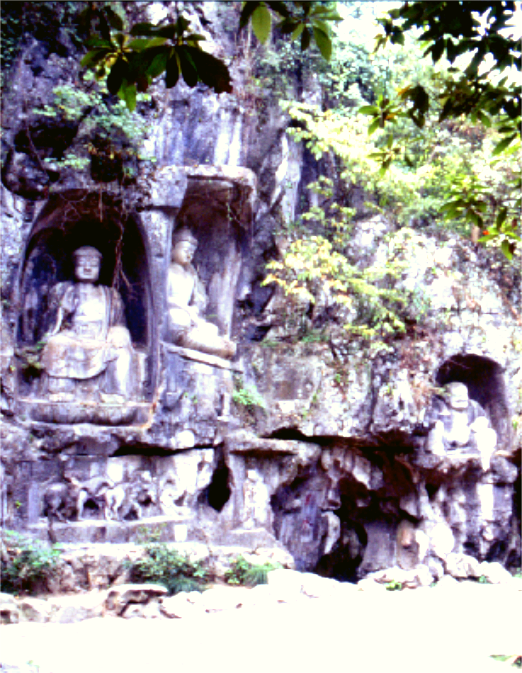
One of the most famous attractions beside Lingyin Temple is Feilai Peak, a limestone mountain famous for its Buddhist grotto carvings and legendary story.
According to local legend, Ji Gong, a famous Buddhist monk known for his wisdom and unconventional behavior, suddenly predicted that a mountain would fly from a distant place and land in front of Lingyin Temple. He worried that the flying mountain would crush the nearby village, so he rushed to warn the villagers to leave.
However, because Ji Gong was often considered a playful and strange monk, the villagers ignored his warning. Seeing that the mountain was about to arrive, Ji Gong ran into a wedding ceremony, carried away the bride, and escaped.
The villagers became angry and chased after him. At that moment, the sky darkened, strong winds blew, and a huge mountain suddenly flew down in front of Lingyin Temple, covering the entire village. The villagers finally realized that Ji Gong had saved their lives.
Since then, the mountain has been called Feilai Peak, meaning “the peak that flew from afar.”
Feilai Peak Grottoes – A Treasure of Chinese Buddhist Art
Feilai Peak is one of the most important examples of ancient Chinese grotto art in southern China. The stone carvings here date from the Five Dynasties and Ten Kingdoms period to the Ming Dynasty, spanning more than 1,000 years of Buddhist artistic development.
Among the more than 470 Buddhist statues, around 335 remain relatively well preserved. These sculptures represent different periods of Chinese Buddhist art and are considered priceless cultural treasures.
The earliest carvings include statues of:
* Buddha
* Guanyin Bodhisattva
* Mahasthamaprapta Bodhisattva
created in 951 AD during the Northern Han Dynasty.
Among the most famous works is the Lushena Buddha relief sculpture from the Northern Song Dynasty, known for its exquisite craftsmanship.
The most popular carving is the statue of Maitreya Buddha and the Eighteen Arhats. The smiling Maitreya Buddha statue is especially famous, showing a joyful expression with a large belly, bare chest, and a relaxed posture. It perfectly represents the Buddhist spirit of compassion, tolerance, and happiness.
The Yuan Dynasty carvings, including more than 100 Han-style and Tibetan-style Buddhist sculptures, are also highly valued for their elegant forms and artistic beauty.
The Legend of the Three Lives Stone
Another famous cultural attraction near Lingyin Temple is the Three Lives Stone (Sansheng Stone), which is associated with traditional Chinese beliefs about destiny and reincarnation.
According to legend, there is a mysterious road called Huangquan Road, a river called Wangchuan River (River of Forgetfulness), and at the end of the bridge stands a red stone known as the Three Lives Stone.
It is believed that if the names of two people are carved onto the stone, their destiny will connect through three lifetimes:
* Past life
* Present life
* Future life
The legend symbolizes eternal relationships and the Buddhist concept of karma and reincarnation.
A famous story from the Tang Dynasty tells of a monk named Yuan Ze and his friend Li Yuan. During their journey to Mount Emei, Yuan Ze predicted that he would meet a pregnant woman whose child would be his next life. Before passing away, he promised Li Yuan that they would meet again twelve years later at Tianzhu Temple in Qiantang. When the baby was born, he smiled at Li Yuan, proving the mysterious connection between their past and future lives.
Why Visit Lingyin Temple Hangzhou?
Today, Lingyin Temple is one of the top cultural attractions in Hangzhou, attracting visitors from around the world who come to experience:
* Ancient Chinese Buddhist architecture
* Sacred temple culture
* Feilai Peak grotto sculptures
* Traditional legends and folklore
* Peaceful mountain scenery near West Lake
A visit to Lingyin Temple offers more than sightseeing—it provides a journey through 1,700 years of Chinese history, Buddhist philosophy, and artistic heritage.