Located in the southern suburbs of Guiyang, Guizhou Province, Qingyan Ancient Town is one of the most famous historical and cultural towns in Guizhou. With a history of more than 600 years, the town is renowned for its well-preserved stone architecture, ancient streets, religious heritage, and rich cultural atmosphere.
Covering an area of approximately 741 acres, Qingyan Ancient Town was originally established in 1378 during the Ming Dynasty. Today, its unique historical charm and traditional architecture attract visitors from China and around the world.
A Military Town with Over 600 Years of History
Qingyan Ancient Town was founded during the early Ming Dynasty (1368–1644) for military purposes. Due to its strategic location, Zhu Yuanzhang, the first emperor of the Ming Dynasty, established Qingyan as an important military station for transferring messages and housing troops.
After centuries of development, reconstruction, and restoration, Qingyan gradually evolved into a distinctive ancient town featuring the architectural styles and cultural characteristics of both the Ming and Qing dynasties (1644–1911).
Although the town is relatively small, it features a carefully planned layout, hundreds of historical sites, and a unique local culture that reflects the history of southwest China.
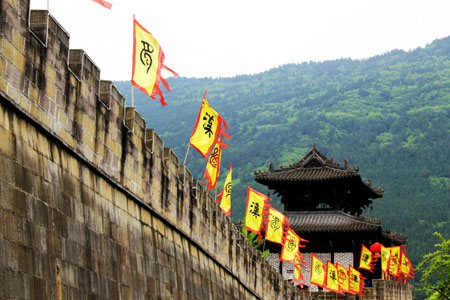
Stone Architecture and Ancient City Walls
One of the most distinctive features of Qingyan Ancient Town is its extensive use of stone. Built according to the local geological conditions, the town features impressive stone streets, stone houses, and massive city walls constructed from large rocks.
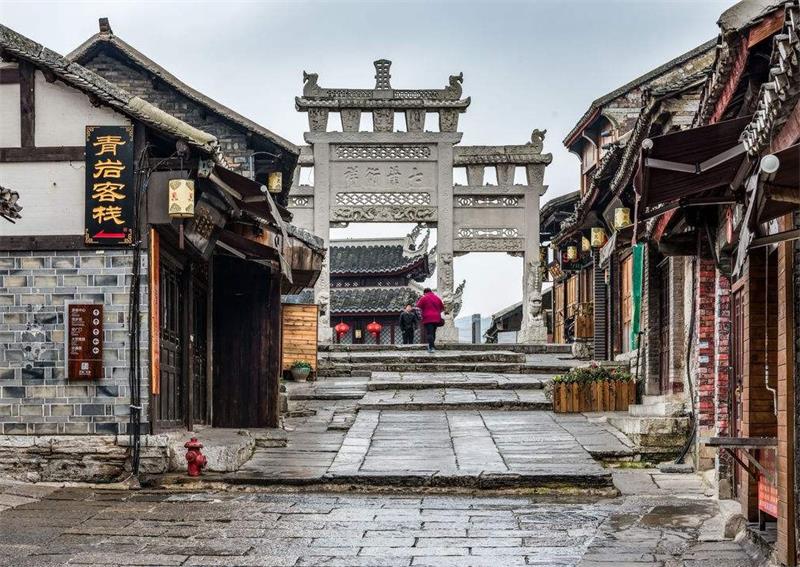
The ancient walls divide Qingyan into an inner town and outer town, with four gates facing north, south, east, and west. Originally, eight stone memorial archways stood outside the gates as symbols of the town. Today, three of these remain, decorated with exquisite carvings.
Among them, the most famous is the Zhao Lunli Baisui Archway, a beautifully carved structure representing longevity and traditional Chinese values.
Ancient Streets and Ming-Qing Architecture
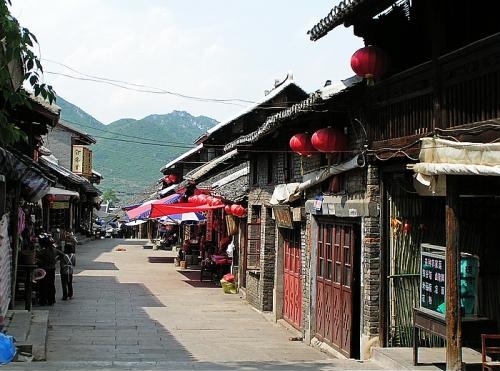
Walking through the inner town, visitors can admire more than 30 types of traditional buildings, including temples, monasteries, courtyards, pavilions, caves, and former residences. These structures showcase the craftsmanship of Ming and Qing Dynasty architects.
Many cultural treasures can be found throughout the town, including:
* Stone carvings at Ciyun Temple
* Wooden sculptures at Shoufo Temple
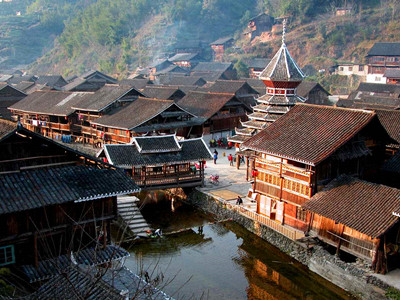
* Traditional wooden houses along ancient commercial streets
Visitors can stroll through the historic streets, admire classical architecture, and enjoy local specialties such as:
* Qingyan tofu
* Rice tofu
* Rose sugar
Stopping at a traditional tea house is also a wonderful way to experience the relaxed atmosphere of this ancient town.
A Unique Blend of Religious Cultures
Qingyan Ancient Town is also notable for its diverse religious heritage. Buddhism, Taoism, Catholicism, and Christianity have all influenced the town’s cultural development.
Visitors can explore traditional Buddhist temples and Taoist sites while also discovering the history of Christianity in Qingyan. Catholicism was introduced to the town in 1851 by a French missionary, while Christianity arrived later, creating a unique multicultural religious landscape.
Historical Figures of Qingyan
Throughout history, Qingyan Ancient Town has been home to many influential figures. Among them was Zhao Yijiong, the first person from Guizhou Province to achieve the title of Zhuangyuan (top scholar in the imperial examination system) during the Qing Dynasty.
Another notable figure was Chang Pinggang, who served as the General Secretary of Sun Yat-sen and was also a native of Qingyan.
These historical connections add further depth to the cultural significance of the town.
Experience the Charm of Qingyan Ancient Town
With its ancient stone walls, traditional buildings, historic temples, local cuisine, and cultural heritage, Qingyan Ancient Town is one of the best places to experience traditional Chinese history and architecture near Guiyang.
Although it can be visited as a day trip from Guiyang, staying overnight allows travelers to experience the town’s quieter side, especially in the early morning when the ancient streets are peaceful and the atmosphere reflects the elegance of old China.
|
Admission Fee:
|
CNY 10 for the entrance fee CNY 80 for the combo ticket
|
|
Bus Route:
|
Take special line at Hebingongyuan Station. Ticket fare: around CNY 3
|