China Exploration - China Adventure Tours and Travel Service
  • China Exploration - China Adventure Tours and Travel Service
  • 86-28-86270775
  • info@chinaexploration.com
  • Tour Code Search
  • HOME
  • China Tours
    • Top 10 China Tours
    • Classic China Tours
    • Yangtze Cruise Tour

        Yangtze Cruise Routes

        Yangtze Cruise Calendar

    • Join-in Group Tours
    • Short Stay Tours

        144 hours VISA free tours

        Less than 7 days tours

    • Family Tours
  • Adventure Tours
    • Overland Off-road Tours
    • Culture & Folklore Tours
    • Wildlife Exploration Tours
    • Trekking & Hiking Tours
    • Eco-Tour
    • M.I.C.E. & Event
    • School and Education Tours
  • DESTINATIONS
      BeijingChengduChongqingDaliDatongGuilinGuiyangHangzhouHongkongHuangshanKunmingLanzhouLhasaLijiangLuoyangPingyaoSanyaShanghaiShangrilaHohhotUrumqiWuhanXiamenXi’anXiningYinchuanZhangjiajie Explore All Destinations>>
  • Customized your trip
  • TRAVEL GUIDE
    • Travel to China
    • China Visa and Permit
    • Chinese Attractions
    • Chinese Culture
    • China Nature Reserve
    • China City Guide
    • China Maps
    • China Travel News
    • Hotel Booking
    • FAQS
  • About Us
    • Contact Us
    • Our Team
    • Our Glory
    • Olympic Torch Bearer
    • Feedback
    • Photo Album
    • Travel Story
    • Travel Video
    • Teams and Condition
    • Insurance Policy
    • Site Map
  • China Tours
  • Top 10 China Tours
  • Classic China Tours
  • Join-in Group Tours
  • Short Stay Tours
  • Family Tours
  • Adventure Tours
  • Overland Off-road Tours
  • Culture & Folklore Tours
  • Wildlife Exploration Tours
  • Trekking & Hiking Tours
  • Eco-Tour
  • M.I.C.E. & Event
  • School and Education Tours
  • Honeymoon Tour
  • DESTINATIONS
  • Beijing Tours
  • Chengdu Tours
  • Chongqing Tours
  • Dali Tours
  • Dalian Tours
  • Datong Tours
  • Guilin Tours
  • Guiyang Tours
  • Guangzhou Tours
  • Haerbin Tours
  • Hangzhou Tours
  • Hohhot Tours
  • HongKong Tours
  • Huangshan Tours
  • Kashgar Tours
  • Kunming Tours
  • Lanzhou Tours
  • Tibet Tours
  • Lijiang Tours
  • Luoyang Tours
  • TRAVEL GUIDE
  • Travel to China
  • China Visa and Permit
  • Chinese Attractions
  • Chinese Culture
  • China Nature Reserve
  • China City Guide
  • China Maps
  • China Travel News
  • Hotel Booking
  • FAQS
  • About Us
  • Contact Us
  • Our Team
  • Our Glory
  • Olympic Torch Bearer
  • Feedback
  • Photo Album
  • Travel Story
  • Terms And Condition
  • Insurance Policy
  • sitemap
Home > TRAVEL GUIDE > Chinese culture > The Great Wall
The great wall
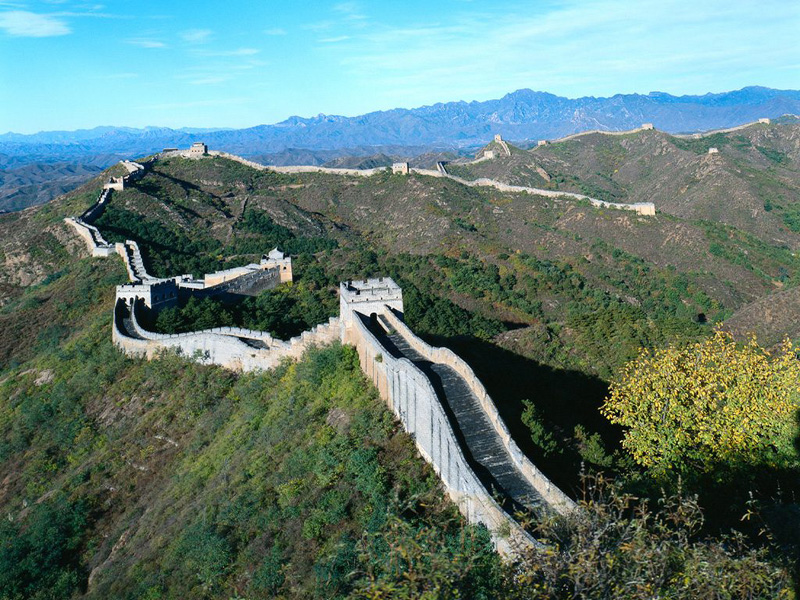
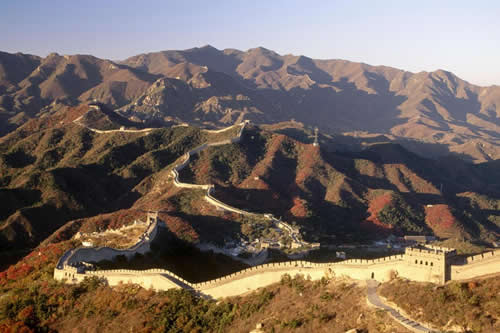
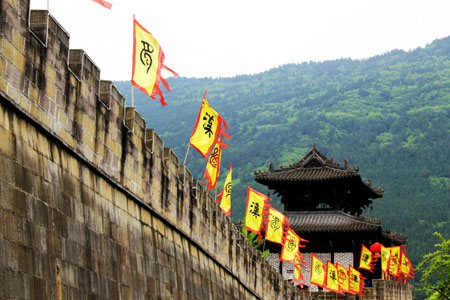
The Great Wall of China is a series of stone and earthen fortifications in northern China, built, rebuilt, and maintained between the 5th century BC and the 16th century to protect the northern borders of the Chinese Empire. Since the 5th century BC, several walls have been built that were referred to as the Great Wall. One of the most famous is the wall built between 220–206 BC by the first Emperor of China, Qin Shi Huang. Little of that wall remains; the majority of the existing wall were built during the Ming Dynasty.
 
The Great Wall stretches from Shanhaiguan in the east to Lop Nur in the west, along an arc that roughly delineates the southern edge of Inner Mongolia. The most comprehensive archaeological survey, using advanced technologies, has recently concluded that the entire Great Wall, with all of its branches, stretches for 8,851.8 km (5,500.3 mi). This is made up of 6,259.6 km (3,889.5 mi) of sections of actual wall, 359.7 km (223.5 mi) of trenches and 2,232.5 km (1,387.2 mi) of natural defensive barriers such as hills and rivers.
 
History of the great wall
 
The Chinese were already familiar with the techniques of wall-building by the time of the Spring and Autumn Period, which began around the 8th century BC. During the Warring States Period from the 5th century BC to 221 BC, the states of Qi, Yan and Zhao all constructed extensive fortifications to defend their own borders.
 
Built to withstand the attack of small arms such as swords and spears, these walls were made mostly by stamping earth and gravel between board frames. Qin Shi Huang conquered all opposing states and unified China in 221 BC, establishing the Qin Dynasty. Intending to impose centralized rule and prevent the resurgence of feudal lords, he ordered the destruction of the wall sections that divided his empire along the former state borders.
 
To protect the empire against intrusions by the Xiongnu people from the north, he ordered the building of a new wall to connect the remaining fortifications along the empire's new northern frontier. Transporting the large quantity of materials required for construction was difficult, so builders always tried to use local resources. Stones from the mountains were used over mountain ranges, while rammed earth was used for construction in the plains.
 
There are no surviving historical records indicating the exact length and course of the Qin Dynasty walls. Most of the ancient walls have eroded away over the centuries, and very few sections remain today. Later, the Han, Sui, Northern and Jin dynasties all repaired, rebuilt, or expanded sections of the Great Wall at great cost to defend themselves against northern invaders.
 
the great wallthe great wall
 
The Great Wall concept was revived again during the Ming Dynasty following the Ming army's defeat by the Oirats in the Battle of Tumu in 1449. The Ming had failed to gain a clear upper-hand over the Manchurian and Mongolian tribes after successive battles, and the long-drawn conflict was taking a toll on the empire. The Ming adopted a new strategy to keep the nomadic tribes out by constructing walls along the northern border of China. Acknowledging the Mongol control established in the Ordos Desert, the wall followed the desert's southern edge instead of incorporating the bend of the Huang He.
 
Unlike the earlier Qin fortifications, the Ming construction was stronger and more elaborate due to the use of bricks and stone instead of rammed earth. As Mongol raids continued periodically over the years, the Ming devoted considerable resources to repair and reinforce the walls. Sections near the Ming capital of Beijing were especially strong.
 
During the 1440s–1460s, the Ming also built a so-called "Liaodong Wall". Similar in function to the Great Wall (whose extension, in a sense, it was), but more basic in construction, the Liaodong Wall enclosed the agricultural heartland of the Liaodong province, protecting it against potential incursions by Jurched-Mongol Oriyanghan from the northwest and the Jianzhou Jurchens from the north. While stones and tiles were used in some parts of the Liaodong Wall, most of it was in fact simply an earth dike with moats on both sides.
 
Towards the end of the Ming Dynasty, the Great Wall helped defend the empire against the Manchu invasions that began around 1600. Under the military command of Yuan Chonghuan, the Ming army held off the Manchus at the heavily fortified Shanhaiguan pass, preventing the Manchus from entering the Chinese heartland. The Manchus were finally able to cross the Great Wall in 1644, when the gates at Shanhaiguan were opened by Wu Sangui, a Ming border general who disliked the activities of rulers of the Shun Dynasty. The Manchus quickly seized Beijing, and defeated the newly founded Shun Dynasty and remaining Ming resistance, to establish the Qing Dynasty.
 
In 2009, an additional 290 kilometres (180 miles) of previously undetected portions of the wall, built during the Ming Dynasty, were discovered. The newly discovered sections range from the Hushan mountains in the northern Liaoning province to Jiayuguan in western Gansu province. The sections had been submerged over time by sandstorms that moved across the arid region.
 
Under Qing rule, China's borders extended beyond the walls and Mongolia was annexed into the empire, so construction and repairs on the Great Wall were discontinued.
 
Related Tours
 
The Great Wall Hiking Exploration
Beijing Tours
China Customized Private Tours
China Culture & Folklore Tours

More Attractions

Recommended Tours

Mt. Wudangshan Off-beaten Track

It is overland tour to Mt. Wudangshan in Hubei province from Xian. Hubei province is located in mid China connecting many provinces in China by convenient transportation of railway, cruise, and flights......

1 Day Chengdu Harmoney Tours of

One day classic tours of Chengdu to Mt. Qingchengshan and Dujiangyan Dam will show tourist the profound of ancient Chinese wisdom and culture in harmony relation with the world. ......

1 Day Chengdu Giant Panda and L

The most classic one day Chengdu tours will bring tourist to Chengdu Giant panda garden and Leshan giant buddha with private travel guide and car in Chengdu, extremely convenient and easy!......

1 Day Best Chengdu Tours of San

One days best Chengdu tours bring tourist to Sanxingdui museum and giant panda garden with private guide and car, making your tour in Chengdu easy. ......

1 Day Chengdu Panda Volunteer T

This panda volunteer work provide tourist with one days unique experience of Panda volunteer project works and bring them an intimate touch with Giant pandas, also the best way to learn deep about pand......

2 Days Mt. Emeishan and Leshan

It is tour from the only one operator in Chengdu tours market offering Emeishan and Leshan tours by bullet train. Our highlights including Leshan Giant Buddha and Mt Emeishan. ......

Popular China Packages
  • Top 10 China Tours
  • Yangtze Cruise Tours
  • China Short Trips
  • Tibet Tours
  • Sichuan Tours
  • Yunnan Tour
  • Guilin Tour
  • Xiamen Tours
Adventure Tours
  • Overland Off-road Tours
  • Culture & Folklore Tours
  • Wildlife Exploration Tours
  • Trekking & Hiking Tours
  • Eco-Tour
  • M.I.C.E. & Event
  • School and Education Tours
  • Honeymoon Tour
China Travel Guide
  • Travel to China
  • China Visa and Permit
  • China Attractions
  • Chinese culture
  • China Nature Reserves
  • City Guide
  • China Maps
  • China Travel News
  • FAQS
Follow Us
Keep me updated
  • Stay up-to-date with the latest news direct to your inbox.

Address: 35th, Yangguang Business Center, Jinjiang District, Chengdu, Zip610065, China
About us | Contact us | Teams and Condition | Customer Center | Site Map
TEL: 028-86270775 E-mail: info@chinaexploration.com
Working hours:9:00AM-6:00PM(GMT+8)),Copyright(2003-2025) 蜀ICP05000963号 China Exploration Tour

  • Email: info@chinaexploration.com
  • Telephone: 86-28-86270775