



China Exploration
  • China Exploration
  • 86-28-86270775
  • info@chinaexploration.com
  • Tour Code Search
  • HOME
  • China Tours
    • Top 10 China Tours
        Top 10 China Tours
    • Classic China Tours
        Classic China Tours
    • Yangtze Cruise Tour
        Yangtze Cruise Routes

        Yangtze Cruise Routes

        Yangtze Cruise Calendar

        Yangtze Cruise Calendar

    • Join-in Group Tours
        Join-in Group Tours
    • Short Stay Tours
        144 hours VISA free tours

        144 hours VISA free tours

        Less than 7 days tours

        Less than 7 days tours

    • Family Tours
        Family Tours
  • Adventure Tours
    • Overland Off-road Tours
        Overland Off-road Tours
    • Culture & Folklore Tours
        Culture & Folklore Tours
    • Wildlife Exploration Tours
        Wildlife Exploration Tours
    • Trekking & Hiking Tours
        Trekking & Hiking Tours
    • Eco-Tour
        Eco-Tour
    • M.I.C.E. & Event
        M.I.C.E. & Event
    • School and Education Tours
        School and Education Tours
  • DESTINATIONS
      BeijingBeihaiChengduChongqingChangshaChaozhouDaliDalianDunhuangDatongEnshiFuzhouGuilinGuiyangGuangzhouHaerbinHangzhouHohhotHulun BuirHongKongHuangshanJilinJiangxiJinanJinggangshanJiuzhaigouKashgarKaifengKailiKunmingLanzhouLijiangLuoyangNanchangNanjingPutuoshanPingyaoQinghaiQingdaoQinhuangdaoSanyaShanghaiShenyangShandongSuzhouShenzhenShangrilaTibetTianshuiTianjinTaiyuanUrumqiWuyishanWutaishanWudangshanWuhanXiamenXishuangbannaXi'anXiningXinjiangXingyiYinchuanYichangYunnanZhangjiajieZhanjiangZhangye Explore All Destinations>>
  • Customized your trip
  • TRAVEL GUIDE
    • Travel to China
    • China Visa and Permit
    • Chinese Attractions
    • Chinese Culture
    • China Nature Reserve
    • China City Guide
    • China Maps
    • China Travel News
    • China Hotel
    • FAQS
  • About Us
    • Contact Us
    • Our Team
    • Our Glory
    • Olympic Torch Bearer
    • Feedback
    • Photo Album
    • Travel Story
    • Travel Video
    • Teams and Condition
    • Insurance Policy
    • Site Map
  • China Tours
  • Top 10 China Tours
  • Classic China Tours
  • Join-in Group Tours
  • Short Stay Tours
  • Family Tours
  • Adventure Tours
  • Overland Off-road Tours
  • Culture & Folklore Tours
  • Wildlife Exploration Tours
  • Trekking & Hiking Tours
  • Eco-Tour
  • M.I.C.E. & Event
  • School and Education Tours
  • Honeymoon Tour
  • DESTINATIONS
  • Beijing Tours
  • Beihai Tours
  • Chengdu Tours
  • Chongqing Tours
  • Changsha Tours
  • Chaozhou Tours
  • Dali Tours
  • Dalian Tours
  • Dunhuang Tours
  • Datong Tours
  • Enshi Tours
  • Fuzhou Tours
  • Guilin Tours
  • Guiyang Tours
  • Guangzhou Tours
  • Haerbin Tours
  • Hangzhou Tours
  • Hohhot Tours
  • Hulun Buir Tours
  • HongKong Tours
  • TRAVEL GUIDE
  • Travel to China
  • China Visa and Permit
  • Chinese Attractions
  • Chinese Culture
  • China Nature Reserve
  • China City Guide
  • China Maps
  • China Travel News
  • Hotel Booking
  • FAQS
  • About Us
  • Contact Us
  • Our Team
  • Our Glory
  • Olympic Torch Bearer
  • Feedback
  • Photo Album
  • Travel Story
  • Travel Video
  • Terms And Condition
  • Insurance Policy
  • sitemap
Home > TRAVEL GUIDE > Chinese culture > Silk Road
The Story of Chinese Silk and the Silk Road
  • There is a beautiful Chinese legend about how silk was discovered. It is said that Leizu, the wife of the Yellow Emperor, was sitting beneath a mulberry tree when a silkworm cocoon accidentally fell into her cup of hot tea. As she tried to remove it, the cocoon began to unwind into a long, fine thread. This, according to legend, was how the secret of silk was first discovered.

    The more down-to-earth explanation is that ancient Chinese people gradually discovered that the strange white cocoons produced by silkworms could be boiled and unwound into extraordinarily fine and strong threads. Over generations, they developed the techniques of raising silkworms, reeling silk, dyeing it, and weaving it into beautiful fabrics.

    The cultivation of silkworms and the production of silk are known as sericulture. A tiny silkworm, initially no larger than an ant, feeds mainly on mulberry leaves and grows rapidly. After roughly three to four weeks, it becomes mature enough to spin its cocoon. It then attaches itself to a support, such as straw or a specially prepared frame, and begins producing a continuous silk filament around itself.


    The next stage is silk reeling. The cocoons are placed in hot water to soften the natural gum, allowing the delicate filaments to be unwound. Several filaments are combined and reeled together to form a stronger silk thread. The raw silk can then be dyed and woven into fabric.

    One remarkable feature of silk is the extraordinary length of the filament produced by a single cocoon. Depending on the species and processing method, a cocoon can contain a filament hundreds of meters long, sometimes approaching or exceeding a kilometer. This helps explain why such a tiny creature could produce one of the world's most precious natural textiles.

    For thousands of years, silk was one of China's most valuable products. Chinese craftsmen developed sophisticated techniques for weaving silk into clothing, tapestries, embroidery, and other luxury goods. Silk became so highly prized that it was eventually used not only as clothing but also as a symbol of wealth, refinement, and social status.

    During the Western Han Dynasty, Emperor Wu Di expanded China's contacts with Central Asia. The diplomatic missions associated with Zhang Qian helped open and strengthen routes linking China with Central Asia and beyond. Over time, these networks of trade and cultural exchange became known collectively as the Silk Road.

    The Silk Road was not a single road, but a vast network of routes stretching from Chang'an, today's Xi'an, westward through Central Asia and eventually toward the Middle East and Europe. Along these routes traveled not only silk, but also spices, precious stones, horses, glassware, ideas, religions, technologies, and artistic traditions.

    When Chinese silk eventually reached the Roman world, it caused a sensation. Roman elites, particularly wealthy women, greatly admired its softness, beauty, and luxurious appearance. Silk became a symbol of wealth and high social status.

    There is also a famous legend about how the secret of sericulture eventually escaped from China. According to one version, a foreign princess married a king in Central Asia and secretly carried silkworm eggs hidden in her headdress. Another version tells of a monk who smuggled silkworm eggs out of China. Although these stories are difficult to verify historically, they reflect an important truth: over many centuries, the knowledge of silk production gradually spread from China across Asia and eventually to Europe.

    Thousands of years have passed since silk was first produced in China, yet silk remains one of the world's most admired natural fibers. Modern technology is now exploring ways to produce silk-like materials without relying entirely on silkworms. Nevertheless, the story of silk remains a remarkable chapter in Chinese history—a story of nature, craftsmanship, trade, cultural exchange, and human ingenuity.

    Silk was more than a fabric. It became a bridge connecting China with the rest of the world.


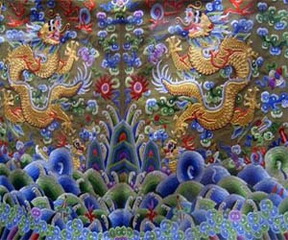
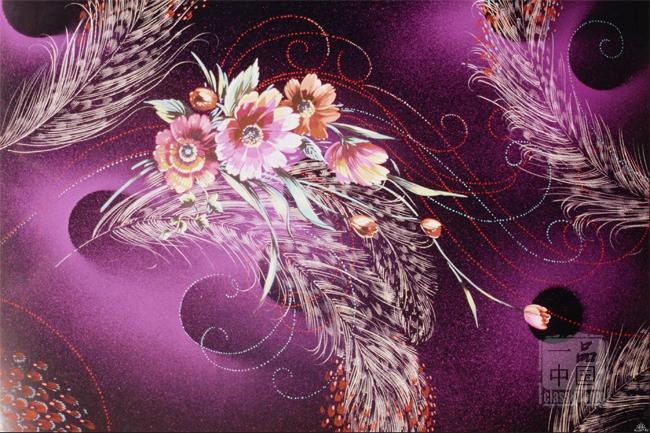
    Chinese Silk beautiful chinese silk

    Related Tours

  • Silk Road Overland Expedition in West China
  • China Train Tour

    China Festival Tours

    Fixed Overland tour from Kyrghyzstan to Laos in 2015

    2015 China Overland Tour of Self driving From Laos To Mongolia by Own Vehicle

    18 Days Ancient China Culture Tours

    28 Days All China Around Exploration

    Popular China Tours

More Attractions

Recommended Tours

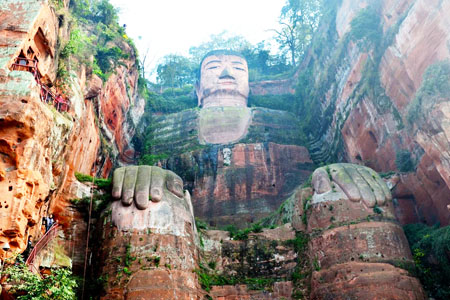
2 Days Leshan Giant Buddha and

Classic two days tours to west Chengdu, where Leshan Giant Buddha and Mt Emeishan are both world class top tour destinations, and also visit a local old town. ......
3 Days Chengdu Emeishan and Les

Explore the best of Chengdu and Sichuan on this 3-day private tour. Visit Chengdu Panda Base, Kuanzhai Alley, Wangjianglou Bamboo Park, Leshan Giant Buddha, Luocheng Ancient Town, and Mount Emei with a......
3 Days Three Kingdoms Tour in N

Explore Sichuan’s ancient history and culture on a 3-day private tour from Chengdu. Visit the Giant Panda Base, Sanxingdui Museum, Jianmen Pass, Zhaohua Ancient Town, and Langzhong Ancient Town to di......
Jiuzhaigou Private Tours By Tra

Explore Jiuzhaigou Valley and Huanglong National Park from Chengdu with our private tours. Choose a high-speed train, flight, or scenic overland journey to discover UNESCO World Heritage landscapes, co......
3 Days Abundant South Chengdu T

Discover Sichuan’s hidden cultural treasures on this 3-day tour from Chengdu, visiting Anyue Buddhist Rock Carvings, Zigong Salt Museum, Dinosaur Museum, Rongxian Buddha, Leshan Giant Buddha and Huan......
3 Days’ Epicure Tours of Sich

Experience the best of Chengdu with giant pandas, Sichuan cooking class, local markets, Leshan Giant Buddha, Buddhist cuisine and authentic Chengdu food culture.......

Popular China Packages
  • Top 10 China Tours
  • Yangtze Cruise Tours
  • China Short Trips
  • Tibet Tours
  • Sichuan Tours
  • Yunnan Tour
  • Guilin Tour
  • Xiamen Tours
Adventure Tours
  • Overland Off-road Tours
  • Culture & Folklore Tours
  • Wildlife Exploration Tours
  • Trekking & Hiking Tours
  • Eco-Tour
  • M.I.C.E. & Event
  • School and Education Tours
  • Honeymoon Tour
China Travel Guide
  • Travel to China
  • China Visa and Permit
  • China Attractions
  • Chinese culture
  • China Nature Reserves
  • City Guide
  • China Maps
  • China Travel News
  • FAQS
Follow Us
Keep me updated
  • Stay up-to-date with the latest news direct to your inbox.

Address: 35th, Yangguang Business Center, Jinjiang District, Chengdu, Zip610065, China
About us | Contact us | Teams and Condition | Customer Center | Site Map
TEL: 028-86270775 E-mail: info@chinaexploration.com
Working hours:9:00AM-6:00PM(GMT+8)),Copyright(2003-2026) 蜀ICP05000963号 China Exploration Tour

  • Email: info@chinaexploration.com
  • Telephone: 86-28-86270775