




Classic two days tours to west Chengdu, where Leshan Giant Buddha and Mt Emeishan are both world class top tour destinations, and also visit a local old town. ......
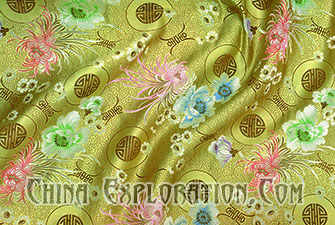
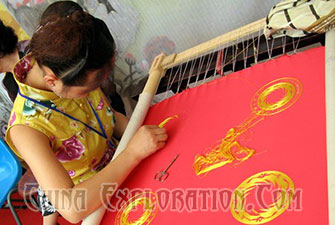
Chinese Embroidery as a Chinese handicraft has long been an important facet of traditional Chinese arts and crafts. Practiced all over the country, China's most famous works of embroidery come from Suzhou (abbr. Su), Hunan (abbr. Xiang), Sichuan (abbr. Shu) and Guangdong (abbr. Yue). Embroidery as a folk art is imbued with the distinct characteristics of its locality. As an art form it features exquisite craftsmanship, immaculate execution and strong aesthetic appeal.
Su (Suzhou) Embroidery is crafted in areas centered on Suzhou, Jiangsu Province. It is noted for its beautiful patterns, elegant colors, variety of stitches, and consummate craftsmanship. A needle creates Su embroidery on fabric as a brush paints a picture on canvas. Stitching is meticulously skillful, coloration subtle and refined.
Xiang (Hunan) Embroidery comes from areas centered on Changsha, capital of Hunan Province. It is distinct for its starkly elegant black, white and gray coloration. Its emphasis is on contrasts of light and shade that highlight the pattern texture to give a three-dimensional effect. Xiang Embroidery composition combines void and solid imagery, utilizing empty space in the same way as Chinese ink-and-wash paintings.
Yue (Guangdong or Guang) Embroidery includes that crafted in Chaozhou. It is composed of intricate but symmetrical patterns, vibrant colors, varied stitches and a defined weave. Its use of primary colors, light and shade are reminiscent of Western paintings.
Shu (Sichuan) Embroidery comes from areas centered on Chengdu, capital of Sichuan Province. Its raw materials are satin and colored silk, its craftsmanship painstaking and refined. The emphasis is on even stitching, delicate coloration, and local flavor. Sichuan embroidery is used to decorate quilt covers, pillowcases, garments, shoes and painted screens.
Choice of image apart, the successful creation of a work of embroidery pivots on stitching methods, coloration, and their combination. These factors are decisive when applying distinct embroidery techniques to the depiction of figures, objects, animals, backgrounds, landscapes and ornaments.
Organic development and accumulation over centuries has made embroidery a complete art of rich patterns and malleable forms that evoke intense aesthetic pleasure. Works fall naturally into different series according to subject matter and technique. They include oil painting, traditional Chinese painting, water towns, flowers, greeting cards, pigeons and flower vases. Examples of practical-use embroidered articles are garments, handkerchiefs, scarves and greeting cards.
Related Tours
Fixed Overland tour from Kyrghyzstan to Laos in 2015
2015 China Overland Tour of Self driving From Laos To Mongolia by Own Vehicle
18 Days Ancient China Culture Tours
Classic two days tours to west Chengdu, where Leshan Giant Buddha and Mt Emeishan are both world class top tour destinations, and also visit a local old town. ......
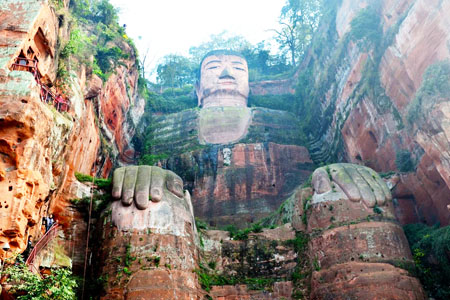
Explore the best of Chengdu and Sichuan on this 3-day private tour. Visit Chengdu Panda Base, Kuanzhai Alley, Wangjianglou Bamboo Park, Leshan Giant Buddha, Luocheng Ancient Town, and Mount Emei with a......
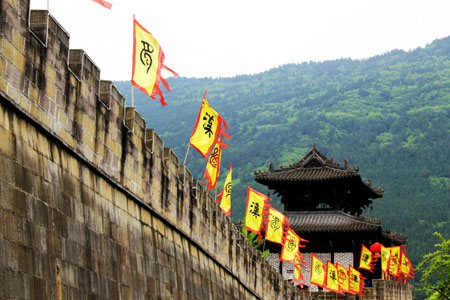
Explore Sichuan’s ancient history and culture on a 3-day private tour from Chengdu. Visit the Giant Panda Base, Sanxingdui Museum, Jianmen Pass, Zhaohua Ancient Town, and Langzhong Ancient Town to di......
Explore Jiuzhaigou Valley and Huanglong National Park from Chengdu with our private tours. Choose a high-speed train, flight, or scenic overland journey to discover UNESCO World Heritage landscapes, co......
Discover Sichuan’s hidden cultural treasures on this 3-day tour from Chengdu, visiting Anyue Buddhist Rock Carvings, Zigong Salt Museum, Dinosaur Museum, Rongxian Buddha, Leshan Giant Buddha and Huan......
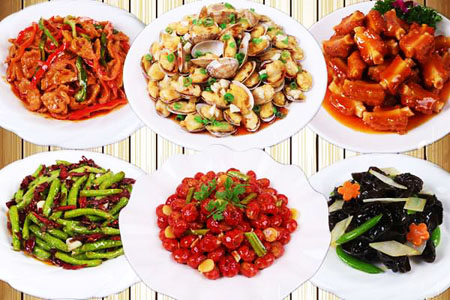
Experience the best of Chengdu with giant pandas, Sichuan cooking class, local markets, Leshan Giant Buddha, Buddhist cuisine and authentic Chengdu food culture.......

