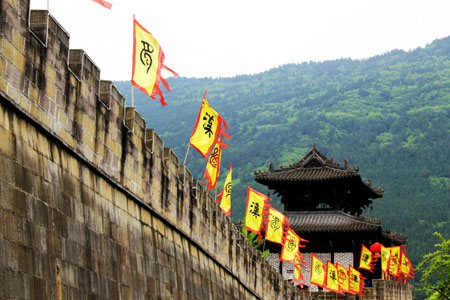
The essence of Chinese kung fu lies in the diverse ethnic traditions and regional cultures of China. It developed over thousands of years through people's daily lives, labor, military practices, physical training, and philosophical traditions.
Emei Kung Fu, one of China's major martial arts traditions, is deeply rooted in the culture of Mount Emei in Sichuan. It reflects the influence of Buddhism, Taoism, and Confucianism, combining physical training with meditation, health cultivation, traditional medicine, and philosophical thought.
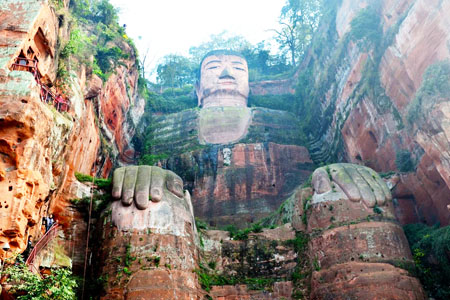
Mount Emei has long been regarded as a sacred Buddhist mountain and a place associated with hermits, monks, and martial artists. Its distinctive natural environment, together with Sichuan's regional culture and the traditions of Buddhist cultivation, helped shape the unique character of Emei martial arts.
At the philosophical level, Emei Kung Fu emphasizes the traditional Chinese concept of the unity of humanity and nature. Its movements seek a balance between strength and softness, movement and stillness, tension and relaxation. The resulting style is often described as “hard and soft complementing each other, movement and stillness in harmony, and elegant and natural.”
The Origins of Emei Kung Fu
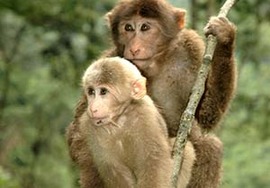
According to traditional accounts, the history of Emei martial arts can be traced back to ancient times. One legendary figure is White Ape Man, also known as Situ Xuan Kong, who was said to have studied and imitated the movements of mountain apes during the Spring and Autumn and Warring States periods. Although this story belongs largely to the realm of martial arts tradition and legend, it is regarded within Emei martial arts culture as an important part of its origin story.
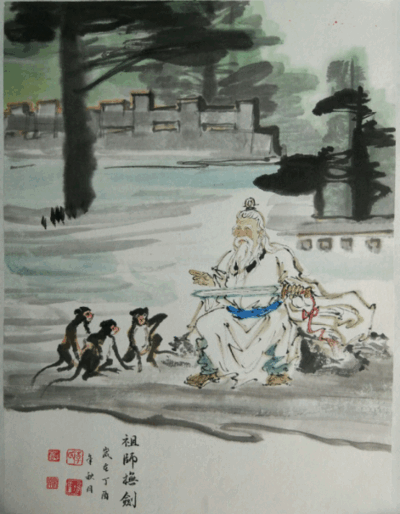
Another figure associated with the development of Emei martial arts is the so-called “Indifferent Master” of the Northern Wei period. According to local tradition, he had military experience before becoming a Buddhist practitioner on Mount Emei. He is said to have combined his knowledge of military techniques with Buddhist cultivation, contributing to the development of martial arts traditions on the mountain.
During the Southern Song Dynasty, the tradition of Baiyun Chan Master is associated with the development of Emei Linji Qigong. This tradition combined elements of Buddhist practice, Taoist cultivation, traditional medicine, and martial arts. Among the practices traditionally attributed to this lineage is the Twelve Stances of Emei, which has continued to be practiced and studied.
Another important figure in Emei martial arts tradition was De Yuan, a Southern Song-era master remembered for his distinctive white eyebrows and associated with the development of White Eyebrow Boxing. This tradition later spread beyond Sichuan to regions including Guangdong, Hong Kong, Macao, and Taiwan.
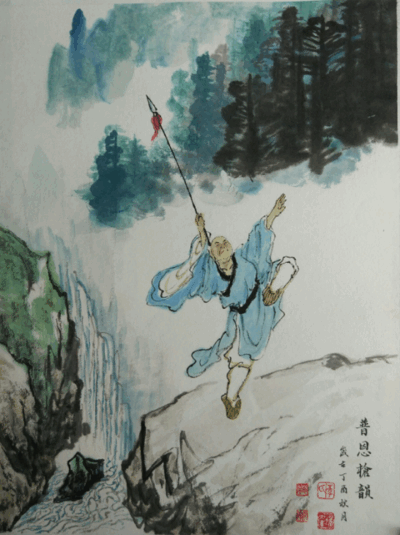
The Ming Dynasty was an important period in the development and systematization of Emei martial arts. Various masters and schools emerged, and different techniques were refined and passed down through generations. Traditional accounts also associate Chan Master Pu'en with the development of Emei spear techniques.
The Philosophy of Emei Kung Fu
Unlike martial arts traditions that are often described primarily through a single philosophical or religious influence, Emei Kung Fu is traditionally characterized by the integration of Buddhist, Taoist, and Confucian ideas.
Buddhist practice contributed meditation and spiritual cultivation; Taoist traditions emphasized harmony with nature, breathing, internal cultivation, and health; while Confucian thought contributed ideas concerning ethics, discipline, personal cultivation, and conduct.
As a result, Emei Kung Fu is more than a system of fighting techniques. Traditionally, it has also been regarded as a way of cultivating the body, mind, breath, health, and character.
Its philosophy reflects the traditional Chinese idea that human beings should live in harmony with nature. The concepts of nature, balance, circular movement, emptiness, and harmony can all be found in the theory and practice of Emei martial arts.
The Character of Emei Kung Fu
One of the characteristics traditionally associated with Emei Kung Fu is “rigid and soft complementing each other.”
In practice, this means combining internal strength with flexible body movements. Strength is not necessarily expressed through brute force; instead, power is generated through coordinated movement, balance, timing, breathing, and control.
The result is a martial art in which strength and softness, movement and stillness, offense and defense are constantly balanced.
Perhaps this is the most fascinating aspect of Emei Kung Fu: it transforms martial training into a philosophy of balance—between human beings and nature, strength and softness, body and mind.