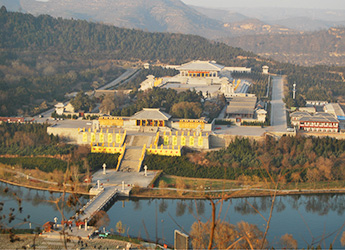
Yellow Emperor Mausoleum (黄帝陵, Huangdi Ling) is one of the most important cultural and historical sites in China. Located on the top of Qiaoshan Mountain in Huangling County, Shaanxi Province, the mausoleum is believed to be the resting place of Yellow Emperor (Huangdi, 轩辕黄帝), the legendary ancestor of the Chinese nation.
Known as “The First Mausoleum in the World”, Yellow Emperor Mausoleum represents the origins of Chinese civilization and has been a sacred place for worship and ancestor ceremonies for thousands of years.
Surrounded by beautiful natural scenery, ancient cypress forests, and peaceful mountain landscapes, the site combines history, mythology, and traditional Chinese culture, making it an important destination for visitors exploring Shaanxi Province.
History and Significance of Yellow Emperor Mausoleum
According to ancient Chinese historical records and legends, Yellow Emperor (Huangdi) was one of the legendary Five Emperors of ancient China. He is traditionally regarded as the founder of Chinese civilization and is credited with important cultural achievements, including the development of agriculture, medicine, writing, and social systems.
The tradition of worshiping Yellow Emperor at Qiaoshan Mountain dates back more than 2,000 years. Many emperors throughout Chinese history held ceremonies here to honor the ancestor of the Chinese people.
Today, Yellow Emperor Mausoleum remains an important symbol of Chinese cultural identity and is often visited during major national memorial ceremonies.
Scenic Environment of Qiaoshan Mountain
Yellow Emperor Mausoleum is located on Qiaoshan Mountain, a beautiful mountain area famous for its ancient cypress trees and tranquil environment.
The mountain is surrounded by streams and covered with evergreen vegetation, creating a peaceful atmosphere suitable for reflection and cultural exploration.
A wide stone pathway leads visitors from the foot of the mountain to the mausoleum area. Along the route, visitors can enjoy the natural scenery while learning about the history and traditions associated with Huangdi.
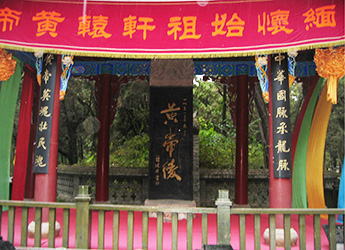 The Mausoleum of Yellow Emperor
At the summit of Qiaoshan Mountain stands the tomb of Yellow Emperor.
Before reaching the mausoleum, visitors pass the famous “Dismounting Rock”, which bears the inscription:
“Civil and military officials should dismount here.”
According to ancient tradition, officials and worshipers were required to get off their horses at this point and walk respectfully to the mausoleum.
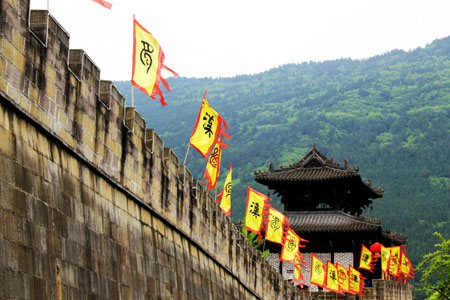
The mausoleum is surrounded by a protective stone wall and features a large ceremonial stele in front known as “Qiaoshan Dragon Drive Stele.”
According to legend, this was the place where Yellow Emperor ascended to heaven on a dragon after completing his earthly mission, becoming an important symbol in Chinese mythology.
Xuanyuan Temple: A Place to Honor the Chinese Ancestor
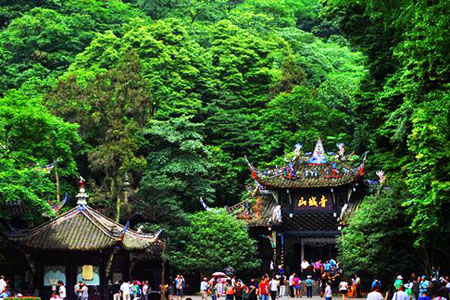
At the foot of Qiaoshan Mountain stands Xuanyuan Temple (轩辕庙), a historic temple dedicated to Yellow Emperor.
Originally built during the Han Dynasty, the temple has undergone several restorations throughout history and remains an important place for ancestor worship.
The main attractions inside the temple include:
* The Hall of Xuanyuan Huangdi
* Memorial tablets honoring Yellow Emperor
* Ancient stone inscriptions
* Historical steles recording imperial ceremonies
The temple courtyard is also home to the famous “Yellow Emperor Cypress”, a legendary ancient tree believed to have been planted personally by Huangdi more than 4,000 years ago.
The cypress stands approximately 19 meters high, with a trunk circumference of around 10 meters, and is known as the “Father of the World’s Cypresses.”
Cultural Heritage and Ancient Ceremonies
Yellow Emperor Mausoleum contains numerous stone inscriptions documenting historical worship ceremonies and restoration projects throughout Chinese history.
Around 50 ancient steles are preserved in the Stele Pavilion, including inscriptions by emperors of different dynasties and records related to the protection and renovation of the mausoleum and temple.
These historical relics provide valuable insight into Chinese traditions of ancestor worship and the development of Chinese civilization.
Yellow Emperor Worship Ceremony
The annual Yellow Emperor Worship Ceremony is one of the most important traditional cultural events in China.
During the ceremony, participants gather at the mausoleum to honor Huangdi and express respect for Chinese heritage and civilization. The event attracts visitors, scholars, and cultural representatives from around the world.
Why Visit Yellow Emperor Mausoleum?
Yellow Emperor Mausoleum is more than an ancient tomb; it is a symbol of Chinese history, culture, and national identity.
For travelers interested in Chinese mythology, ancient civilization, traditional rituals, and cultural heritage, the mausoleum provides a unique opportunity to explore the roots of Chinese civilization.
A visit to Yellow Emperor Mausoleum offers a deeper understanding of China’s long history and the traditions that have shaped Chinese culture for thousands of years.