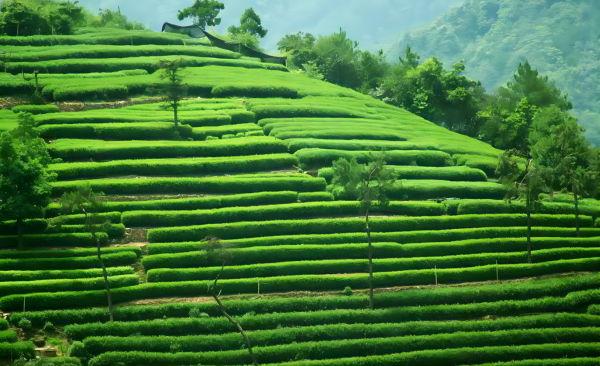
 Longjing, meaning “Dragon Well”, is one of the most famous cultural attractions in Hangzhou, Zhejiang Province. Located near the scenic West Lake, Longjing is renowned for its crystal-clear spring, beautiful tea plantations, and the world-famous West Lake Longjing Tea, one of China’s Top Ten Famous Teas.
Surrounded by green mountains and peaceful tea gardens, Longjing represents the perfect harmony between nature, history, and traditional Chinese tea culture. For centuries, it has attracted emperors, poets, monks, and travelers seeking tranquility and inspiration.
The Legend and History of Dragon Well
Longjing Spring is a round-shaped natural spring pool famous for its clear and sweet water. According to legend, ancient people believed that the spring was connected to the sea and inhabited by a dragon, giving it the name Longjing (Dragon Well).
It is also said that Ge Hong, a famous Taoist scholar and alchemist during the Eastern Jin Dynasty, once practiced alchemy in this area.
About 500 meters from Longjing Spring stands Longjing Temple, also known as Old Longjing. Although the original temple no longer exists, the peaceful site has become an important place for visitors to experience Hangzhou’s tea culture.
The Unique Water of Longjing Spring
The water of Longjing Spring is composed of both underground water and surface water. Because underground water accounts for a larger proportion, it remains beneath the surface layer.
One of the most interesting natural phenomena occurs when the spring water is gently stirred with a stick. The underground water rises and creates a circular water line on the surface. As the water gradually settles, the circle slowly shrinks and disappears, creating a fascinating experience for visitors.
West Lake Longjing Tea – China’s Legendary Green Tea
The tea produced around Longjing Village is called West Lake Longjing Tea, named after its place of origin near West Lake in Hangzhou. With a history of more than 1,200 years, it is one of the most treasured varieties of Chinese green tea.
The traditional producing areas of West Lake Longjing Tea are known as the “Five Famous Tea Areas”:
* Lion Peak (Shifeng)
* Longjing Village
* Yunqi
* Hupao (Tiger Running)
* Meijiawu
Among them, Lion Peak Longjing Tea is considered one of the highest-quality varieties.
 Imperial Tea and the Royal History of Longjing Tea
West Lake Longjing Tea became especially famous during the Qing Dynasty when Emperor Qianlong visited Hangzhou several times during his journeys to southern China.
During his visits, Emperor Qianlong praised the beauty of Longjing tea gardens and designated 18 tea trees in front of Hu Gong Temple at Lion Peak as “Imperial Tea Trees.”
Since then, Longjing Tea gained worldwide recognition and became closely associated with Chinese royal culture.
The Long History of West Lake Longjing Tea
The history of Longjing Tea can be traced back to the Tang Dynasty. During this period, Lu Yu, known as the “Tea Saint of China,” recorded tea production around Hangzhou’s Tianzhu and Lingyin areas in his famous work The Classic of Tea (Cha Jing), the world’s earliest book dedicated to tea.
The development of Longjing Tea can be summarized as:
* Song Dynasty: Longjing tea areas began to develop, and several local teas became tribute teas.
* Yuan Dynasty: The quality and reputation of Longjing Tea continued to improve.
* Ming Dynasty: West Lake Longjing Tea became widely known throughout China.
* Qing Dynasty: Emperor Qianlong’s appreciation helped establish Longjing Tea as a world-famous tea.
For more than a thousand years, Longjing Tea has evolved from a local beverage into a symbol of Chinese culture and craftsmanship.
The Unique Characteristics of West Lake Longjing Tea
High-quality West Lake Longjing Tea is known for its:
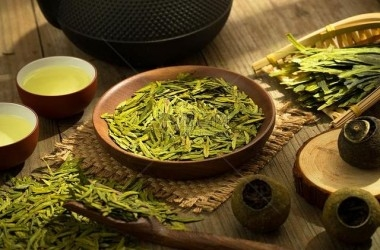
* Flat, smooth, and delicate leaves
* Bright green color
* Fresh and elegant fragrance
* Sweet and refreshing taste
* Tender green tea leaves after brewing
Tea harvested before the Qingming Festival is called Mingqian Longjing, which is considered the most precious and highest-grade Longjing Tea.
When brewed, the tea produces a clear jade-green color, a fresh aroma similar to orchids, and a smooth taste with a long-lasting aftertaste.
Longjing Tea and Hangzhou Culture
Like West Lake itself, Longjing Tea is a symbol of the relationship between people, nature, and culture. The tea gardens around Longjing Village combine beautiful mountain landscapes with centuries-old traditions, making it one of the best places to experience authentic Chinese tea culture.
Today, visitors can walk through peaceful tea fields, visit historic springs and temples, enjoy traditional tea ceremonies, and discover why Longjing remains one of China’s most beloved cultural treasures.