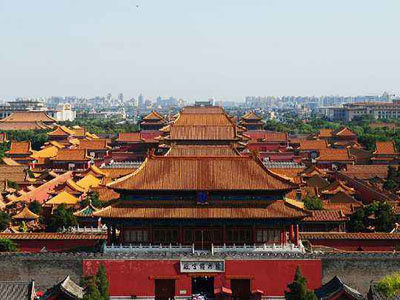
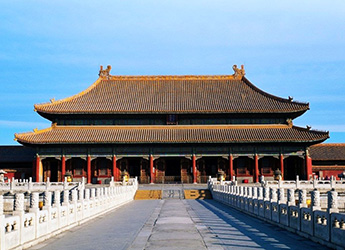
 Located in the heart of Beijing, the Palace Museum (Gugong Museum) is one of China’s most important museums and a world-famous cultural landmark. It was established in 1925 on the foundation of the Forbidden City, the former imperial palace of the Ming and Qing dynasties.
With its magnificent architecture and vast collection of priceless cultural relics, the Palace Museum represents the highest achievements of ancient Chinese palace design, art, and craftsmanship.
Today, it is one of Beijing’s most visited attractions and a UNESCO World Heritage Site, attracting millions of visitors from around the world every year.
History of the Forbidden City and Palace Museum
The Forbidden City was the imperial palace of China’s Ming and Qing dynasties. Construction began in 1406 under the reign of the Ming Emperor Yongle and was completed in 1420.
For nearly 600 years, from 1420 to 1911, the palace served as the political and residential center of China’s emperors.
The entire complex was designed according to traditional Chinese principles of architecture and Feng Shui, emphasizing harmony between humans, nature, and the universe.
The rectangular palace complex covers approximately:
* 720,000 square meters
* 961 meters from north to south
* 760 meters from east to west
It contains nearly 10,000 rooms and spaces, making it the largest and most complete ancient wooden palace complex in the world.
After the last emperor of the Qing Dynasty, Puyi, left the Forbidden City in 1924, the Palace Museum was officially established in 1925.
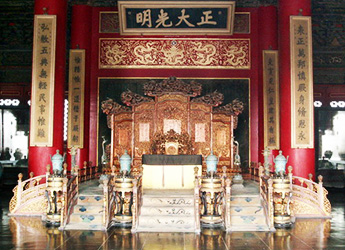 The Forbidden City – A Masterpiece of Chinese Architecture
The Forbidden City is considered the greatest surviving example of ancient Chinese palace architecture.
The complex is arranged along a strict north-south central axis, creating a sense of balance, order, and imperial grandeur.
The palace is surrounded by:
* A 10-meter-high defensive wall
* A 5.2-meter-wide moat
It has four main gates:
* Meridian Gate (Wumen) – the main southern entrance
* Eastern Flowery Gate (Donghuamen)
* Western Flowery Gate (Xihuamen)
* Gate of Divine Prowess (Shenwumen) – the northern entrance
Visitors entering the central palace area pass through a sequence of grand gates and courtyards before reaching the main imperial halls.
The Outer Court – Center of Imperial Ceremonies
The southern section of the Forbidden City is known as the Outer Court (Qianchao), where important state ceremonies were held.
The three main halls are:
Hall of Supreme Harmony (Taihedian)
The largest and most magnificent hall in the Forbidden City, it was used for major imperial ceremonies, including:
* Emperor coronations
* Birthday celebrations
* Royal weddings
* Important state events
Hall of Central Harmony (Zhonghedian)
A smaller hall where emperors prepared before attending ceremonies.
Hall of Preserving Harmony (Baohedian)
A place used for royal banquets and imperial examinations during the Qing Dynasty.
Together, these three halls represent the political power and authority of imperial China.
The Inner Court – The Emperor’s Residence
The northern section of the Forbidden City is known as the Inner Court (Neiting), where emperors, empresses, and royal family members lived.
The major buildings include:
* Palace of Heavenly Purity (Qianqinggong) – the emperor’s residence
* Hall of Union and Peace (Jiaotaidian) – a ceremonial hall
* Palace of Earthly Tranquility (Kunninggong) – the empress’s residence
Behind these buildings is the beautiful Imperial Garden, featuring ancient trees, pavilions, rockeries, and traditional landscaping.
The Inner Court also contains:
* Six eastern palaces
* Six western palaces
These were residences for imperial consorts and members of the royal family.
A Treasure House of Chinese Art and Culture
The Palace Museum houses the largest collection of ancient Chinese artworks in the world.
Its collection contains more than one million cultural relics, including:
* Chinese paintings
* Ceramics
* Bronze vessels
* Jade carvings
* Gold and silver objects
* Calligraphy works
* Lacquerware
* Embroidery
* Sculptures
* Court furniture
* Royal documents
* Clocks and decorative objects
Many of these treasures were once owned by the imperial families of the Ming and Qing dynasties.
The museum is regarded as a priceless record of China’s artistic traditions, craftsmanship, and royal history.
The Symbolism of Colors in the Forbidden City
Color symbolism plays an important role in Forbidden City architecture.
Yellow dominates the palace because it represented the emperor and royal authority.
Visitors can see yellow in:
* Glazed roof tiles
* Palace decorations
* Architectural details
However, one famous exception is Wenyuange, the imperial library, which has a black roof.
According to ancient beliefs, black represented water, and water was thought to protect buildings from fire.
Palace Museum as a UNESCO World Heritage Site
The Forbidden City was recognized as a UNESCO World Heritage Site in 1987 due to its outstanding historical, architectural, and cultural value.
It was also included on China’s list of key protected historical monuments in 1961.
Today, the Palace Museum continues to preserve and display China’s imperial heritage while serving as an important center for historical research and cultural education.
Why Visit the Palace Museum Beijing?
The Palace Museum is a must-see destination for travelers interested in:
* Chinese history
* Imperial culture
* Traditional architecture
* Ancient art
* Royal traditions
A visit allows travelers to walk through the same courtyards once used by emperors and experience the grandeur of one of the greatest architectural achievements in human history.
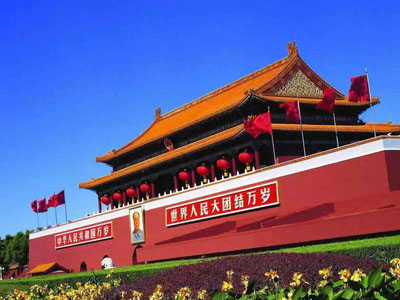
Together with Tiananmen Square, Jingshan Park, and the surrounding historic areas of central Beijing, the Palace Museum offers an unforgettable journey into China’s imperial past.