The Summer Palace, known in Chinese as Yiheyuan (Garden of Harmonious Unity), is one of the finest examples of Chinese imperial garden design. Located in the northwestern suburbs of Beijing, it combines natural landscapes with magnificent man-made structures, creating a harmonious balance between architecture and nature.
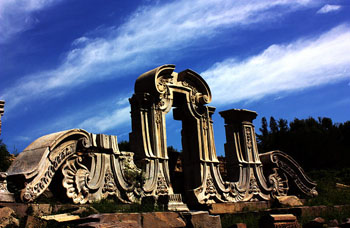
Originally built in 1750 during the Qing Dynasty, the Summer Palace was largely destroyed during the war of 1860 and later restored on its original foundation in 1886. It served as an imperial retreat for four generations of the Qing royal family and is now one of Beijing’s most popular cultural attractions.
Recognized as a masterpiece of Chinese landscape gardening, the Summer Palace represents the perfect integration of hills, lakes, pavilions, temples, bridges, and palace buildings. It is the largest and best-preserved imperial garden in China and was inscribed as a UNESCO World Heritage Site in 1998.
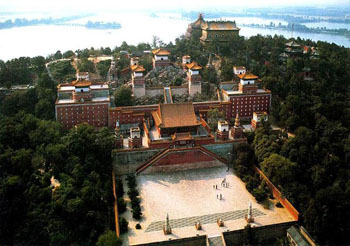
Covering an area of approximately 290 hectares, with about three-quarters occupied by water, the Summer Palace centers around Longevity Hill (Wanshou Mountain) and Kunming Lake. The entire complex is divided into three main areas: the administrative area, the residential area, and the scenic area.
Main Areas of the Summer Palace
Administrative Area
The administrative area is located in the eastern part of the Summer Palace and was where imperial affairs were handled. Its main building is the Hall of Benevolence and Longevity (Renshou Hall), originally known as the Hall of Diligent Government. It served as the place where emperors conducted state affairs and met officials.
Residential Area
The residential area consists mainly of three important courtyards:
* Hall of Jade Ripples (Yulantang) – the residence of Emperor Guangxu.
* Hall of Happiness and Longevity (Leshoutang) – the living quarters of Empress Dowager Cixi.
* Yihe Hall – another important imperial residence.
These elegant courtyards provide visitors with a glimpse into the daily life of China’s imperial family.
 Scenic Area
The scenic area forms the largest part of the Summer Palace and includes Longevity Hill, Kunming Lake, and numerous traditional Chinese structures made of wood, stone, glazed tiles, and bronze.
Among the most famous attractions are:
* The Long Corridor (Changlang) – the longest garden corridor in China, decorated with thousands of traditional paintings.
* The Marble Boat (Qingyan Stone Boat) – a famous lakeside structure symbolizing imperial elegance.
* The Palace Theatre (Daxilou) – one of the three largest traditional palace theaters in China.
* The Hall of Benevolence and Longevity’s Nine-Dragon Screen – featuring imperial dragon designs and numerous calligraphic styles of the Chinese character “longevity.”
Cultural Heritage of the Summer Palace
Chinese gardens have long been admired worldwide for their ability to combine natural beauty with artistic design. The Summer Palace is an outstanding example of this philosophy, blending northern Chinese mountain scenery with the elegant water landscapes traditionally found in southern China.
Many features of the Summer Palace were inspired by famous landscapes and gardens from different regions of China. For example:
* Kunming Lake was designed to imitate the scenery of West Lake in Hangzhou.
* The West Causeway (Xidi) on Kunming Lake was modeled after the famous Su Causeway of West Lake.
* The six bridges along the causeway reflect the design of the six bridges on West Lake.
* Garden of Harmonious Interests (Xiequyuan) was inspired by the famous Jichang Garden in Wuxi.
The temples and buildings on Longevity Hill also reflect the influence of Tibetan Buddhist architecture, which was highly valued by Qing emperors. The Pavilion of Buddhist Fragrance (Foxiang Pavilion) is one of the most iconic examples, designed in the style of Tibetan Buddhist temples.
The Long Corridor of the Summer Palace
The Long Corridor (Changlang) is one of the most famous attractions in the Summer Palace. Stretching for 728 meters along the northern shore of Kunming Lake, it connects various buildings at the foot of Longevity Hill.
The corridor is decorated with more than 8,000 traditional Chinese paintings, depicting scenes from Chinese history, mythology, literature, and daily life. These artworks make it not only an architectural masterpiece but also a remarkable outdoor art gallery.
The Long Corridor is also famous for its impressive durability. Despite facing strong winds, storms, and earthquakes over centuries, the structure has remained remarkably stable. Its strength is attributed to its specially reinforced foundation, balanced structural design, and protection provided by Longevity Hill.
Visiting the Summer Palace
Today, the Summer Palace is one of Beijing’s most popular tourist destinations, offering visitors the opportunity to experience China’s imperial history, classical garden aesthetics, and traditional architecture. Whether exploring ancient halls, walking along the Long Corridor, taking a boat ride on Kunming Lake, or enjoying views from Longevity Hill, visitors can appreciate the unique beauty of this extraordinary cultural treasure.