



search for a Trip
French President Emmanuel Macron Visited Chengdu
On December 3, 2025, French President Mr.Emmanuel Macron set his feet on 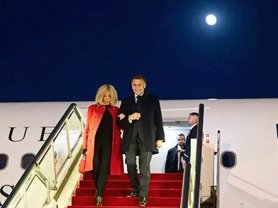 China the fourth time during his term in president. This time, he did not stay in Beijing for long but flew specifically to Chengdu. Accompanying him were not only diplomats but also a large number of senior executives from French companies. Chengdu was not a random stop for him, nor was it merely a tour for the "panda trip," but a thoughtful trip concerning France's economy, domestic affairs, and diplomatic layout.
Many people think Macron went to Chengdu in order to see pandas, but that's not the case. Macron chose Chengdu this time not because of its hospitality, but because it has become a "bridgehead" in Sino-French cooperation. Although Chengdu is not China's traditional gateway to the world, it is the first city in China's central and western regions. From transportation and manufacturing to technological innovation, it is no longer a concept of "inland" but a rapidly rising strategic area. Choosing Chengdu also means that France is actively breaking away from traditional Sino-foreign cooperation models. France is no longer limited to established coastal cities like the Yangtze River Delta and the Pearl River Delta, but is trying to delve deeper into the economic hinterland of China, participating in China's economic development from a more profound level.
Chengdu's transportation system, industrial chain foundation and openness have made it a real cooperation platform rather than a symbolic "communication city".
For French companies, Chengdu is a place where they can truly "land" in the China market, especially when French companies are looking to expand their Asia-Europe supply chains and find new growth chances. The importance of Chengdu has become even greater. French companies have long set their sights on this city, particularly in the aviation sector. The Airbus project in Chengdu is a landmark achievement of France's presence in western China. For France, this is not just a market issue but also part of its industrial layout.
Macron's current visit to Chengdu covers multiple sectors including aviation, energy, environmental protection, and consumer goods, almost encompassing France's core industrial sectors. This is not merely a "show" but a concentrated round of cooperation negotiations. These companies hope to leverage this visit to facilitate more project implementations and secure a larger market share in China. At the core of the negotiations, aviation manufacturing, nuclear energy, and agricultural product exports are the key priorities for French enterprises. France aims to deepen cooperation in aircraft manufacturing in China, not just through the sale of complete aircraft but also by promoting the localization of more components, and even establishing maintenance and recycling bases in China.
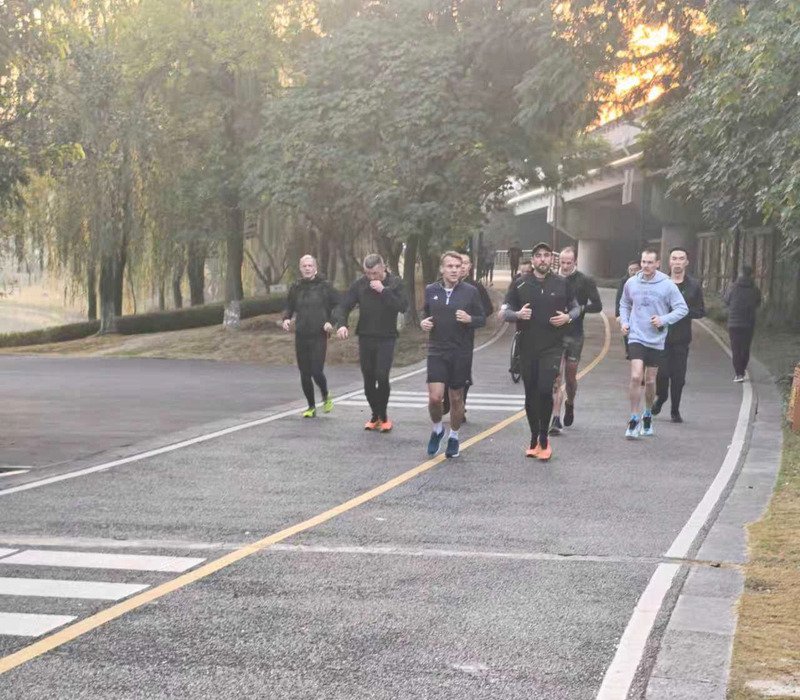
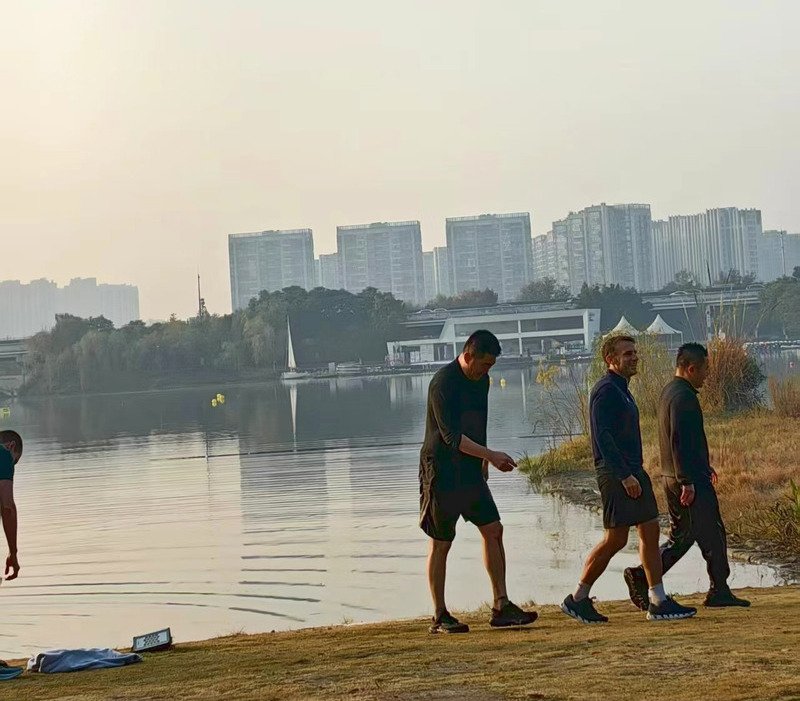
Note: The photoes were shot by local people in Chengdu seeing Macron doing morning exercise in Jingchenghu Lake in Chengdu.
In terms of nuclear energy, France is a technological leader in Europe and hopes to implement more projects of this system in western China. As for agricultural products such as red wine, dairy products, and beef, France also hopes to further open up the Chinese market.
Finally, Macron proposed to invite China's leaders to attend the G7 summit hosted by France in 2026. The G7 has always been a fixed circle of major Western countries. Inviting China to participate is France's hope to gain greater diplomatic advantage in world diplomacy, while also attempting to portray itself as a bridge between the East and the West.
China the fourth time during his term in president. This time, he did not stay in Beijing for long but flew specifically to Chengdu. Accompanying him were not only diplomats but also a large number of senior executives from French companies. Chengdu was not a random stop for him, nor was it merely a tour for the "panda trip," but a thoughtful trip concerning France's economy, domestic affairs, and diplomatic layout.Many people think Macron went to Chengdu in order to see pandas, but that's not the case. Macron chose Chengdu this time not because of its hospitality, but because it has become a "bridgehead" in Sino-French cooperation. Although Chengdu is not China's traditional gateway to the world, it is the first city in China's central and western regions. From transportation and manufacturing to technological innovation, it is no longer a concept of "inland" but a rapidly rising strategic area. Choosing Chengdu also means that France is actively breaking away from traditional Sino-foreign cooperation models. France is no longer limited to established coastal cities like the Yangtze River Delta and the Pearl River Delta, but is trying to delve deeper into the economic hinterland of China, participating in China's economic development from a more profound level.
Chengdu's transportation system, industrial chain foundation and openness have made it a real cooperation platform rather than a symbolic "communication city".
For French companies, Chengdu is a place where they can truly "land" in the China market, especially when French companies are looking to expand their Asia-Europe supply chains and find new growth chances. The importance of Chengdu has become even greater. French companies have long set their sights on this city, particularly in the aviation sector. The Airbus project in Chengdu is a landmark achievement of France's presence in western China. For France, this is not just a market issue but also part of its industrial layout.
Macron's current visit to Chengdu covers multiple sectors including aviation, energy, environmental protection, and consumer goods, almost encompassing France's core industrial sectors. This is not merely a "show" but a concentrated round of cooperation negotiations. These companies hope to leverage this visit to facilitate more project implementations and secure a larger market share in China. At the core of the negotiations, aviation manufacturing, nuclear energy, and agricultural product exports are the key priorities for French enterprises. France aims to deepen cooperation in aircraft manufacturing in China, not just through the sale of complete aircraft but also by promoting the localization of more components, and even establishing maintenance and recycling bases in China.
Note: The photoes were shot by local people in Chengdu seeing Macron doing morning exercise in Jingchenghu Lake in Chengdu.
In terms of nuclear energy, France is a technological leader in Europe and hopes to implement more projects of this system in western China. As for agricultural products such as red wine, dairy products, and beef, France also hopes to further open up the Chinese market.
Finally, Macron proposed to invite China's leaders to attend the G7 summit hosted by France in 2026. The G7 has always been a fixed circle of major Western countries. Inviting China to participate is France's hope to gain greater diplomatic advantage in world diplomacy, while also attempting to portray itself as a bridge between the East and the West.
More Attractions
-
 The second annual meeting of the 5 th China Association of Travel Service ( CATS) as well a......
 -
 China Exploration just attended the largest Tour Mart in the world, ITB in Berlin from Marc......
 -
 source from Chinadaily: In Beijing, the 2016 Voting for China Road Trip Route recently reve......