





search for a Trip
Crested Ibis National Nature Reserve
Hanzhong Crested Ibis National Nature Reserve is located in Hanzhong, Shaanxi Province, in the southern foothills of the Qinling Mountains. The reserve extends across Yangxian and Chenggu counties, with its main administrative area located in Yangxian County. It was established to protect the endangered Crested Ibis (Nipponia nippon) and its natural habitat.
Established in 1983, the reserve covers an area of approximately 37,549 hectares. Its primary conservation objective is to protect the Crested Ibis, one of the world’s rarest bird species, together with the forests, wetlands, farmland and other habitats on which the species depends.
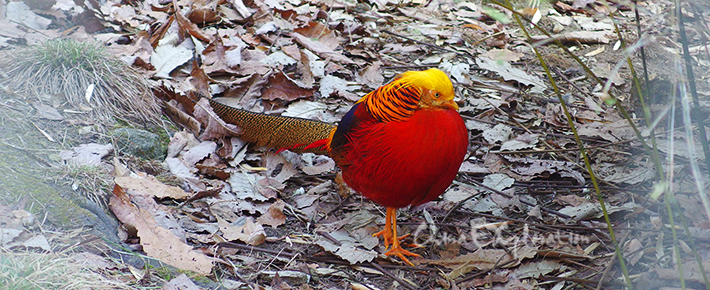
Conservation of the Crested Ibis
The Crested Ibis is a rare and beautiful bird and is under national protection in China. It has long been regarded as a symbol of good fortune and is sometimes described as the “Oriental Gem.”
For many years, the species was believed to have disappeared from China. However, in 1981, a small population of wild Crested Ibis was discovered in Yangxian County in southern Shaanxi. The discovery was of enormous importance to global wildlife conservation, as it represented the last known wild population of the species at that time.
The discovery prompted extensive conservation efforts in China. Habitat protection, artificial breeding, scientific research and population monitoring were gradually introduced to help the species recover.
International cooperation has also played an important role. In the late 1980s, China and Japan established a joint research and habitat protection program focusing on the Crested Ibis. These long-term conservation efforts have helped the species recover from the brink of extinction, and populations have since been established in several suitable areas of China.
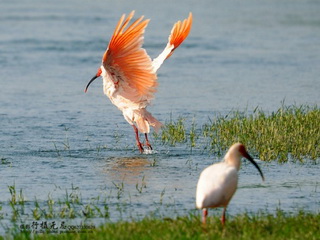
The Crested Ibis
The Crested Ibis is a medium-sized bird measuring around 79 centimeters in length. It is easily recognized by its pale pinkish-white plumage, red facial skin, long black bill and distinctive crest.
The bird generally inhabits low mountain forests, wetlands, rice fields and areas close to streams. It feeds on small fish, frogs, insects and other aquatic or terrestrial creatures found in shallow water and wetland environments.
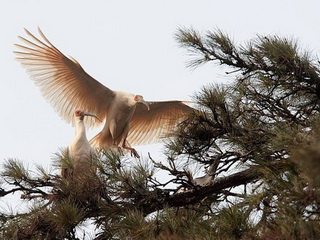
Crested Ibis usually rest and sleep in tall trees, while feeding in wetlands, streams and agricultural areas during the day. In the Yangxian area, they are generally resident birds and move between higher and lower elevations according to seasonal conditions and food availability.
Breeding and Nesting
The breeding season of the Crested Ibis generally begins in spring. Nesting usually takes place from April to May, when the birds build their nests in trees and raise their young.
A breeding pair normally lays several eggs, which are incubated for approximately one month. The young remain in the nest for several weeks after hatching before becoming capable of flying independently.
The successful breeding of the Crested Ibis in protected habitats has been one of the most important achievements of conservation programs in Shaanxi.
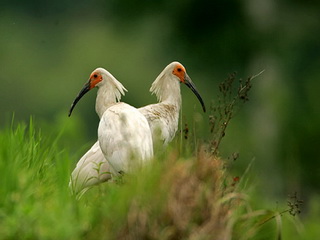
Crested Ibis Conservation Area in Yangxian
The main Crested Ibis conservation area is located near Yangxian County, where visitors can learn about the history and conservation of this remarkable bird.
Facilities in the area include a Crested Ibis breeding and conservation center, an educational museum and facilities for observing the birds. These sites provide information about the biology of the species, its dramatic decline and the conservation work that has helped its population recover.
One of the highlights is the opportunity to observe Crested Ibis in their natural environment. Areas around their traditional roosting sites can attract numerous birds, particularly in the evening when they return to tall trees to rest.
The surrounding landscape of rice fields, streams, forests and mountain foothills provides an important habitat for the Crested Ibis as well as many other species of birds and wildlife.
A Remarkable Wildlife Conservation Story
The history of the Crested Ibis in Hanzhong is one of the most inspiring wildlife conservation stories in China. From a tiny surviving population discovered in Yangxian in the early 1980s, the species has benefited from decades of habitat protection, scientific research, captive breeding and reintroduction programs.
Today, Hanzhong and Yangxian remain closely associated with the conservation of the Crested Ibis. A visit to the reserve offers travelers more than an opportunity to see a rare bird; it also provides an insight into China’s efforts to protect endangered wildlife and restore natural habitats.
Surrounded by the beautiful landscapes of the Qinling Mountains, Hanzhong Crested Ibis National Nature Reserve is an excellent destination for birdwatchers, nature lovers and visitors interested in wildlife conservation and China’s natural heritage.
China Attractions Guide
- Anhui Attractions
- Beijing Attractions
- Chongqing Attractions
- Fujian Attractions
- Gansu Attractions
- Guangdong Attractions
- Guangxi Attractions
- Guizhou Attractions
- Hainan Attractions
- Henan Attractions
- Hongkong Attractions
- Hubei Attractions
- Hunan Attractions
- Heilongjiang Attractions
- Inner Mongolia Attractions
- Jiangsu Attractions
- Jilin Attractions
- Jiangxi Attractions
- Liaoning Attractions
- Manchuria Attractions

