




search for a Trip
Changchun City Guide
Located in Jilin Province, Changchun is the provincial capital and an important city in northeastern China. Known as the “Spring City of the North,” Changchun has earned the title of National Garden City due to its extensive urban greenery and beautiful landscapes.
As a city with a unique historical background, Changchun combines modern urban life with important cultural heritage sites. Visitors can explore former imperial buildings, historical districts, and lively public spaces that reflect the city’s diverse past and local culture.
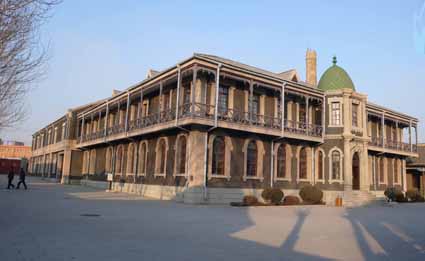 1. Puppet Emperor’s Palace — The Former Imperial Palace of Manchukuo
The Puppet Emperor’s Palace (Manchukuo Imperial Palace) is Changchun’s most famous historical attraction. Located on Guangfu Road in the northeast of Changchun, the palace complex covers an area of approximately 12 hectares.
It was the official residence of Puyi, the last emperor of China, who served as the nominal emperor of Manchukuo from 1932 to 1945.
The main buildings of the palace include Qinmin Building, Jixi Building, and Tongde Palace. These structures combine traditional Chinese architectural elements with Western design influences, creating a distinctive architectural style that reflects the complicated history of the early 20th century.
Today, the palace has been transformed into a museum where visitors can learn about the history of Manchukuo and the life of Puyi.
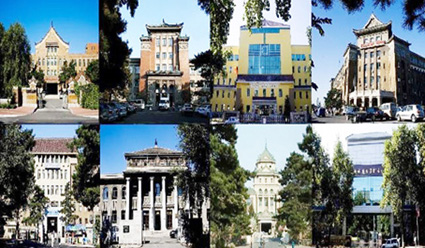
2. Eight Ministries of Manchukuo — Historic Government Buildings
The Eight Ministries of Manchukuo were established in 1936 and are located around Xinmin Street in central Changchun.
The complex consisted of eight major government departments of Manchukuo:
* Department of Security
* Department of Legislation
* Department of Economy
* Department of Transportation
* Department of Agriculture
* Department of Culture and Education
* Department of Diplomacy
 * Department of Health
The buildings represent the urban planning and architectural style of Changchun during the Manchukuo period. Today, this historic area provides visitors with a deeper understanding of Changchun’s modern history and architectural heritage.
3. Changchun Culture Square — A Window into Local Life
Located at the intersection of Jiefang Avenue and Xinmin Avenue, Changchun Culture Square is one of the city’s largest public leisure spaces.
Opened in August 1996, the square covers an area of approximately 20.5 hectares and serves as an important gathering place for local residents.
During summer evenings, thousands of people come here to enjoy various activities, including dancing, exercise, entertainment, and cultural events. The square offers visitors a wonderful opportunity to experience the everyday life and community culture of Changchun.
With its historical landmarks, green urban environment, and vibrant local culture, Changchun is an important destination for travelers exploring Jilin Province and the history of Northeast China.
China Attractions Guide
- Anhui Attractions
- Beijing Attractions
- Chongqing Attractions
- Fujian Attractions
- Gansu Attractions
- Guangdong Attractions
- Guangxi Attractions
- Guizhou Attractions
- Hainan Attractions
- Henan Attractions
- Hongkong Attractions
- Hubei Attractions
- Hunan Attractions
- Heilongjiang Attractions
- Inner Mongolia Attractions
- Jiangsu Attractions
- Jilin Attractions
- Jiangxi Attractions
- Liaoning Attractions
- Manchuria Attractions

